

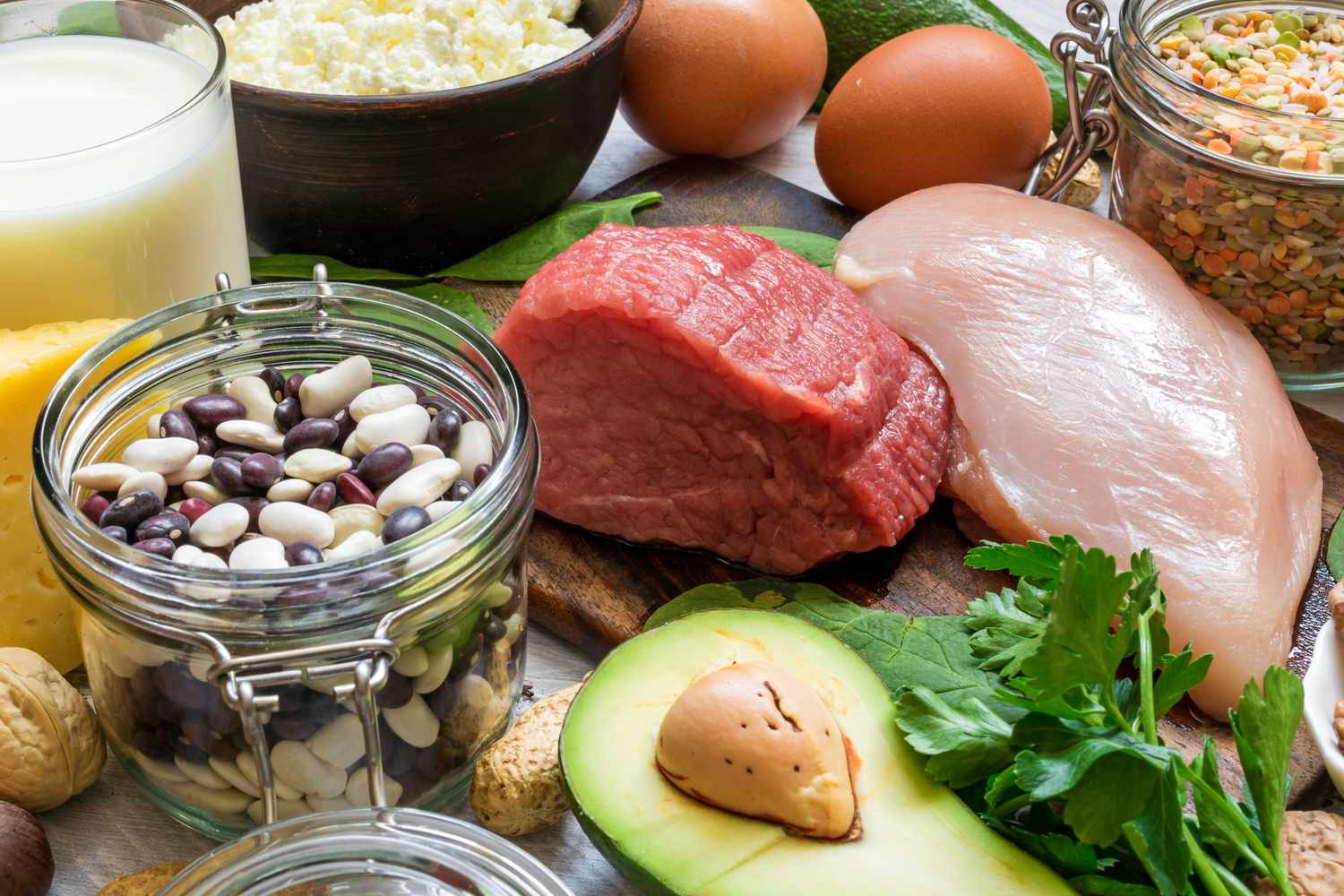
B vitamins serve several crucial roles in the body and are naturally eliminated in the urine, so they require daily replacement through various foods. Examples of foods rich in various B vitamins include animal proteins, fatty fish, green vegetables, eggs, fortified cereals, dairy products, chickpeas, and sunflower seeds.
1. Beef Liver
Maryna Iaroshenko / Getty Images
Animal organ meats, particularly liver, are a “powerhouse” source of B vitamins, especially vitamin B12 (cobalamin).
A 3-ounce (oz) serving of beef liver provides the following eight B vitamins and their percent Daily Value (%DV).
A B-complex vitamin supplement would provide these vitamins. Check the label for the DV for each in a supplement.
What Is the Daily Value (DV)?
The U.S. Food and Drug Administration (FDA) developed Daily Values (DVs) as a reference to help people compare the nutrient content of foods and supplements with that of the recommended daily intake for that nutrient.
- Foods that supply at least 20% DV are considered a rich source of that nutrient.
- The DVs reviewed in this article are approximations for adults (and kids age 4 or older) who are on a 2000-calorie daily diet.
2. Fatty Fish and Tuna
rebeccafondren / Getty Images
Fatty or oily fish like salmon, as well as tuna (a leaner fish), are packed with a variety of B vitamins. A 3-oz serving of salmon and tuna, around the size of a wallet or deck of cards, is rich in the following B vitamins:
| B Vitamin | Salmon | Tuna |
| Thiamine (B1) | 11% DV (sockeye, cooked) | 17% DV (bluefish, cooked) |
| Riboflavin (B2) | 15% DV (pink, canned) | 16% DV (bluefin, cooked) |
| Niacin (B3) | 54% DV (sockeye, cooked) | 4% DV (light, canned) |
| Pantothenic acid (B5) | 22% DV (sockeye, cooked) | 24% DV (fresh, bluefin, cooked) |
| Pyridoxine (B6) | 35% DV (sockeye, cooked) | 53% DV (fresh, yellowfin, cooked) |
| Biotin (B7) | 17% DV (pink, canned in water) | 2% DV (canned in water) |
| Cobalamin (B12) | 108% DV (Atlantic, cooked) | 104% DV (light, canned in water) |
3. Nutritional Yeast
Nedim_B / Getty Images
Nutritional yeast is jam-packed with several B Vitamins, including thiamine, riboflavin, niacin, pyridoxine, and folate. It is also commonly fortified with cobalamin (vitamin B12).
Since vitamin B12 deficiency can occur in people eating a strict vegetarian or vegan diet, nutritional yeast is often recommended. If a vitamin B12 deficiency manifests on a plant-based diet, a B12 supplement is advised.
The following B vitamins and their DVs are found in 1/4 cup of nutritional yeast.
- Thiamine (B1): 790% DV
- Riboflavin (B2): 570% DV
- Niacin (B3): 230% DV
- Pyridoxine (B6): 300% DV
- Folate (B9): 270% DV
- Cobalamin (B12): 346% to 1,000% DV, depending on the specific brand
4. Spinach
los_angela / Getty Images
Spinach is a great source of folate (vitamin B9) and, to a lesser degree, a few other B vitamins. Specifically, 1/2 cup of boiled spinach provides 33% DV for folate.
Examples of other green vegetables that are excellent sources of vitamin B9 include:
- Kale
- Asparagus
- Broccoli
- Brussel sprouts
- Swiss chard
- Turnip greens
5. Eggs
Kilito Chan / Getty Images
Eggs are a considerable source of biotin, with one egg providing 33% DV for vitamin B7. Eggs provide smaller amounts of B2, B5, and B12.
6. Fortified Cereals
bhofack2 / Getty Images
Cereal is a natural source of nearly all B vitamins, except vitamin B12. The problem is that the B vitamin content declines significantly after milling. As such, several breakfast cereals are fortified with multiple B vitamins, providing over 20% DV, if not 100%.
One typical fortified cereal, often a pantry staple, is multigrain Cheerios. The vitamin B content of one prepackaged bowl of multigrain Cheerios includes:
- Thiamine (B1): 22% DV
- Riboflavin (B2:) 23% DV
- Niacin (B3): 22% DV
- Pyridoxine (B6:) 20% DV
- Folate: (B9): 35% DV
- Vitamin B12 (cobalamin): 43% DV
7. Chicken and Beef
BURCU ATALAY TANKUT / Getty Images
Animal proteins, including chicken, beef, turkey, and pork, are superb sources of multiple B vitamins. For example, a 3-oz serving of chicken or beef, depending on the type and preparation, is rich in the following B vitamins:
| B Vitamin | Chicken | Beef |
| Riboflavin (B2) | 15% DV (rotisserie chicken, breast meat only) | 31% DV (tenderloin steak, boneless, trimmed of fat, grilled) |
| Niacin (B3) | 64% DV (grilled breast, meat only) | 36% DV (ground, 90% lean, pan browned) |
| Pantothenic acid (B5) | 26% DV (breast meat, skinless, roasted) | 12% DV (ground, 85% lean meat, broiled) |
| Pyridoxine (B6) | 29% DV (roasted breast) | 18% DV (ground beef, patty, 85% lean, broiled) |
| Cobalamin (B12) | 14% DV (breast, roasted, meat only) | 100% DV (ground, 85% lean, pan browned) |
8. Milk
Hyrma / Getty Images
Milk is an excellent source of riboflavin (B2) and cobalamin (B12). Specifically, 1 cup of 2% milk provides 38% DV for B2 and 54% DV for B12.
Other dairy products, including Swiss and cheddar cheeses and yogurt, are also excellent sources of B2 and B12.
9. Garbanzo Beans
Cris Cantón / Getty Images
Garbanzo beans, also known as chickpeas, are known for their high folate (B9) content, with a 1/2 cup containing around 35% DV.
Other beans are also rich in folate, such as:
- Cooked or boiled black beans: 32% DV
- Boiled black-eyed peas (cowpeas): 26% DV
- Canned kidney beans: 12% DV
10. Sunflower Seeds
Javier Zayas Photography / Getty Images
Sunflower seeds are a robust source of pantothenic acid (B5), with 1/4 cup providing 48% DV. They are also a decent source of thiamine (B1), with 1/4 cup providing 16% DV.
Other seeds high in thiamine include macadamia nuts and flaxseeds, whereas pumpkin seeds are rich in pantothenic acid.
Before Stopping a Vitamin B Supplement
Please talk with your healthcare provider before starting or stopping a vitamin B supplement.
While many people can obtain sufficient vitamin B intake from a well-balanced diet, a B-complex supplement may be indicated in some instances—for example, those following a strict plant-based diet or those with gut conditions that impair nutrient absorption.
:max_bytes(150000):strip_icc()/Colleen-Doherty-MD-660-9d8d5f15b5a8408d91816814d441735b.jpg)