
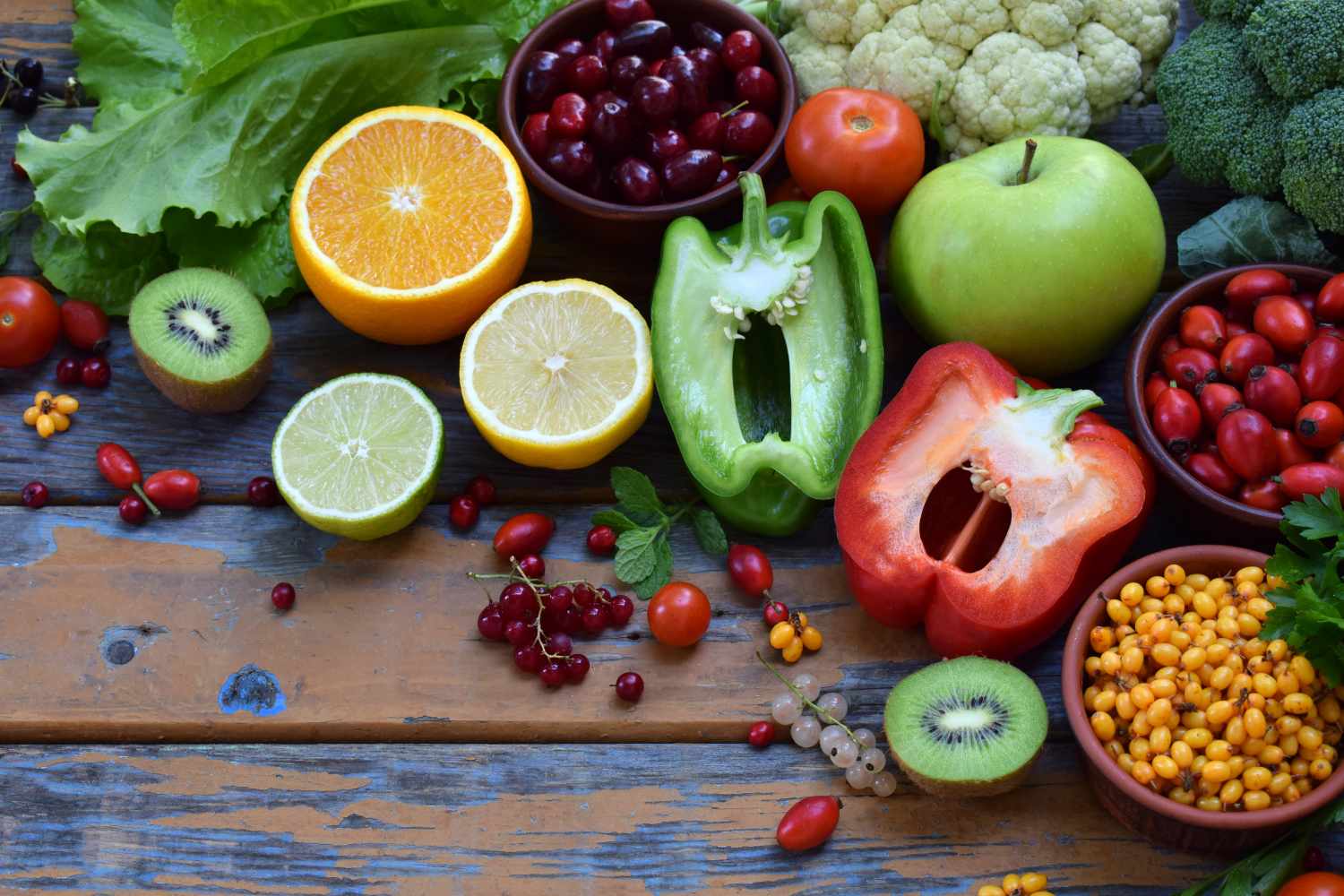
11 Foods Rich in Vitamin C (Ascorbic Acid) for Immune Support

11 Foods Rich in Vitamin C (Ascorbic Acid) for Immune Support

Ascorbic acid, the scientific name for vitamin C, supports immune function. Eating ascorbic acid-rich foods helps your immune system work properly.

1. Guava

Danilo Oliver / Getty Images


Vitamin C: 228 milligrams (mg) per 100 grams (g)

This tropical fruit is a supreme source of ascorbic acid, offering several times the amount found in an orange to significantly boost immune function. It also contains lycopene, an antioxidant that protects cells.

2. Brussels Sprouts

Sebalos / Getty Images


Vitamin C: 143 mg per 100 g (raw)

These mini cabbages deliver ascorbic acid to support immune cell function, while their vitamin K helps maintain normal blood clotting and bone health.

3. Red Bell Pepper

smykalova Nataliia / Getty Images


Vitamin C: 142 mg per 100 g

These vibrant vegetables deliver ascorbic acid amounts that surpass many citrus fruits, providing solid support for skin and mucous membranes, the body’s first immune barrier.

Beta-carotene in red bell peppers helps maintain healthy vision. Their ruby color signals a later stage of ripening, resulting in a naturally sweeter taste and higher nutrient density.

4. Yellow Bell Pepper

AlexPro9500 / Getty Images


Vitamin C: 139 mg per 100 g

These vegetables are an exceptionally potent source of ascorbic acid, offering high antioxidant power to help support and protect immune cells from everyday stress.

They also provide carotenoids that contribute to eye health. Yellow peppers are fully ripened green peppers; their higher vitamin C levels develop alongside their sweeter flavor.

5. Kale

masa44 / Getty Images


Vitamin C: 93 mg per 100 g (raw)

Kale, a leafy green, provides a valuable dose of ascorbic acid for immune health. It’s also packed with lutein and zeaxanthin, two carotenoids that lower the risk of age-related macular degeneration.

6. Broccoli

Igor Dudchak / Getty Images


Vitamin C: 91 mg per 100 g (raw)

This cruciferous vegetable has a generous dose of ascorbic acid paired with sulforaphane, which helps reduce the secretion of an inflammatory cytokine (protein) called IL-6. This may help reduce the risk of certain types of cancers. 

7. Papaya

leonori / Getty Images


Vitamin C: 61 mg per 100 g

This tropical fruit, known as “fruit of the angels,” combines ascorbic acid with carotenoids, delivering a one-two punch for resilient immune defense and tissue repair. The natural enzyme papain also helps break down proteins and may promote better digestion.

8. Kiwi

nata_vkusidey / Getty Images


Vitamin C: 59 mg per 100 g

This small fuzzy fruit is packed with ascorbic acid to help keep immune defenses resilient. It also has vitamin E for extra cell protection.

9. Strawberries

Jose Luis Gallego Aviles / Getty Images


Vitamin C: 59 mg per 100 g

These popular berries provide ascorbic acid for immune support. Despite their sweetness, strawberries are mostly water and naturally low in calories.

10. Oranges

GCapture / Getty Images


Vitamin C: 59 mg per 100 g

Eating this vitamin C icon regularly may help reduce the duration and severity of cold symptoms. Oranges also have folate (vitamin B9), which supports red blood cell formation.

Beyond their high ascorbic acid content, oranges have bioactive compounds, like citrus bioflavonoids, that may boost vitamin C’s overall ability to support immune health.

11. Pineapple

supitchamcsdam / Getty Images


Vitamin C: 48 mg per 100 g

While pineapple’s ascorbic acid supports the body’s immune defenses, its uniquely high levels of the enzyme bromelain act as a powerful anti-inflammatory agent.

Other Foods With Ultra-High Ascorbic Acid

These fruits contain far more ascorbic acid than common produce, but they’re almost impossible to find in most U.S. grocery stores:

  • Kakadu plum: An Australian superfruit with up to 3,150 mg of vitamin C per 100 g.
  • Camu camu: A tart Amazonian berry that supplies up to 2,280 mg per 100 g.
  • Acerola cherry: These Barbados cherries deliver 1500–4500 mg per 100 g.
  • Sea buckthorn: This Eurasian berry with a citrusy taste has about 900 mg per 100 g.
  • Amla (Indian gooseberry): This sour fruit contains 193–720 mg per 100 g.
Verywell Health uses only high-quality sources, including peer-reviewed studies, to support the facts within our articles. Read our editorial process to learn more about how we fact-check and keep our content accurate, reliable, and trustworthy.
  1. Ali A, Riaz S, Khalid W, et al. Potential of ascorbic acid in human health against different diseases: an updated narrative reviewInternational Journal of Food Properties. 2024;27(1):493-515. doi:10.1080/10942912.2024.2327335

  2. U.S. Department of Agriculture. Guavas, common, raw.

  3. U.S. Department of Agriculture. Oranges, raw, navel.

  4. Alves MB, Vasconcelos AG, Silva De Carvalho AÉ, et al. Lycopene from red guava (Psidium guajava L.): from hepatoprotective effect to its use as promising self-emulsifying drug delivery system for anti-inflammatory and antioxidant applicationsPharmaceuticals. 2023;16(6):905. doi:10.3390/ph16060905

  5. Chandana MR, Goswami AK, Rana VS, et al. Unravelling the physicochemical and antioxidant profiles of guava genotypes across developmental stages and seasonalityFood Bioscience. 2025;71:107097. doi:10.1016/j.fbio.2025.107097

  6. U.S. Department of Agriculture. Brussels sprouts, raw.

  7. Mladěnka P, Macáková K, Kujovská Krčmová L, et al. Vitamin K – sources, physiological role, kinetics, deficiency, detection, therapeutic use, and toxicityNutrition Reviews. 2022;80(4):677-698. doi:10.1093/nutrit/nuab061

  8. U.S. Department of Agriculture. Peppers, bell, red, raw.

  9. Gombart AF, Pierre A, Maggini S. A review of micronutrients and the immune system–working in harmony to reduce the risk of infectionNutrients. 2020;12(1):236. doi:10.3390/nu12010236

  10. Rodríguez-Rodríguez E, Sánchez-Prieto M, Olmedilla-Alonso B. Assessment of carotenoid concentrations in red peppers (Capsicum annuum) under domestic refrigeration for three weeks as determined by HPLC-DADFood Chemistry: X. 2020;6:100092. doi:10.1016/j.fochx.2020.100092

  11. U.S. Department of Agriculture. Peppers, bell, yellow, raw.

  12. Moritz B, Schmitz AE, Rodrigues ALS, Dafre AL, Cunha MP. The role of vitamin C in stress-related disordersThe Journal of Nutritional Biochemistry. 2020;85:108459. doi:10.1016/j.jnutbio.2020.108459

  13. Martínez S, López M, González-Raurich M, Alvarez AB. The effects of ripening stage and processing systems on vitamin C content in sweet peppers (capsicum annuum l.)International Journal of Food Sciences and Nutrition. 2005;56(1):45-51. doi:10.1080/09637480500081936

  14. U.S. Department of Agriculture. Kale, raw.

  15. Mrowicka M, Mrowicki J, Kucharska E, Majsterek I. Lutein and zeaxanthin and their roles in age-related macular degeneration—neurodegenerative diseaseNutrients. 2022;14(4):827. doi:10.3390/nu14040827

  16. U.S. Department of Agriculture. Broccoli, raw.

  17. Al-Bakheit A, Abu-Qatouseh L. Sulforaphane from broccoli attenuates inflammatory hepcidin by reducing IL-6 secretion in human HepG2 cellsJournal of Functional Foods. 2020;75:104210. doi:10.1016/j.jff.2020.104210

  18. U.S. Department of Agriculture. Papayas, raw.

  19. Laurora A, Bingham JP, Poojary MM, Wall MM, Ho KKHY. Carotenoid composition and bioaccessibility of papaya cultivars from HawaiiJournal of Food Composition and Analysis. 2021;101:103984. doi:10.1016/j.jfca.2021.103984

  20. Ayodipupo Babalola B, Ifeolu Akinwande A, Otunba AA, Ebenezer Adebami G, Babalola O, Nwufo C. Therapeutic benefits of Carica papaya: A review on its pharmacological activities and characterization of papainArabian Journal of Chemistry. 2024;17(1):105369. doi:10.1016/j.arabjc.2023.105369

  21. U.S. Department of Agriculture. Kiwifruit (kiwi), green, peeled, raw.

  22. Office of Dietary Supplements. Vitamin E.

  23. Pal S, Das S, Das S, Dubey A. Analytical review on the nutraceutical importance of superfood: actinidia deliciosaijhs. 2022:8559-8571. doi:10.53730/ijhs.v6nS5.10716

  24. U.S. Department of Agriculture. Strawberries, raw.

  25. Charoenwoodhipong P, Zuelch ML, Keen CL, Hackman RM, Holt RR. Strawberry (Fragaria x Ananassa) intake on human health and disease outcomes: a comprehensive literature reviewCritical Reviews in Food Science and Nutrition. 2025;65(25):4884-4914. doi:10.1080/10408398.2024.2398634

  26. Basu A, Izuora K, Betts NM, et al. Dietary strawberries improve cardiometabolic risks in adults with obesity and elevated serum ldl cholesterol in a randomized controlled crossover trialNutrients. 2021;13(5):1421. doi:10.3390/nu1305142

  27. Hemilä H, Chalker E. Vitamin C reduces the severity of common colds: a meta-analysisBMC Public Health. 2023;23(1):2468. doi:10.1186/s12889-023-17229-8

  28. Zhang L, Peng Y, Kong Y, Zhang X, Li Z, Jia H. The unique presentation of the relationship between red blood cell folate and appendicular skeletal muscle mass: a cross-sectional studySci Rep. 2024;14(1):27263. doi:10.1038/s41598-024-76693-3

  29. Zacarías-García J, Pérez-Través L, Gil JV, Rodrigo MJ, Zacarías L. Bioactive compounds, nutritional quality and antioxidant capacity of the red-fleshed kirkwood navel and ruby valencia orangesAntioxidants. 2022;11(10):1905. doi:10.3390/antiox11101905

  30. U.S. Department of Agriculture. Pineapple, raw, all varieties.

  31. Varilla C, Marcone M, Paiva L, Baptista J. Bromelain, a group of pineapple proteolytic complex enzymes (Ananas comosus) and their possible therapeutic and clinical effects. A summaryFoods. 2021;10(10):2249. doi:10.3390/foods10102249

  32. Dharanikumar K, Lavanya SM, Mahendran K, Prahadeeswaran M, Kumar GA. A study on the import of exotic fruits and factors influencing its consumptionInt J Stat Appl Math. 2023;8(5S):330-335. doi:10.22271/maths.2023.v8.i5Se.1214

  33. Zhou Y, Phan ADT, Akter S, et al. Bioactive properties of Kakadu plum-blended productsMolecules. 2023;28(6):2828. doi:10.3390/molecules28062828

  34. Prakash A, Baskaran R. Acerola, an untapped functional superfruit: a review on latest frontiersJ Food Sci Technol. 2018;55(9):3373-3384. doi:10.1007/s13197-018-3309-5

  35. Zulfiqar R, Fatima K, Haq IU, et al. The miracle Berry: Unveiling the therapeutic attributes of sea buckthorn – A reviewHuman Nutrition & Metabolism. 2025;41:200321. doi:10.1016/j.hnm.2025.200321

  36. Gul M, Liu ZW, Iahtisham-Ul-Haq, et al. Functional and nutraceutical significance of amla (Phyllanthus emblica L.): a reviewAntioxidants. 2022;11(5):816. doi:10.3390/antiox11050816

Additional Reading

Headshot

By Christopher Bergland

Bergland is a retired ultra-endurance athlete turned medical writer and science reporter. He is based in Massachusetts.