

Carbohydrates (carbs) provide energy as well as many micronutrients to help the body perform at its best. While potatoes are a nutritious and tasty carb, they can cause blood sugar to rise more quickly than some other options.
1. Leafy Greens
Kseniya Ovchinnikova / Getty Images
Dark green leafy vegetables, such as kale, spinach, and bok choy, are packed with nutrients such as:
- Vitamins A, C, E, and K
- Many of the B-vitamins, including folate
- Fiber
- Iron
- Magnesium
- Potassium
- Calcium
- Carotenoids (antioxidants)
Dark leafy greens are low in calories and have a low glycemic index value, meaning they don’t cause a big rise in blood sugar.
2. Nuts
Feng Zhao / Getty Images
The carbs in nuts are primarily in the form of fiber.
Nuts are also a source of:
- Monounsaturated fats and polyunsaturated fats
- Protein
- Vitamins, such as E, B6, niacin, and folate
- Minerals, such as magnesium, zinc, iron, copper, calcium, selenium, phosphorus, and potassium
- Phytochemicals (act as antioxidants)
Nuts are high in calories, so be mindful of portion sizes.
3. Seeds
Varlay / Getty Images
Seeds are also high in fiber and protein and rich in polyunsaturated fats.
Most seeds are sources of nutrients such as:
- Vitamins B1, B2, B3, and E
- Minerals, such as magnesium, potassium, and calcium
- Antioxidants
Like nuts, seeds are high in calories, so be mindful of portion sizes.
4. Legumes
nataliaspb / Getty Images
Legumes, such as beans, lentils, and chickpeas, are carbohydrates that are slowly digested and less likely to spike blood sugar levels.
Most legumes are:
- High in protein and fiber
- Low in fat
- Low glycemic index
- Sources of nutrients such as iron, potassium, zinc, magnesium, and niacin
5. Whole Grains
Elena Popova / Getty Images
Whole grains, such as oats, whole wheat, and brown rice:
- Use all parts of the grain
- Are higher in fiber, which slows digestion and blood sugar climbs, and aids in digestion
- Contain nutrients such as B vitamins, vitamin E, and a variety of minerals
Try replacing white or refined bread, pasta, and rice with whole-grain counterparts.
6. Barley
© eleonora galli / Getty Images
Barley is a grain rich in beta-glucan, a type of soluble fiber associated with cholesterol-lowering properties.
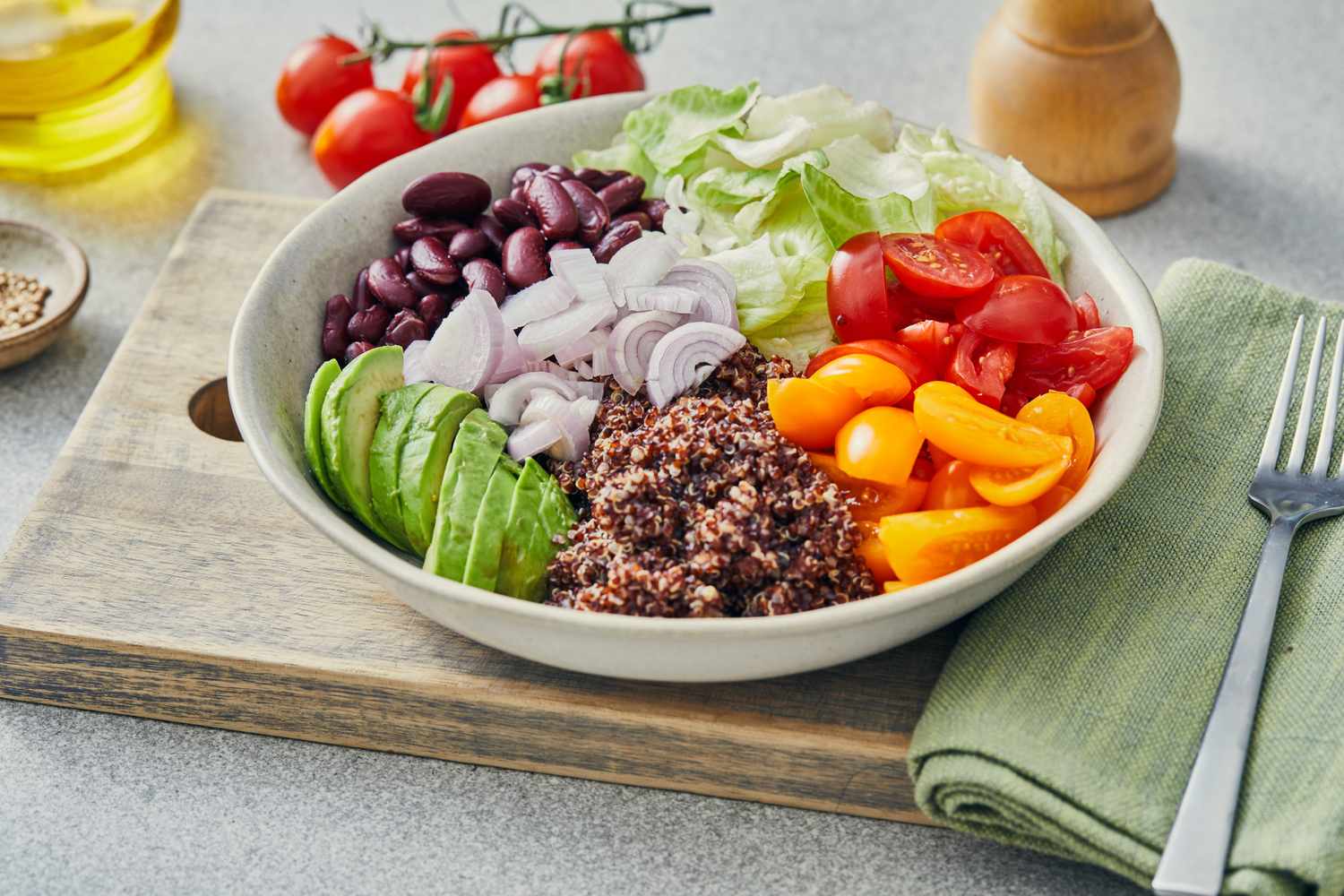
7. Quinoa
Mariha-kitchen / Getty Images
Quinoa is a gluten-free pseudocereal that is rich in fiber and a complete protein source.
Quinoa contains nutrients such as:
- Magnesium
- Folate
- Manganese
- Phosphorus
- Thiamin (Vitamin B1)
- Phytochemicals, such as saponins, flavonoids, phytosterols, and phenolic acids
8. Oats
Arx0nt / Getty Images
Oats are versatile whole grains that can be eaten as oatmeal cereal or used in cooking or baking. Like barley, oats are high in fiber, including beta-glucan, and are a good source of protein.
They contain nutrients such as:
- Phosphorus
- Magnesium
- Thiamine
- Zinc
- Phenolic compounds and phytoestrogens (act as antioxidants)
Oats have been associated with potential health benefits such as:
- Helping manage cholesterol
- Supporting heart health
- Helping to prevent blood sugar spikes
- Increasing satiety (feeling of fullness), which may help with weight management
- Promoting digestive health and preventing constipation
Choose oats that are less processed, such as steel cut or stone ground, rather than quick or instant oats, which are more processed and have a higher glycemic index.
9. Whole Fruits
Catherine Falls Commercial / Getty Images
Whole, fresh fruits contain more fiber than processed fruits, such as applesauce or fruit juices. The fiber in whole fruits helps to slow digestion and reduce blood sugar spikes from the natural sugars in fruits.
For instance, a whole, fresh orange has twice the fiber and half the sugar of a 12-ounce glass of orange juice.
Look for fruits with edible skin, such as apples and pears, and ones with edible seeds, like berries, to up the fiber content.
10. Non-Starchy Vegetables
bhofack2 / Getty Images
Whole, unprocessed, non-starchy vegetables are high in fiber, low in calories, and packed full of nutrients. They have a smaller impact on blood sugar than most carbs, and can be eaten in higher portions. These types of vegetables include:
- Peppers
- Cucumber
- Broccoli
- Tomatoes
- Green beans
- Onions
- Mushrooms
These vegetables can also be used to stretch out carbs such as pasta, allowing you to eat the same volume of food with less starch.
11. Sweet Potatoes
vaaseenaa / Getty Images
Although sweet potatoes do cause a rise in blood sugar, this spike is smaller than that of white potatoes. While they make a great replacement for other potatoes, you should still have them in moderation.
Sweet potatoes are excellent sources of vitamins A and C, and are high in fiber. They also provide potassium, magnesium, calcium, and antioxidants.
12. Beets
YelenaYemchuk / Getty Images
Beets are a nutrient-packed root vegetable that can be eaten raw, cooked, pickled, mashed, and in many other ways.
While beets have more natural sugar than many vegetables, their high fiber content slows down the absorption of sugar, helping to minimize blood sugar spikes. Beets have a moderate glycemic index, meaning they can be consumed in moderation for most people who are managing their blood sugar levels.
Beets have been linked to health benefits such as:
- Helping to manage blood pressure
- Helping to manage cholesterol
- Promoting digestive health
- Increasing satiety
- Helping to protect cells from oxidative stress and inflammation
What Makes a Carb Good or Bad?
Generally, carbohydrates can be categorized as simple or complex.
| Simple Carbs | Complex Carbs |
|---|---|
| Often labeled as “bad carbs” or sugars | Often labeled as “good carbs” or starches and fibers |
| Broken down quickly by the body, causing blood sugar spikes | Broken down more slowly, causing more gradual blood sugar rise |
| Don’t provide satiety | Increases satiety |
| Found in: -Sweeteners (e.g., table sugar, honey, syrup) -Fruit juices -Sugary sodas -Candy | Found in: -Whole, unprocessed, non-starchy vegetables -Certain fruits (e.g., apples) -Starchy vegetables (e.g., sweet potatoes) -Whole grains -Beans -Lentils |
Are Potatoes Unhealthy?
Potatoes contain beneficial nutrients such as:
- Potassium
- Fiber (mainly in the peel)
- Vitamin C
- Vitamin B6
However, potatoes have a high starch content and can cause blood sugar levels to rise more quickly than some other carbohydrates, so they should be eaten in moderation.
Tips for Choosing the Right Carbs
Look for carbs that are:
- Nutrient dense, and good sources of vitamins, minerals, fiber, and other beneficial nutrients
- Complex, and less likely to spike blood sugar levels
- Help satisfy your hunger, and keep you satiated for longer
:max_bytes(150000):strip_icc()/PicsArt_09-20-02.40.06-13db387d22de4949b3d6c887bcc884cd.jpg)