

:max_bytes(150000):strip_icc():format(jpeg)/VWH-GettyImages-576594466-1587cc9691cf4e1e9dc3a6a215a92735.jpg)
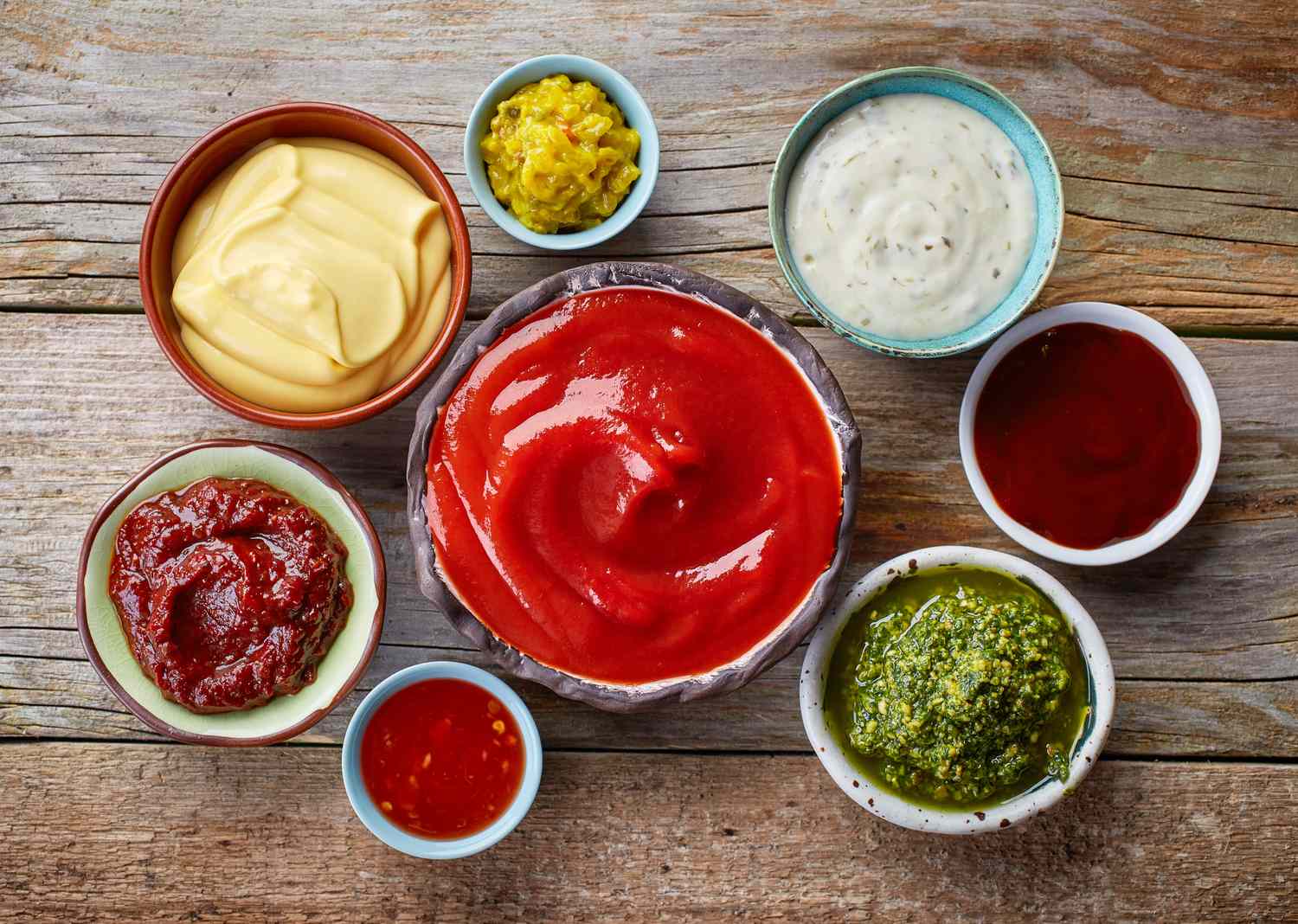
Condiments can elevate almost any meal, but many come with more saturated fat, sugar, or salt than you might expect. The healthiest condiments are often vegetable-based and naturally low in calories, while others deliver heart-healthy fats without too much sugar or excess sodium that can contribute to health risks.
1. Salsa
Low-calorie, veggie-based topping
Salsas are essentially a chunky blend of tomatoes, onions, and peppers. These vegetables provide antioxidants that help neutralize cell-damaging free radicals, plus phytonutrients like flavonoids and carotenoids that support heart, immune, and eye health.
Salsa’s fiber content aids digestion and prolongs satiety, which helps keep you full.
Naturally low in calories, salsa takes top prize because it delivers big flavor, refreshing texture, and health benefits with no added fats or significant sugar.
2. Mustard
Flavor booster with virtually no calories
Whether you choose classic yellow, spicy brown, or Dijon, mustards are universally low in calories, fats, and sugar. Mustard seeds are rich in glucosinolates and omega-3 fatty acids.
3. Hummus
Chickpea dip with fiber and protein
This Middle Eastern dip or spread, made from chickpeas, tahini, and olive oil, is nutrient-dense, contributing to your overall fiber and plant-based protein intake. Hummus is high in healthy monounsaturated fats, but portion control is key—its calories can add up quickly.
4. Tzatziki
Yogurt-based option with cucumbers
Tzatziki is a Mediterranean diet mainstay. It’s typically made with strained Greek yogurt that provides probiotics for gut health, protein for muscle support, and calcium for bone strength. Cucumbers add antioxidants that help protect cells from free radicals.
5. Hot Sauce
Spiciness without many calories or sugar
Most traditional bottled hot sauces are very low in calories, with their main ingredients being chili peppers, vinegar, and salt. The capsaicin in chili peppers may modestly increase metabolism and help low-grade inflammation. Keep an eye on sodium levels, which can be high.
6. Pesto
Basil-based sauce with heart-healthy fats
While pesto is high in calories, most come from the healthy fats in olive oil and pine nuts, supplying vitamin E and antioxidants. Fresh basil, rich in vitamins A and K, makes pesto green. Its vivid color comes from chlorophyll, a plant compound that may help protect cells from damage.
7. Vinaigrette
Simple dressing that aids nutrient absorption
Vinaigrettes made with a high-quality oil like extra virgin olive oil contain monounsaturated and polyunsaturated fats, which may help boost nutrient absorption. Commercial brands, however, often contain high amounts of hidden sodium and added sugars.
When possible, stick to homemade varieties what whisk together vinegar, oil, and herbs.
8. Chili Garlic Sauce
Savory heat and texture with minimal sugar
The garlic in this sauce contains allicin, which may support heart health and immune function, while the chili peppers provide capsaicin, a compound linked to metabolism and antioxidant benefits. Still, chili garlic sauce can be high in sodium.
9. Sriracha
Sweetened spicy sauce with more sugar
Sriracha contains chili peppers, vinegar, sweetener, and garlic. Its ingredients have some antioxidant and immunity benefits. Unlike plain hot sauce, Sriracha usually contains more added sugar, though still far less than typical ketchup and BBQ sauces.
10. Soy Sauce
Low-calorie umami boost with very high sodium
Soy sauce is an extremely low-calorie condiment, but its excessive sodium content (as much as 1,000 milligrams or more per tablespoon) means it should be used sparingly. Opt for smaller portions, or choose low-sodium or reduced-sodium versions, which can cut the sodium content by more than 40%.
11. Ketchup
Sweet and salty tomato-based staple
Most ketchup is loaded with high-fructose corn syrup and other forms of added sugar, and it contains about 150 milligrams of sodium per tablespoon. Ketchup provides lycopene, a heart-healthy antioxidant, plus small amounts of vitamin C and potassium. Choose low-sugar or naturally sweetened versions when possible.
12. Mayonnaise
Iconic condiment, loaded with calories
Mayo is arguably the most calorie-dense condiment. One tablespoon has about 100 calories and 12 grams of fat. Most brands use vegetable oil, but versions made with olive or avocado oil can offer more healthy monounsaturated fats and a small boost of omega-3s, which support heart and brain health.
Avocado: A Healthy Mayonnaise Swap
Although it’s typically categorized as a dip, guacamole or mashed avocado works well as a creamy stand-in for mayonnaise. These spreads are rich in fiber, healthy fats, potassium, folate, and antioxidants, making them nutrient-dense condiment options for sandwiches and wraps.
13. BBQ Sauce
Tangy sauce loaded with hidden sugar
Barbecue sauce ranks low because it often contains a staggering amount of added sugar per serving, frequently combining multiple sweeteners like brown sugar, molasses, and high-fructose corn syrup. Making your own BBQ sauce can significantly improve its nutritional profile.
14. Pure Maple Syrup or Honey
All-natural but may cause blood sugar spikes
While natural sweeteners are healthier in some ways than refined sugar, options like maple syrup and honey are still basically pure sugar with no fiber or protein. Although they have a slightly lower glycemic index than table sugar, pure maple syrup and honey can still cause blood sugar spikes. Use these options in moderation and in the context of a balanced snack or meal.
15. Ranch Dressing
Popular, high-calorie condiment
Ranch holds last spot on the list because a two-tablespoon serving is very high in fat (14 grams total), salt (260 milligrams sodium), and calories (140 cal).
Overconsuming ranch dressing’s salt, sodium, and calories may increase the risk of cardiovascular disease, high blood pressure, and obesity. But, in small portions, it can make eating vegetables more enjoyable, which may benefit your overall health.
A healthier swap for Ranch dressing is Italian dressing seasonings mixed with nonfat or low-fat Greek yogurt.