

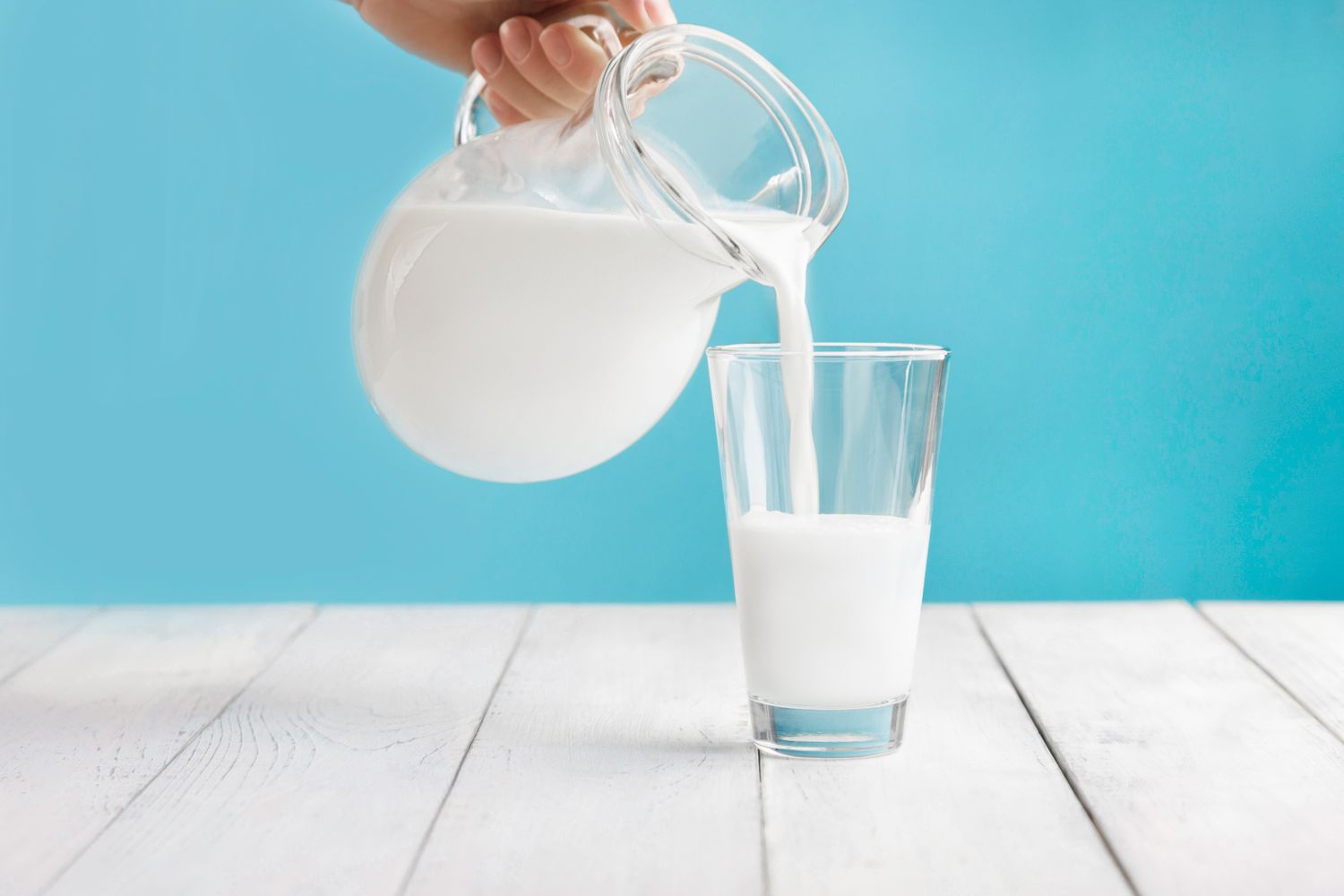
When it comes to the healthiest milk alternatives for overall nutrition, including protein and calcium, soy and pea milk are the best options. Second to those, hemp can also provide good nutritional value compared to cow’s milk.
1. Soy Milk
Soy milk, made from soybeans and water, contains nutrients that may provide several health benefits. These include plant-based compounds called isoflavones, which act as antioxidants in the body and help prevent inflammation and improve heart health by reducing blood pressure and lowering high cholesterol.
Regarding overall nutrition, soy milk is often the closest to cow’s milk in nutrient content among plant-based milk alternatives. This is because it’s often fortified with calcium and other vitamins, such as A and D.
Protein: The protein content may be similar to that of milk, depending on the type. For example, a one-cup serving of 2% milk contains about 8.2 grams (g) of protein, whereas a one-cup serving of unsweetened, plain soy milk has about 8.7 grams of protein.
Calcium: Fortified soy milk also offers a good dose of calcium. While a serving of dairy milk provides 309 milligrams (mg) of calcium, a cup of soy milk provides 246 mg.
Soy Milk Nutrition
While brands vary in nutritional content, unsweetened soy milk tends to offer the best nutritional value. A one-cup serving also contains good amounts of vitamins D, A, E, and B12, as well as potassium, riboflavin, folate, and other nutrients.
- Calories: 93
- Fat: 5 g
- Sodium: 83 mg
- Carbohydrates: 3.2 g
- Sugar: 1.4 g
- Protein: 8.7 g
- Calcium: 246 mg
2. Pea Milk
Pea milk, made from yellow peas, is another plant-based milk alternative that is nutritionally similar to milk. Overall, it doesn’t provide as many nutrients as fortified soy milk, but it does have more calcium per one-cup serving, as well as vitamin D and iron.
Protein: The protein content in pea milk is roughly the same as both soy and cow’s milk at 8 grams per one cup. While it is higher in fat than soy milk, the fats it contains are considered healthy: polyunsaturated and monounsaturated.
Calcium: One cup of fortified pea milk provides 451 milligrams of calcium, which is more than either cow’s milk or soy milk. Be sure to check the label of your pea milk, as unfortified varieties won’t have the same amounts.
Pea Milk Nutrition
A one-cup serving of pea milk also provides some vitamin D, iron, riboflavin, phosphorous, potassium, and other nutrients.
- Calories: 70
- Fat: 4.5 g
- Sodium: 130 mg
- Carbohydrates: 0 g
- Sugar: 0 g
- Protein: 8 g
- Calcium: 451 mg
3. Hemp Milk
Hemp milk is another popular plant-based milk option. It’s made from whole hemp seeds and provides healthy fat, with modest amounts of plant protein and minimal carbs.
Calcium: Fortified hemp milk provides roughly 20% of your daily value (DV) of calcium, the same as soy milk and slightly below cow’s milk. That said, it doesn’t offer nearly as many other nutrients as soy and pea milk. Be sure to check the label to determine whether your milk is fortified with calcium.
Protein: A one-cup serving of hemp milk only provides about 3 grams of protein.
It’s also lower in calories than both soy and pea protein, but not by much, and it contains higher levels of fat. The fats, however, are omega-6 and omega-3 fats, which are healthy.
Hemp Milk Nutrition
A one-cup serving of unsweetened hemp milk also contains some vitamin D, iron, potassium, and magnesium.
- Calories: 60
- Fat: 5 g
- Sodium: 120 mg
- Carbohydrates: 1 g
- Sugar: 1 g
- Protein: 3 g
- Calcium: 288 mg
What to Consider
When choosing a milk alternative, always check the label. Some products may have more or less of the nutrients you’re looking for, and flavored or sweetened varieties often contain much more sugar.
Nutrient values vary across brands, plant-based milk types, and flavored, unflavored, and sweetened or unsweetened versions. Assess which nutrients matter to you and what you’re trying to avoid, and make your choice from there.
:max_bytes(150000):strip_icc()/VerywellBioPicAngelicaBottaro-203f7e803ab444b2b5c13b4252d11159.JPG)