

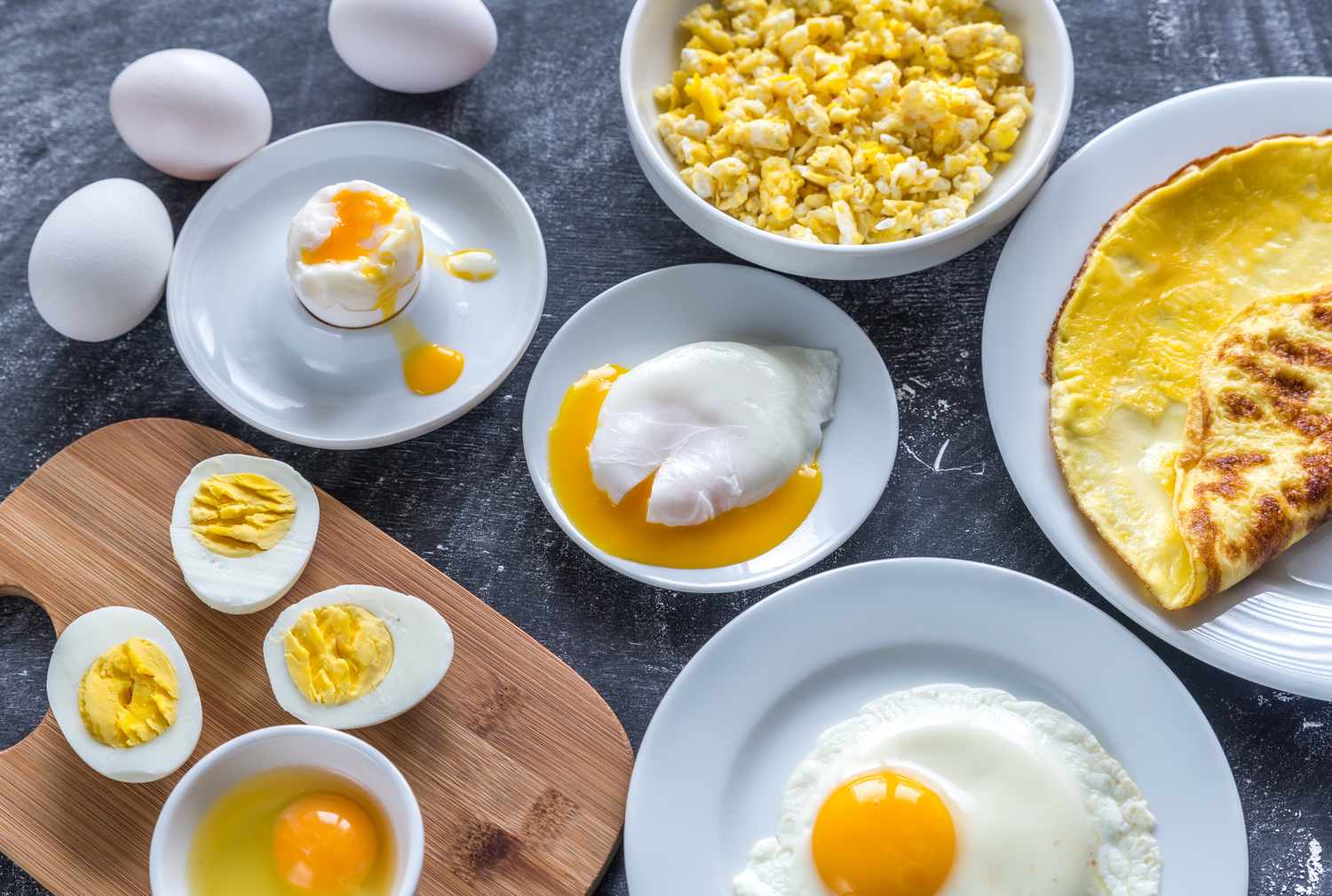
Eggs are a nutrient-packed breakfast staple, providing protein, vitamins, minerals, antioxidants, and healthy fats. Research shows that how eggs are prepared can affect their calorie, cholesterol, and saturated fat content, with some cooking methods offering clearer health benefits than others.
1. Scrambled
Scrambling eggs is a popular, quick, and healthy way to cook them. Most people consume the whole egg while scrambling, which means that you’ll get all of the egg’s protein, vitamins, minerals, and heart-healthy fats that make it a nutritious food.
Consider using a healthy oil (olive or avocado oil) to cook them instead of butter, milk, or cream to reduce the cholesterol content. Scrambling eggs also allows you to include fiber-rich vegetables to help boost digestion and support a balanced diet. It is healthier than alternatives such as frying, which can increase saturated fat intake.
Evidence suggests that eating one to two eggs daily can be a nutritious addition to most healthy adults’ balanced diets.
2. Boiled
Placing eggs in boiling water with the shells on is another healthy cooking method that can be used until the yolk is runny (soft-boiled) or fully cooked (hard-boiled).
Consuming the whole egg provides good amounts of nutrients like vitamin A, vitamin D, and vitamin B12 compared to other methods, such as eating only egg whites. This makes hard-boiled eggs a popular option for high-protein diets aimed at promoting muscle gain.
When boiling eggs, you won’t need to use cooking oil or butter, which benefits people looking to cut back their saturated fat intake. Some studies suggest that boiling eggs can boost the bioaccessibility (the way the body absorbs specific nutrients) of egg antioxidants lutein and zeaxanthin compared to other methods, such as scrambling.
3. Poached
Poaching eggs involves dropping a cracked egg into boiling water, then cooking it until the egg whites are fully cooked but the yolk remains runny. Poaching doesn’t require butter or cooking oil, which limits calories.
Some research found that poaching eggs might boost the digestibility of the healthy fats and protein they contain, compared to other cooking methods such as boiling or scrambling.
While poaching, add a small splash of vinegar to the simmering water to help prevent the egg whites from spreading when they come into contact with the water.
4. Egg Whites Alone
While it’s not an exact cooking method, using egg whites alone, however you choose to prepare them, is considered one of the healthiest ways to consume this food.
Egg whites are low in calories, high in protein, and don’t contain cholesterol. This is why egg whites are often recommended for people following a weight-loss diet or aiming to reduce saturated fat intake.
What’s more, egg whites still contain other key nutrients like vitamin B2 (riboflavin) and selenium, and they can be combined with one whole egg to help boost the volume and protein content of a particular egg dish.
Tips for Incorporating Eggs into Your Diet
Regardless of the cooking method, some tips that nutritionists suggest for incorporating eggs into a balanced diet include:
- Combine two egg whites with one whole egg for a low-fat, low-cholesterol option that’s still high in protein.
- Stick with healthy cooking oils, such as avocado or olive oil, rather than vegetable oils when cooking eggs to cut down on saturated fat.
- Consider choosing a cooking method that doesn’t require oil, such as boiling or poaching.
- Pair two hard-boiled eggs with fresh fruit for a protein and fiber-rich snack.
- Include herbs, spices, and vegetables in scrambled eggs for additional nutrients and flavor.
- Add eggs to other non-traditional breakfast recipes, like mixing egg whites into a smoothie or topping a salad with sliced hard-boiled eggs.
- Prevent foodborne illness by keeping eggs refrigerated at 40°F (4°C) or lower and ensuring they’re cooked to an internal temperature of 160°F (71°C).
:max_bytes(150000):strip_icc()/IMG_5047-9727550a95404c49a7515e66930004ef.JPG)