
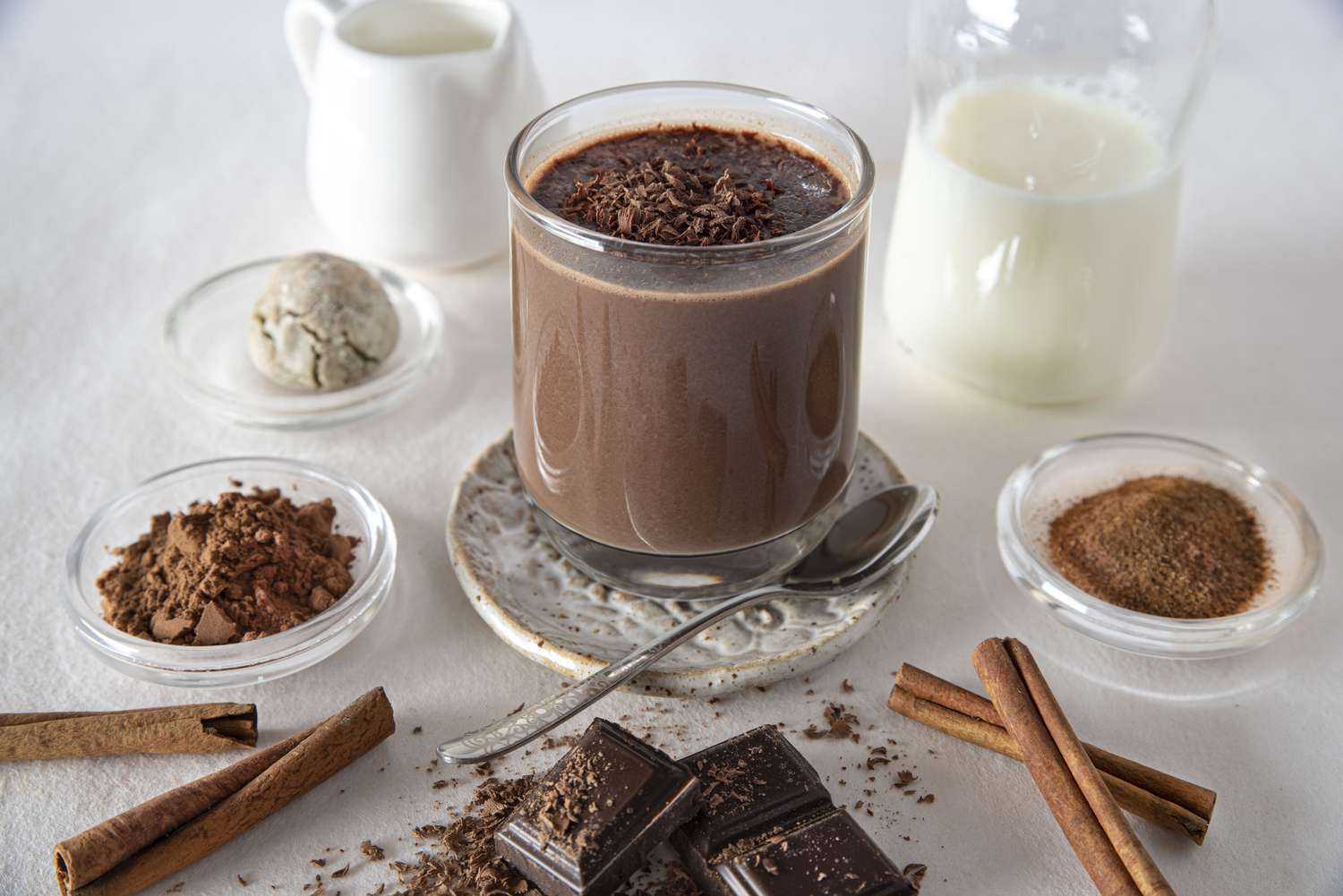
4 Healthy Ways to Build a Better Hot Chocolate at Home

4 Healthy Ways to Build a Better Hot Chocolate at Home

Hot chocolate is a rich, warm beverage perfect for chilly nights, but it’s also high in added sugars and calories. Fortunately, it’s easy to make hot chocolate at home with a few healthy food swaps.

1. Use Cocoa Powder

When making your own healthy hot chocolate, ditch the storebought packets and start with real, unsweetened cocoa powder. It has a rich chocolatey taste without the added sugar and chemicals of processed versions. 

Cocoa is high in antioxidants and provides several health benefits. It contains polyphenols, antioxidants that help lower inflammation and improve heart health. Cocoa also contains flavonols, antioxidants that improve blood flow and reduce blood pressure. 

Unsweetened cocoa powder has a bitter taste, so you will still need to add a sweetener to achieve the satisfying taste of hot chocolate. 

2. Choose Healthier Sweeteners

Most hot chocolate recipes call for white sugar. If you’re looking for a healthier alternative, consider the following sweeteners:

  • Honey: Honey offers a sweet taste and provides powerful antioxidants. It also has antibacterial properties, which may help protect you against infection, and is known to relieve coughing. Use a drizzle of it in your hot chocolate. Remember that honey is not safe for infants under 1 year old due to the risk of botulism. 
  • Stevia: Stevia is a natural, plant-based sweetener that comes from the stevia (Stevia rebaudiana) plant. It tastes much sweeter than white sugar but contains no sugar and is very low in calories. Stevia has an intensely sweet taste, so start with a small amount when adding it to hot chocolate.
  • Monk fruit extract: Monk fruit extract is naturally calorie-free and does not contain carbohydrates. It may be a good choice for people with diabetes or those who need to consume carbs in moderation. Monk fruit is also rich in antioxidants.

3. Avoid Whole Milk

Hot chocolate can be prepared with milk or water. Whole milk is high in fat and calories, and water often results in a thin, watery hot chocolate. For healthier milk options that are rich and creamy, consider the following:

  • Skim milk: Cow’s milk is a complete protein rich in several healthy nutrients. It is an excellent source of calcium, promoting healthy bones and teeth. It also provides vitamins and minerals to support cell growth and immune health. Opt for skim or 2% milk to reduce the fat and calories while keeping the health benefits. 
  • Almond milk: For a vegan hot chocolate, try almond milk. It is very low in calories and lactose-free, making it a healthy option for those with lactose intolerance. Almonds are rich in monounsaturated fatty acids, which may lower cholesterol levels and improve heart health. It’s also a good source of calcium, and fortified versions provide more calcium than cow’s milk. However, it gives much less protein than cow’s milk.
  • Soy milk: Soy milk is made from soybeans, which are rich in protein and healthy plant compounds. Drinking soy milk regularly may lower cholesterol and reduce high blood pressure. It is naturally low in saturated fat. Soy milk may cause digestive issues, including constipation and diarrhea, in some people. It also may not be safe for breast cancer survivors because of its effect on hormones. 

4. Be Mindful of Additions 

Once you’ve created your hot chocolate base with healthier cocoa powder, milk, and a sweetener of your choice, it’s time to add some fun toppings. For more flavor, consider adding a few drops of pure vanilla extract. To bring out the cocoa flavor, try sprinkling a pinch of kosher salt. Other healthy hot chocolate additions include:

  • Cinnamon: For a rich flavor, simmer your milk with a cinnamon stick or cinnamon tea bag. Cinnamon tea provides a warm, spicy flavor and several health benefits. Consuming it regularly may reduce blood sugar and insulin levels. 
  • Coconut oil: A spoonful of coconut oil adds a rich, creamy texture to your hot chocolate. Coconut oil has antibacterial and antifungal properties that may help protect you from infection. 
  • Protein powder: Protein powder provides protein from dairy (whey) or plant sources (pea, brown rice, bean, etc.). Consuming a protein-rich diet may help you maintain a healthy weight and retain muscle mass. Consider adding a scoop of chocolate protein powder to your hot chocolate for an extra boost. Just be sure to keep an eye on the sweeteners and other additives in your powder. 
  • Cayenne: For a spicier hot chocolate, try a small pinch of cayenne. Cayenne peppers contain capsaicin, a plant compound that may reduce inflammation and provide pain relief. However, the amount of capsaicin in a pinch of cayenne may not be enough to produce health benefits. 

How to Make Healthier Hot Chocolate

Making homemade hot chocolate is a quick and simple process. Gather your ingredients, and warm your chosen milk on the stove until it’s just simmering. Whisk in the cocoa powder, sweetener, and any healthy additions. Once your drink is warm and creamy, pour it into mugs and serve. 

Verywell Health uses only high-quality sources, including peer-reviewed studies, to support the facts within our articles. Read our editorial process to learn more about how we fact-check and keep our content accurate, reliable, and trustworthy.
  1. Steinhaus DA, Mostofsky E, Levitan EB, et al. Chocolate intake and incidence of heart failure: Findings from the cohort of Swedish men. Am Heart J. 2017;183:18-23. doi:10.1016/j.ahj.2016.10.002

  2. Gratton G, Weaver SR, Burley CV, et al. Dietary flavanols improve cerebral cortical oxygenation and cognition in healthy adults. Sci Rep. 2020;10(1):19409. doi:10.1038/s41598-020-76160-9

  3. Alam F, Islam MA, Gan SH, Khalil MI. Honey: a potential therapeutic agent for managing diabetic wounds. Evid Based Complement Alternat Med. 2014;2014:169130. doi:10.1155/2014/169130

  4. Nitsche MP, Carreño M. Is honey an effective treatment for acute cough in children?. ¿Es la miel un tratamiento efectivo para la tos en población pediátrica?. Medwave. 2016;16 Suppl 2:e6454. doi:10.5867/medwave.2016.6454

  5. Oduwole O, Udoh EE, Oyo-Ita A, Meremikwu MM. Honey for acute cough in children. Cochrane Database Syst Rev. 2018;4(4):CD007094. doi:10.1002/14651858.CD007094.pub5

  6. Centers for Disease Control and Prevention. Botulism prevention.

  7. Becker SL, Chiang E, Plantinga A, Carey HV, Suen G, Swoap SJ. Effect of stevia on the gut microbiota and glucose tolerance in a murine model of diet-induced obesity. FEMS Microbiol Ecol. 2020;96(6):fiaa079. doi:10.1093/femsec/fiaa079

  8. Ajami M, Seyfi M, Abdollah Pouri Hosseini F, et al. Effects of stevia on glycemic and lipid profile of type 2 diabetic patients: A randomized controlled trial. Avicenna J Phytomed. 2020;10(2):118-127.

  9. EFSA Panel on Food Additives and Flavourings (FAF), Younes M, Aquilina G, et al. Safety of use of Monk fruit extract as a food additive in different food categories. EFSA J. 2019;17(12):e05921. doi:10.2903/j.efsa.2019.5921

  10. Xue W, Mao J, Chen Q, Ling W, Sun Y. Mogroside IIIE Alleviates high glucose-induced inflammation, oxidative stress and apoptosis of podocytes by the activation of AMPK/SIRT1 signaling pathway. Diabetes Metab Syndr Obes. 2020;13:3821-3830. doi:10.2147/DMSO.S276184

  11. Yan X, Wang X, Zhang J, et al. National trends in nine key minerals intake (quantity and source) among U.S. adults, 1999 to March 2020. Nutr J. 2024;23(1):52. doi:10.1186/s12937-024-00950-4

  12. U.S. Dairy. Calcium-rich foods.

  13. American Heart Association. Monounsaturated fats.

  14. U.S. Department of Agriculture. Unsweetened almond milk, unsweetened.

  15. U.S. Department of Agriculture. Milk, whole, 3.25% milkfat, with added vitamin D.

  16. Kim I-S. Current perspectives on the beneficial effects of soybean isoflavones and their metabolites for humans. Antioxidants. 2021;10(7):1064. doi:10.3390/antiox10071064

  17. Ramdath DD, Padhi EMT, Sarfaraz S, Renwick S, Duncan AM. Beyond the cholesterol-lowering effect of soy protein: a review of the effects of dietary soy and its constituents on risk factors for cardiovascular disease. Nutrients. 2017;9(4):324. doi:10.3390/nu9040324

  18. MedlinePlus. Soy.

  19. Bernardo MA, Silva ML, Santos E, et al. Effect of cinnamon tea on postprandial glucose concentration. J Diabetes Res. 2015;2015:913651. doi:10.1155/2015/913651

  20. Hewlings S. Coconuts and health: Different chain lengths of saturated fats require different consideration. J Cardiovasc Dev Dis. 2020;7(4):59. doi:10.3390/jcdd7040059

  21. Liang C, Gao W, Ge T, et al. Lauric acid is a potent biological control agent that damages the cell membrane of Phytophthora sojae. Front Microbiol. 2021;12:666761. doi:10.3389/fmicb.2021.666761

  22. Wirunsawanya K, Upala S, Jaruvongvanich V, Sanguankeo A. Whey protein supplementation improves body composition and cardiovascular risk factors in overweight and obese patients: A systematic review and meta-analysis. J Am Coll Nutr. 2018;37(1):60-70. doi:10.1080/07315724.2017.1344591

  23. Cintineo HP, Arent MA, Antonio J, Arent SM. Effects of protein supplementation on performance and recovery in resistance and endurance training. Front Nutr. 2018;5:83. doi:10.3389/fnut.2018.00083

  24. Morton RW, Murphy KT, McKellar SR, et al. A systematic review, meta-analysis and meta-regression of the effect of protein supplementation on resistance training-induced gains in muscle mass and strength in healthy adults. Br J Sports Med. 2018;52(6):376-384. doi:10.1136/bjsports-2017-097608

  25. Sanati S, Razavi BM, Hosseinzadeh H. A review of the effects of Capsicum annuum L. and its constituent, capsaicin, in metabolic syndrome. Iran J Basic Med Sci. 2018;21(5):439-448. doi:10.22038/IJBMS.2018.25200.6238

  26. McCarty MF, DiNicolantonio JJ, O’Keefe JH. Capsaicin may have important potential for promoting vascular and metabolic health. Open Heart. 2015;2(1):e000262. doi:10.1136/openhrt-2015-000262

Carrie Madormo

By Carrie Madormo, RN, MPH

Madormo is a health writer with over a decade of experience as a registered nurse. She has worked in pediatrics, oncology, chronic pain, and public health.