

Key Takeaways
- Ozempic and Wegovy contain semaglutide and help with weight loss by reducing appetite.
- Saxenda, like Ozempic and Wegovy, is a GLP-1 agonist used for chronic weight management.
- Botox injections relax stomach muscles to help regulate appetite.
There are various types of injectable medications for weight loss, which can be injected into the stomach or other areas. These include commonly prescribed drugs such as Ozempic or Wegovy (semaglutide), Saxenda (liraglutide), Zepbound (tirzepatide), and even Botox (onabotulinumtoxinA).
Most of these medications, with the exception of Botox, are glucagon-like peptide 1 (GLP-1) receptor agonists and work by reducing your appetite. On the other hand, Botox relaxes the stomach muscles, which also helps regulate appetite.
1. Ozempic and Wegovy (Semaglutide)
Ozempic and Wegovy are brand-name injectable medications that contain semaglutide and are classified as GLP-1 receptor agonists.
Their approved uses by the Food and Drug Administration (FDA) differ:
- Ozempic (semaglutide): Approved to treat type 2 diabetes in adults and to lower the risk of major adverse cardiovascular events (such as heart attack and stroke) in people with type 2 diabetes and heart disease. It is often prescribed off-label for weight loss.
- Wegovy (semaglutide): Approved as a long-term treatment to help with weight loss and maintenance in adults and adolescents 12 years and older with obesity or overweight adults who have at least one weight-related medical condition, such as high cholesterol. It is also approved to reduce the risk of major cardiovascular events in individuals with heart disease and obesity or those who are overweight.
Other important information about semaglutide for weight loss:
- How it works: Semaglutide mimics the GLP-1 hormone, which helps regulate food intake and appetite. It also slows down stomach emptying, keeping you feeling full longer and reducing food intake. It is recommended to use semaglutide alongside lifestyle changes like diet and exercise.
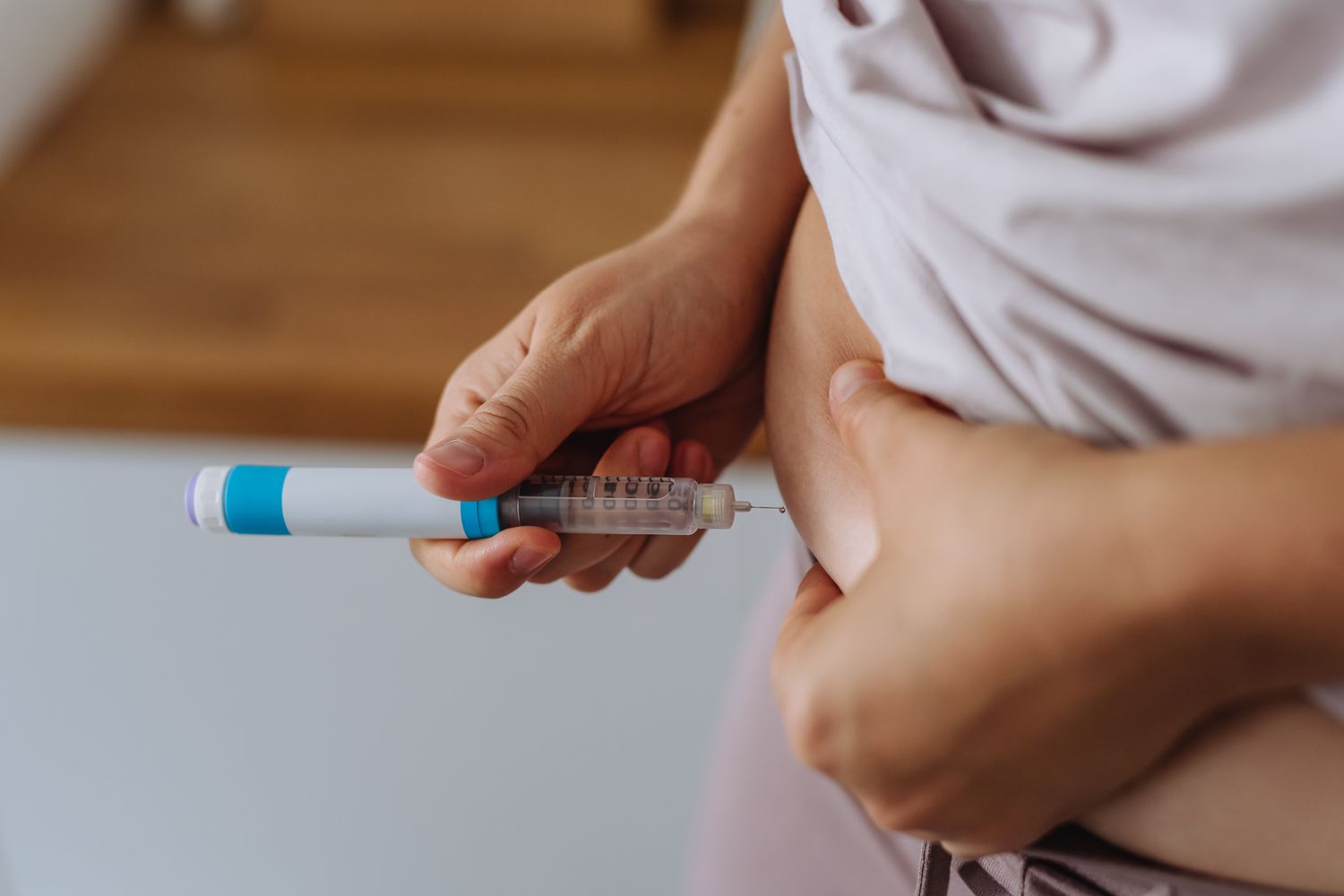
- How to take it: Treatment with semaglutide begins at a low dose that your healthcare provider will gradually increase. It is injected under the skin once a week and can be administered in the stomach, thigh, or upper arm.
- Side effects: Common side effects of the medication are primarily gastrointestinal (GI)-related, such as nausea or vomiting, diarrhea, stomach pain, gas, indigestion, and constipation.
In January 2026, an FDA-approved oral version of Wegovy for adults became available. Wegovy tablets are taken once daily on an empty stomach. Clinical trials show that oral semaglutide matches the effectiveness of the injected version.
How Effective Is It?
A clinical study evaluated weight loss in participants who used semaglutide at a 2.4 milligram (mg) dose once a week for 68 weeks, equivalent to Wegovy’s highest dose and similar to Ozempic’s highest dose (2 mg).
Compared to a placebo, more people using semaglutide experienced weight loss of:
- 5% or more (86% vs. 32%)
- 10% or more (69% vs. 12%)
- 15% or more (51% vs. 5%)
The average weight reduction for those on semaglutide was about 34 pounds, while those on placebo lost just under 6 pounds.
Additionally, semaglutide users saw improvements in heart health, including lower blood pressure and cholesterol levels, and reported enhanced physical functioning.
Ozempic vs. Wegovy
Ozempic and Wegovy are both once-weekly injectable prescription medicines containing the active ingredient semaglutide. They can be injected into the stomach, upper arm, or thigh. While they differ in their FDA-approved uses, both drugs are often prescribed to aid in weight loss, usually along with lifestyle changes like diet and exercise.
2. Saxenda (Liraglutide)
Saxenda, like Ozempic and Wegovy, is a brand-name injectable GLP-1 agonist. Its active ingredient is liraglutide. Saxenda is approved by the FDA for chronic weight management in:
- Adults with obesity
- Overweight adults who have at least one weight-related health condition
- Adolescents 12 years of age and older who have obesity
Other important information about Saxenda for weight loss:
- How it works: As a GLP-1 agonist, Saxenda works the same way as Ozempic and Wegovy and is also generally recommended to be used along with lifestyle changes.
- How to take it: Saxenda is injected subcutaneously in the stomach, thigh, or upper arm. Your healthcare provider gradually increases the dose. Saxenda is injected once daily rather than once weekly.
- Side effects: Common side effects of Saxenda include stomach problems like nausea, vomiting, diarrhea, constipation, and upset stomach. Other common side effects may include dizziness, tiredness, headache, injection site reactions, and low blood sugar.
- Its effectiveness: In a 56-week clinical study, people who used Saxenda lost an average of about 18 pounds, compared to 6 pounds in those who received a placebo. A higher percentage of people who used Saxenda had a weight loss of 5% or more compared to placebo (63% vs. 27%) and 10% or more (33% vs. 11%) at week 56.
A Word From Verywell
Determining which weight loss injectable is appropriate for you can depend on a few factors. This includes comorbidities (e.g., diabetes, thyroid disorders), frequency of injection, cost, and/or age. Desired weight loss can also help narrow down the choice, as some options have a greater success rate than others or may work more quickly.
:max_bytes(150000):strip_icc()/LindsayCookPharmD-cfa1d977313f4279af1af85443c3cc85.jpg)
3. Mounjaro and Zepbound (Tirzepatide)
Mounjaro and Zepbound are brand-name injectable prescription medicines containing the active ingredient tirzepatide. These medications are glucose-dependent insulinotropic polypeptide (GIP) receptors and GLP-1 receptor agonists.
Their FDA-approved uses vary, however:
- Mounjaro (tirzepatide) is FDA-approved to improve blood sugar control in adults with type 2 diabetes. It is also prescribed off-label for weight loss.
- Zepbound (tirzepatide) is FDA-approved for chronic weight management in adults diagnosed with obesity or overweight who have at least one weight-related medical condition. Zepbound is also FDA-approved for obstructive sleep apnea (OSA).
In 2024, the FDA approved Zepbound (tirzepatide) for the treatment of moderate to severe OSA in adults with obesity, to be used in combination with diet and exercise. Zepbound is the first and only FDA-approved medication to treat OSA.
Other important information about tirzepatide for weight loss:
- How it works: Tirzepatide acts on GIP and GLP-1 receptors to help control appetite and food intake.
- How to take it: You’ll start tirzepatide at the lowest dose, which will be gradually increased. Tirzepatide can be injected subcutaneously once a week into the stomach, thigh, or upper arm. Like other weight loss injections, it is recommended to use this alongside lifestyle changes.
- Side effects: Common side effects are GI-related, such as nausea, vomiting, diarrhea, constipation, stomach pain, burping, and indigestion. Injection site reactions are also possible.
How Effective Is It?
In a clinical study, people received various doses of tirzepatide (5, 10, or 15 mg) or a placebo for 72 weeks. The results are as follows:
- People who received 5 mg of tirzepatide lost about 15% of body weight, those who received 10 mg lost about 20%, and those who received 15 mg lost about 21%. People who received a placebo lost about 3% of body weight.
- 85% of people who received 5 mg of tirzepatide lost 5% or more of their weight, while 89% using 10 mg and 91% using 15 mg also achieved this. In comparison, only 35% of people receiving a placebo lost that much weight.
- Also, 50% of those using 10 mg and 57% using 15 mg lost 20% or more of their weight, compared to just 3% of the placebo group.
Boxed Warning for GLP-1 Receptor Agonists
All GLP-1 receptor agonists have a boxed warning, which is the most serious warning required by the FDA. These types of medications have caused thyroid cancer in animal studies. It is not known if this applies to humans.
All individuals who use these medications should be alert to symptoms of a thyroid tumor, such as a lump in the neck, a hoarse voice, and difficulty breathing or swallowing. People with a personal or family history of medullary thyroid carcinoma, as well as people with Multiple Endocrine Neoplasia syndrome type 2 (MEN 2), should not use these medications.
4. Botox (OnabotulinumtoxinA)
Botox (onabotulinumtoxinA) has many approved uses, including both medical and cosmetic. It has been studied for its use as an injectable treatment for obesity, although it is not approved for this:
- How it works: Botox for weight loss works by relaxing the muscles in the stomach wall, which helps keep food in the stomach longer, slows digestion and makes you feel fuller faster and for a longer period.
- How to take it: The injection is performed as an outpatient procedure in an endoscopy center, where the stomach muscles are injected with botulinum toxin A. While you are under sedation, the surgeon uses an endoscope, which goes through the mouth into the stomach, to guide the injections. The effects of these injections last for about three months, but the procedure can only be repeated every six months.
- Side effects: While most people do not experience side effects, some may have a very small amount of bleeding in the stomach.
- Its effectiveness: Studies have found that Botox can lead to a weight loss of between 5% and 10% over six months.
However, this procedure is more complex than the weight loss injections listed above.
Other Injection Sites
Botox for weight loss is injected in a very specific way, and at this time, other injection sites besides the stomach are not used.
Ozempic, Wegovy, Saxenda, Mounjaro, and Zepbound can all be injected into the thigh, stomach, or upper arm area. While you or another trained person can administer the injection into the stomach or thigh, you will generally need another person to inject the upper arm area because it is too difficult to reach by yourself.
You should always rotate injection sites with each dose so that you are not injecting into the same place each time.
:max_bytes(150000):strip_icc()/IMG_9695-8b4dc875a72440b48ade68c160fc970b-0f69e10a6856432c81f7663e477daebd.jpg)