

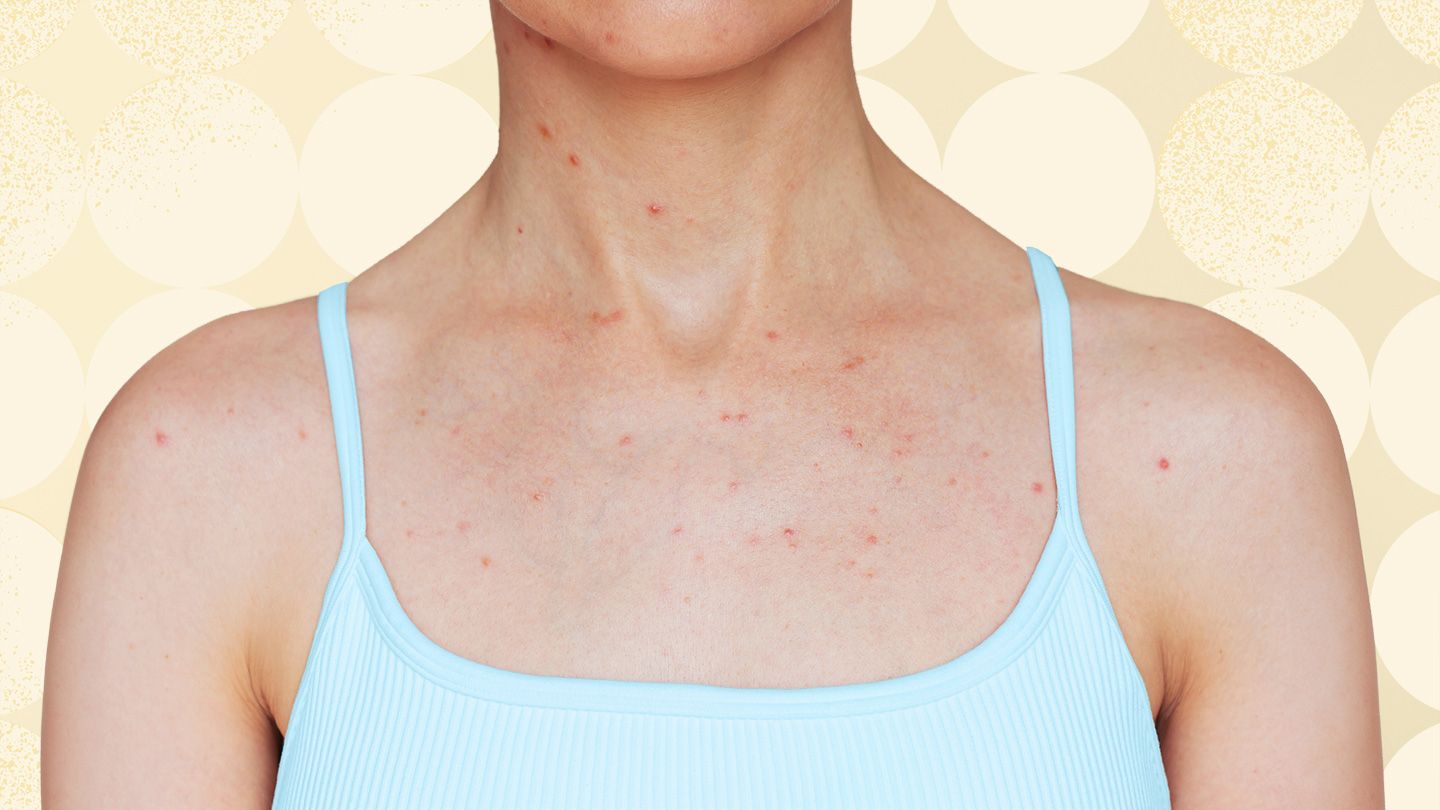
The good news is that body acne is highly treatable. Options range from at-home care to prescription medications to in-office procedures. Lifestyle changes can also help prevent acne in the first place.
At-Home Skin Care
“Many of the same at-home approaches we use for facial acne are also effective for body acne,” says Chheda. She often recommends the following strategies.
- Use benzoyl peroxide face wash to reduce acne-causing bacteria.
- Use salicylic acid body wash, lotion, or cream to exfoliate dead skin cells to keep pores clear.
- Use azelaic acid lotion or serum to reduce inflammation, especially for people with skin of color who are at risk from scarring.
- Use topical cream or gel retinoids to improve skin turnover and keep pores clear.
If a fungal skin infection is the source of your body acne, Leszczynska may recommend washing your skin with an anti-dandruff shampoo containing ingredients such as zinc pyrithione, selenium sulfide, or ketoconazole. “These ingredients have antifungal properties and can help reduce the yeast overgrowth,” she explains. Allow the anti-dandruff shampoo to sit on the skin for three to five minutes before rinsing, advises Leszczynska.
Prescription Medications
Medical Procedures
In-office procedures may be an option if prescription medications don’t provide the results you’re looking for. Chemical peels that use salicylic or glycolic acid to exfoliate and remove damaged outer skin layers, or the laser treatment AviClear (which reduces oil gland activity), may be an option for moderate or severe acne, says Chheda.
Lifestyle Adjustments
If you’re prone to body acne, it’s key to keep skin clean and reduce friction. So, be sure to change out of sweaty clothes promptly, says Johnson.