

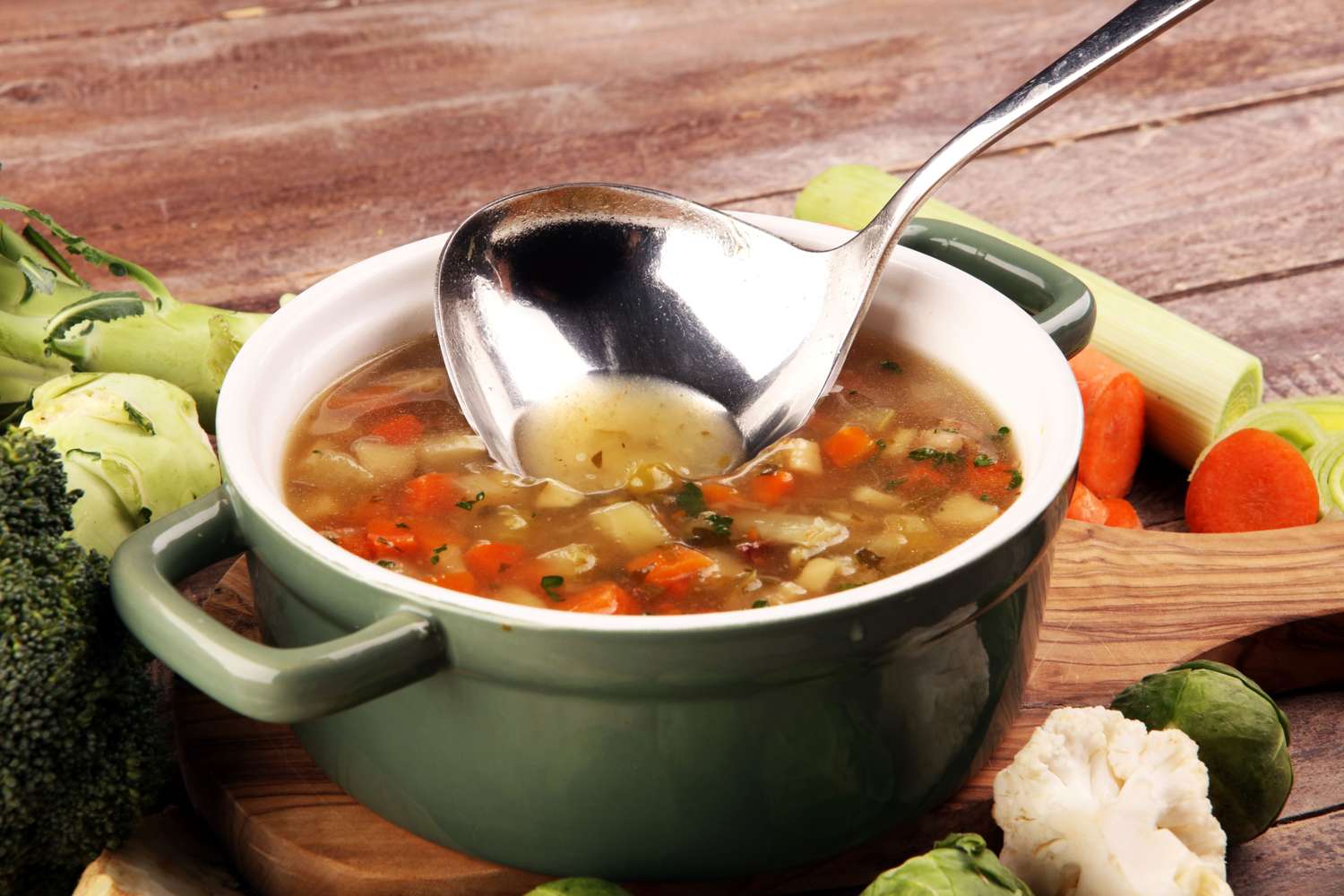
Many canned and restaurant soups contain nearly the entire recommended daily value (DV) of sodium in a single bowl. increasing the risk of high blood pressure and cardiovascular disease. The good news is that with the right ingredients and preparation, soup can be a satisfying, blood-pressure-friendly meal.
1. Lentil Vegetable Soup
Crispin la valiente / Getty Images
Lentil vegetable soup is one of the best choices for blood pressure control. Lentils are rich in potassium and magnesium, which help lower blood pressure in different ways:
- Potassium helps the body rid itself of excess sodium.
- Magnesium acts as a natural calcium channel blocker, lowering blood pressure in a way similar to calcium channel blocker drugs used to treat hypertension (high blood pressure).
- Lentils are also a rich source of soluble fiber, which may help indirectly reduce arterial stiffness and improve vasodilation (the relaxation and widening of blood vessels) by lowering low-density lipoprotein (LDL) cholesterol and promoting a healthy gut microbiome (the community of microbes in the gut).
- Legumes and fiber are core components of the Dietary Approaches to Stop Hypertension (DASH) diet, which has been shown to lower systolic blood pressure by up to 11 mm Hg in some individuals.
Lentil soup made with no-salt-added vegetable broth offers the following nutritional value per 1-cup serving:
- Calories: 163
- Dietary fiber: 8 grams (28% of DV)
- Potassium: 491 milligrams (10% of DV)
2. Homemade Tomato Basil Soup
EJGrubbs / Getty Images
Tomatoes are naturally high in potassium and contain a potent antioxidant, lycopene, which helps improve the elasticity and function of blood vessels.
Potassium is especially important for blood pressure control. According to the National Academies of Sciences, adults should aim for 2,600 to 3,400 milligrams of potassium per day, depending on sex, to counteract sodium’s effects on blood pressure.
When made with low-salt canned tomatoes and no-salt-added stock, homemade tomato basil soup delivers roughly the following nutritional value per cup:
- Calories: 107
- Dietary fiber: 3 grams (10% of DV)
- Potassium: 469 milligrams (10% of DV)
3. Chickpea, Macaroni, and Spinach Soup
LauriPatterson / Getty Images
This Mediterranean-style soup combines two ingredients strongly associated with lower blood pressure:
- Chickpeas provide potassium and soluble fiber.
- Spinach supplies high amounts of magnesium and dietary nitrates. Nitrates are compounds that increase the production of nitric oxide (NO), a colorless gas that triggers vasodilation.
- Both the DASH and Mediterranean diets emphasize legumes and leafy greens as foods important for the prevention and control of hypertension.
When made with no-salt-added broth, chickpea-macaroni soup offers roughly the following nutritional value per one-cup serving:
- Calories: 329
- Dietary fiber: 9 grams (32% of DV)
- Potassium: 559 milligrams (12% of DV)
4. Barley Mushroom Soup
cheche22 / Getty Images
This soup can be part of a blood-pressure-friendly diet in these ways:
- Barley and mushrooms both contain beta-glucan, a type of soluble fiber that helps lower “bad” low-density lipoprotein (LDL) cholesterol and improve insulin sensitivity—both of which are factors for hypertension and heart disease.
- Whole grains like barley and oats are a core component of the DASH diet, with guidelines suggesting at least three servings per day for blood pressure control.
- Mushrooms also add natural umami flavor, reducing the need for salt. Dried, reconstituted mushrooms further enhance this effect.
When made with no-salt-added broth, barley mushroom soup offers the following nutritional value per cup:
- Calories: 251
- Dietary fiber: 7 grams (25% of DV)
- Potassium: 740 milligrams (16% of DV)
5. Butternut Ginger Soup
This perfect winter soup, rich and comforting without the need for cream, offers among the highest amounts of potassium per serving.
Butternut squash is particularly rich in potassium, delivering around 600 milligrams per cup of cooked vegetable. Acorn squash offers even more, clocking in at around 900 milligrams.
Ginger, the ideal partner for butternut soup, contains compounds like gingerols and shogaols that act as mild calcium channel blockers and moderately improve vascular function. The bold, spicy flavor also undercuts the need for salt.
Per one-cup serving, squash soups made with no-salt-added broth offer:
- Calories: 127
- Dietary fiber: 5 grams (18% of DV)
- Potassium: 683 milligrams (14% of DV)
How to Choose Blood-Pressure-Friendly Soups
The American Heart Association recommends that adults consume no more than 2,300 milligrams (mg) of sodium per day, with an ideal limit of 1,500 mg for people with hypertension.
Whether cooking at home or shopping for soup in stores, follow these guidelines:
- Aim for soups with 140 mg of sodium per serving or less (defined by the Food and Drug Administration as “low sodium”).
- Choose no-salt-added broths and no-salt-added canned or fresh vegetables when making soup.
- Avoid bouillon cubes or soup flavoring packs that may contain up to 1,000 mg of sodium.
- Avoid adding high-sodium processed meats such as ham, sausage, or bacon.
- Flavor with herbs, spices, citrus, garlic, vinegar, and mushrooms instead of salt.
:max_bytes(150000):strip_icc()/Denjay_photo-56f3c0ca5f9b5867a1cc4ccb.jpg)