
7 Healthy Foods for Menopause

7 Healthy Foods to Eat During Menopause

Here are seven foods that can help you control your weight, reduce the risk of chronic conditions, and even manage some of the symptoms that can come with menopause.

1. Fortified Yogurt

Yogurt (dairy and fortified) can be a great source of vitamin D and calcium, says Coates. This vitamin-and-mineral combo shores up bone health (which matters during menopause, a time commonly marked by bone density loss) and also helps keep other bodily systems and organs functioning, including your muscles, heart, and nerves, she says.

Vitamin D isn’t naturally found in most foods, according to the National Institutes of Health (NIH).

 Fortified foods — those with added nutrients or vitamins — provide most of the vitamin D in our diet. Milk is the most common example, as almost all of the U.S. milk supply is voluntarily fortified with 100 international units per cup.

2. Lean Protein

Chicken, turkey, fish, beans, and legumes are all good sources of lean protein, which can keep you fuller, longer. By upping your protein intake during menopause, you’ll be less hungry later on and less likely to overeat, which can help lower the risk of weight gain, says Coates. “Protein is one of the macronutrients that your body needs for retaining muscle mass that you have, especially if you have a fitness program that you’re following,” she says.

Protein needs during menopause are 1.0 to 1.2 grams (g) per kilogram of bodyweight.

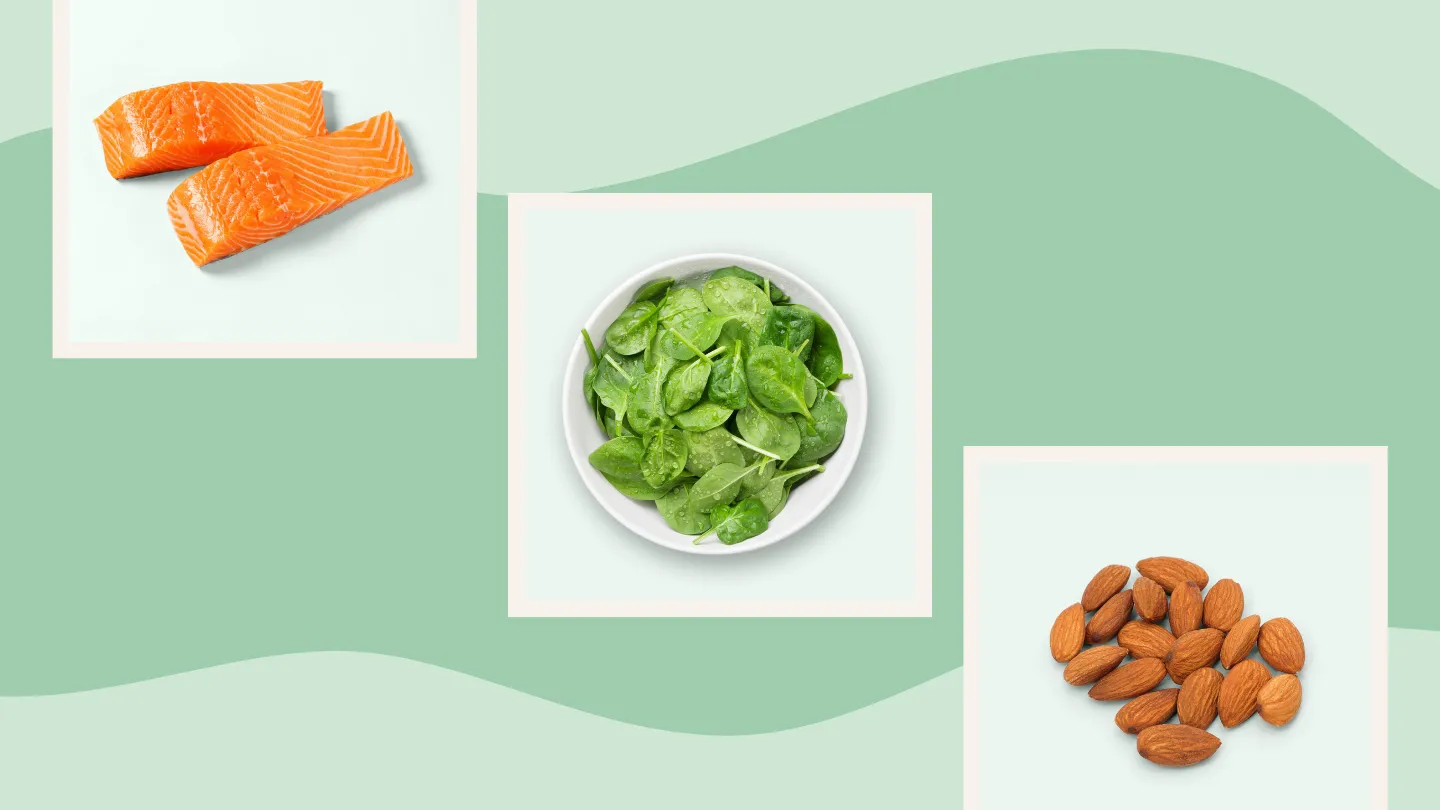
3. Salmon

This fish is a great source of omega-3s and healthy fats, which are important at any age, including menopause, says Coates. Some research suggests that increasing your omega-3 intake can possibly boost your mood, in part because omega-3s might lower inflammation levels in the body.

“It’s been found that people with low levels of omega-3s are more likely to have anxiety or depression,” says Coates. Boosting your omega-3s might help you manage some of the mood swings that come with menopause, she adds.

In addition to packing omega-3s, salmon is a great source of protein. A 3-ounce (oz) filet has 16.8 g of protein, according to the U.S. Department of Agriculture (USDA).

Salmon and other animal sources, such as chicken and beef, contain vitamin B12, which plays a role in regulating serotonin and dopamine — important neurotransmitters that impact how you feel — says Coates.

4. Water

Our bodies are mostly made of water, and we need to continually replenish it. As we get older, beginning at about age 20, the amount of water in our bodies can decrease.

 “This makes us susceptible to dehydration, which can lead to low energy levels,” says Coates. The resulting fatigue can make menopause symptoms even worse.

A good way to remind yourself to stay hydrated is to keep a bottle of water with you throughout the day and refill it to meet your hydration needs, which vary by body weight.

5. Spinach

This leafy green is one of the best food sources of magnesium, says Coates. Just 3.5 oz of spinach packs 93 milligrams (mg) of magnesium, according to the USDA,

 which goes a long way toward the daily recommendation of 320 mg for women over age 30.

Magnesium is one of the most abundant minerals in the body and is needed for hundreds of enzymes to do their work, she says, including protein synthesis, blood pressure regulation, and muscle and nerve function.

Research has found associations between magnesium deficiency and higher levels of stress and anxiety and difficulty relaxing, which can all affect menopause symptoms, says Coates.

 Adding magnesium to your diet may also help you relax and lessen the symptoms of insomnia, she adds.

6. Almonds

Almonds are a good source of both protein and fiber: Just 50 g of almonds (less than one-half cup) packs 10.7 g of protein and 5.4 g of fiber into 313 calories, according to the USDA.

That’s an especially ideal ratio for fiber, according to the Academy of Nutrition and Dietetics, which recommends that women aim to eat 14 g of fiber for every 1,000 calories they consume.

 Not only is fiber important for digestive health, it can also help you feel fuller longer, which can help keep your weight at a healthy level, says Coates.

Plus, almonds are rich in calcium and magnesium, two nutrients that are good for bone health, she says. Magnesium is involved in bone formation and aids the cells that control bone building and growth. There is evidence that a magnesium deficiency might be a risk factor for osteoporosis, according to the NIH.

Almonds also contain vitamin E, which, in larger amounts, has shown to offer some relief from mild hot flashes, according to a systematic review published in 2022.

7. Quinoa

Whole grains are part of a healthy diet for women going through menopause, says Coates. Quinoa contains protein, fiber, B vitamins, and magnesium. Plus it’s a gluten-free grain that has a higher nutritional value than most traditional grains, she says.

Bonus: The fiber and protein found in quinoa can help boost your satiety levels, says Coates.