

:max_bytes(150000):strip_icc():format(jpeg)/GettyImages-1144871017-5ca3ba6ab88f4b2780eb63b0843b5f57.jpg)
Key Takeaways
- Skin peeling between the toes can be caused by a fungal infection (athlete’s foot), bacterial infections, underlying health conditions, and damp feet.
- Treatment options vary but may include topical creams or ointments, medications, and phototherapy.
- Practice good hygiene, wear sandals in public showers, and keep the feet warm, clean, and dry to help prevent it.
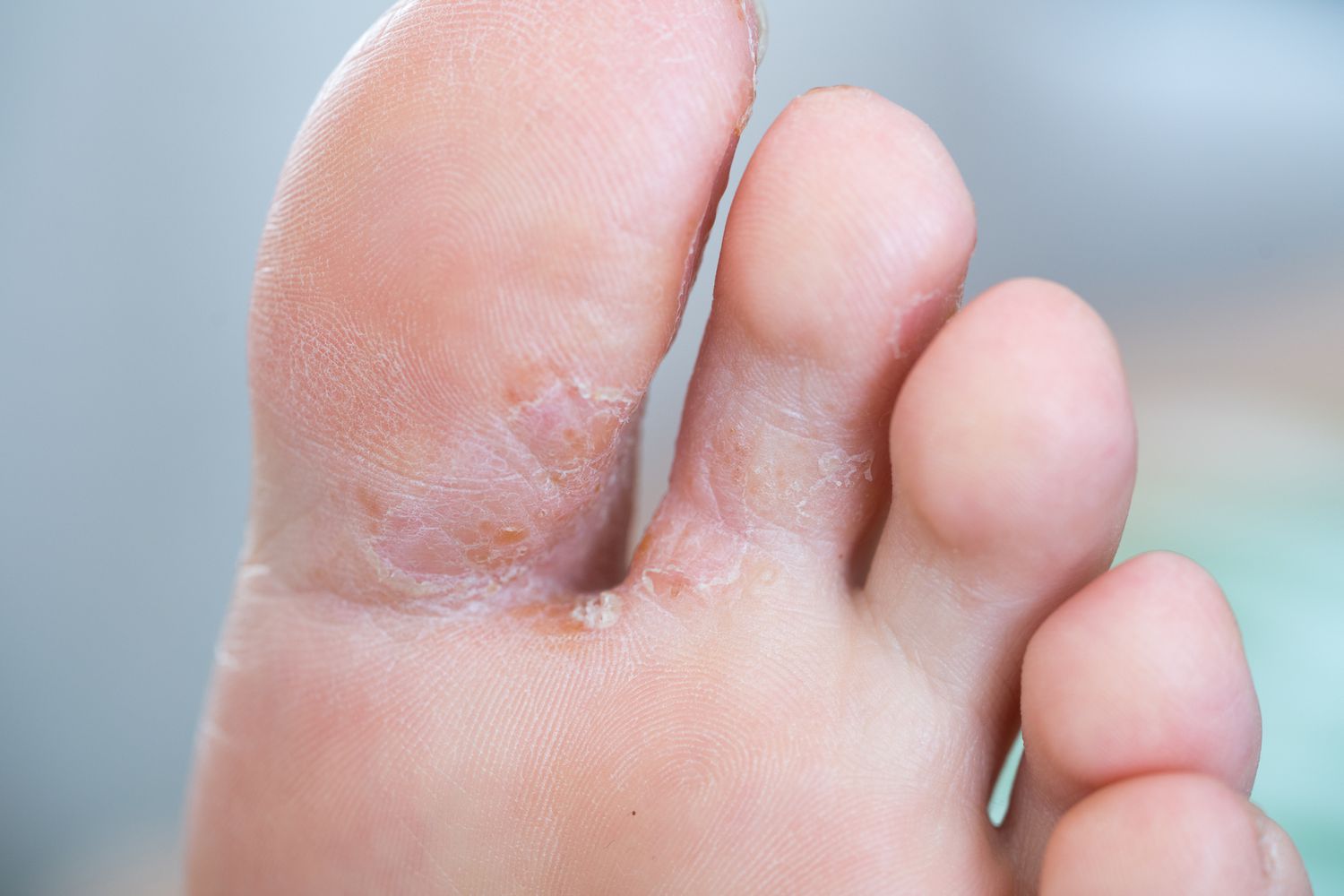
Skin peeling between the toes has several potential causes, including athlete’s foot, healing skin, damp environments, and eczema. Treatment depends on the cause and may include antifungal cream, topical corticosteroids, or antibiotics.
Burak Karademir / Getty Images
1. Athlete’s Foot
Athlete’s foot, also known as tinea pedis, is a fungal skin infection. This fungus thrives in warm, damp places such as locker rooms, pools, and showers. You don’t have to be an athlete to get it.
Symptoms may include:
- Skin peeling or scaling between the toes
- Blisters or cracks in skin between the toes
- Swelling or inflammation at breaks in the skin
- Itching and burning between the toes
- Dry-looking skin
In some cases, infected skin may lead to an unpleasant odor between the toes.
Studies suggest more than 70% of people in the United States will experience athlete’s foot at some stage in their life.
2. Skin Ulcers or Wounds
Any trauma between your toes, like stepping on something sharp or having a friction blister, goes through healing stages. As new skin forms, the old skin will peel away.
People with diabetes may develop open sores, known as diabetic ulcers, even between the toes. Due to peripheral neuropathy (nerve damage), they might not feel these ulcers. Diabetes can reduce blood flow in the feet, slowing healing. It also raises the risk of fungal infections between the toes, complicating ulcer recovery.
3. Shoe Contact Dermatitis
Contact dermatitis happens when skin touches something irritating.
Shoes can be made from various materials, such as:
- Glue
- Fabric
- Plastic
- Rubber
- Leather
Several chemicals are used in the production of leather and rubber for shoes. Skin coming into contact with any of these materials can cause contact dermatitis.
Chemicals in these materials can trigger contact dermatitis. Symptoms may include:
- Flaky skin
- Itchy skin
- Tender skin
- Burning sensation
- Rash
- Stinging
- Blisters
- Hives
If the skin is no longer in contact with the substance that is causing irritation, contact dermatitis may clear up on its own. In some cases, treatments like creams or ointments may be required.
4. Dyshidrotic Eczema
Dyshidrotic eczema is a type of eczema that leads to itchy blisters on the hands, feet, toes, and fingers. It is more frequent in people with other eczema types and can be hereditary.
This eczema affects only the hands and feet, including between the toes. Symptoms may include:
- Rash
- Painful blisters
- Itching
- Burning sensation on the skin
- Reddening of the skin
- Peeling of the skin once blisters heal and dry
5. Cellulitis
Cellulitis is a bacterial skin infection. It is most commonly caused by Staphylococcus or Streptococcus bacteria. All skin has bacteria living on its surface, but a skin infection can occur when there is a crack or break in the skin.
Skin peeling between the toes is a risk factor for developing cellulitis. Also, the affected skin may peel later in the course of cellulitis.
Cellulitis can cause a variety of symptoms, including:
- Redness of the skin
- Inflammation of the skin
- Skin sores that grow quickly
- Skin rash that spreads quickly
- Fatigue
- Pain in the areas affected
- Stretched, glossy or tight skin
- Skin that is warm to the touch in red areas
- Fever
- Chills
- Sweating
- Muscle aches
- Joint stiffness
- Vomiting
- Nausea
As the skin heals, it may also peel and fall off.
6. Dry Skin
It’s possible to have dry skin on your feet, including between your toes. Dry skin, also called xerosis, can cause flaky, cracked, slightly itchy skin. You might also notice it happening in other places on your feet, especially around your heel.
7. Trench Foot
Also called immersion foot, trench foot is a condition caused by feet being exposed to damp, cold conditions for an extended period. Trench foot was common among soldiers in World War I. They had to stand in trenches filled with water and mud for long periods.
Symptoms include:
- Tingling
- Itching
- Numbness
- Odor
- Blotchy skin
- Blisters
- Open sores
- Skin peeling
How It’s Diagnosed
Your healthcare provider will do a physical exam to help determine the cause of peeling skin. Some conditions, like athlete’s foot, may be diagnosed just by looking at your skin. Other times, you may need further testing, including the following:
- KOH exam, which involves scraping a small sample of skin to examine under a microscope
- Skin culture, in which a small sample is sent to a lab to look for viruses or bacteria
- Skin biopsy, which may help to identify a fungus
How It’s Treated
Treating skin peeling between the toes will depend on the underlying cause.
- Athlete’s foot requires treatment with a medicated antifungal powder or cream. These can be available over-the-counter, but more severe cases may be treated with prescription medications.
- Cellulitis is typically treated with antibiotics.
- Dyshidrotic eczema may be treated with topical corticosteroids, phototherapy (exposure to ultraviolet light), or oral steroids.
- Dry skin can be relieved with moisturizers after bathing.
- Trench foot is treated with slow rewarming of the feet, pain control, and keeping the feet dry.
- Shoe contact dermatitis can be treated by avoiding whatever is causing the irritation. Medications, ointments, and a cool compress are also treatment options.
Prevention
While it is not always possible to prevent all of the causes of skin peeling between the toes, some steps can prevent it:
- To avoid athlete’s foot, change socks when damp, wash your feet daily, and dry well between the toes. Wear sandals in public showers, pool areas, and gyms.
- Avoid taking hot showers to prevent dry skin.
- To prevent cellulitis, keep the skin moist to avoid cracking. If the skin breaks, clean the area with soap and water. Take steps to avoid harming the skin.
- Trench foot can be prevented by keeping feet clean, dry, and warm.
- Shoe contact dermatitis can be prevented by avoiding irritants that cause symptoms.
When to See a Healthcare Provider
Whether or not you need to see a healthcare provider will depend on the severity of your symptoms and their underlying cause. A simple athlete’s foot infection can be treated with over-the-counter products and typically heals within a few weeks, for example.
However, diabetic ulcers always need to be treated and monitored by a healthcare provider, and conditions like cellulitis or even contact dermatitis may require prescription medications.
Contact your healthcare provider if you have peeling skin between the toes that doesn’t heal over time or bothers you. Seek immediate medical care for signs of cellulitis, such as hot, red, taut skin, or a rash or sores spreading or streaking up the leg or arms.