

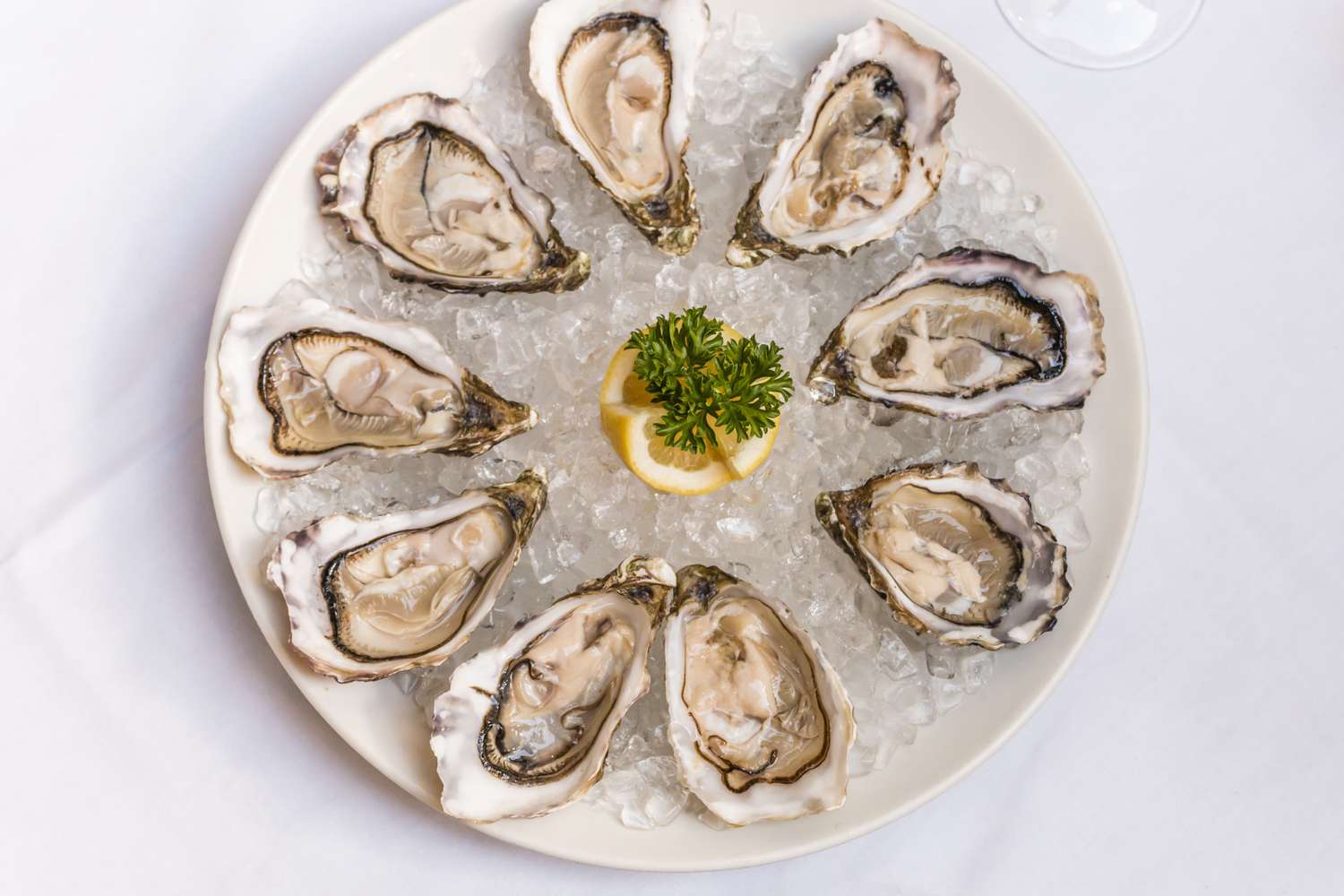
Getting enough essential nutrients is vital, and zinc is one mineral that the body needs for immune health and other bodily functions.
Adults require between 8 and 11 milligrams (mg) per day, though daily needs vary by age and typically increase as you get older. While red meat is a good source of zinc, those who don’t eat it can find zinc in many other foods.
1. Oysters
Carlo A / Getty Images
Serving: 3 ounces (oz)
Zinc: 28.2 mg
Oysters are considered the top source of zinc because they contain more than any other food, including beef. Each 3-oz serving (approximately three medium-sized oysters) contains 28.2 mg of zinc, which is 291% of the daily value. By comparison, 3 oz of bottom sirloin beef (roasted) provides 3.8 mg and 35% of the daily value.
2. Blue Crab
lingqi xie / Getty Images
Serving: 3 oz of cooked blue crab
Zinc: 3.2 mg
Cooked blue crab is another zinc-rich option. For only 3 oz, you will get roughly 3.2 mg of zinc and 29% of the daily value.
3. Oats
Natalia Gdovskaia / Getty Images
Serving: 1 cup of oats
Zinc: 2.3 mg
Oats are rich in a variety of nutrients, one of which is zinc. Each 1-cup serving provides 2.3 mg of zinc.
4. Pumpkin Seeds
Xvision
Serving: 1 oz of pumpkin seeds
Zinc: 2.2 mg
While nuts and seeds are a great source of zinc, pumpkin seeds reign supreme with roughly 2.2 mg per 1-oz serving.
Nuts and Seeds and Zinc
Nuts and seeds are a great source of zinc for many people, especially those who do not eat animal products. Other nuts and seeds that provide a good amount of zinc include cashews and Brazil nuts.
5. Fortified Breakfast Cereals
Brent Hofacker / 500px / Getty Images
Serving: 1 cup of cereal
Zinc: 1.5 mg
Many fortified breakfast cereals have up to 25% of your daily value needs of zinc, depending on the type. For example, a bowl of Cheerios (approximately one cup of cereal) provides 1.5 mg of zinc. If you avoid animal products, cereal can be a good option.
6. Turkey Breast
peredniankina / Getty Images
Serving: 3 oz of roasted turkey breast
Zinc: 1.5 mg
Turkey is a lean meat option that people can include in their diet to increase their zinc intake. One 3-oz serving of roasted turkey breast contains 1.5 mg of zinc.
7. Cheddar Cheese
Erika Bunea / 500px / Getty Images
Serving: 1.5 oz of cheese
Zinc: 1.5 mg
Cheddar cheese contains 1.5 mg of zinc per 1.5-oz serving, providing a significant amount of zinc in a relatively small portion.
8. Shrimp
Rizky Ade Jonathan / Getty Images
Serving: 3 oz of cooked shrimp
Zinc: 1.4 oz
Another seafood option, shrimp, provides you with 1.4 oz of zinc per 3 cooked ounces.
9. Lentils
Odu Mazza / Getty Images
Serving: 1/2 cup of cooked lentils
Zinc: 1.3 mg
Lentils are a great source of zinc for those who don’t eat meat, and contain many other nutrients that are often found in meat, such as protein and iron. Per half-cup of boiled lentils, you will get 1.3 mg of zinc.
Fortified Lentils
Sometimes, lentils are fortified during the production process to increase their nutrient content or enhance the bioavailability of nutrients. If you consume fortified lentils, the amount of zinc you get may be higher than what is traditionally found in non-fortified varieties.
Why Does Your Body Need Zinc?
Zinc is a mineral that the body requires to perform many tasks. For example, zinc plays a crucial role in the immune system’s function, and inadequate levels can lead to a weakened immune response.
Other benefits of eating enough zinc include:
- Lowered inflammation and oxidative stress (an imbalance between antioxidants and highly reactive free radicals that can damage cells)
- A reduced risk of developing age-related diseases
- Better wound healing
- Improved fetal development during pregnancy and growth during childhood
Zinc also plays a role in other functions, including enzyme activity, protein and DNA synthesis, and cell signalling and division.
:max_bytes(150000):strip_icc()/VerywellBioPicAngelicaBottaro-203f7e803ab444b2b5c13b4252d11159.JPG)