

| | |
| Canned Goods: •Low-sodium chicken or veggie broth (at least 28 ounces) •2 (5-ounce) cans water-packed chunk light tuna •1 (15-ounce) can white beans •1 (15-ounce) can garbanzo beans •1 small jar capers •1 small jar kalamata olives •2 (15-ounce) cans black beans •2 (8-ounce) cans enchilada sauce •Unsweetened tart cherry juice (at least 8 ounces) Pantry Items (you likely have many of these on hand): |
Meat and Seafood: •12 ounces fresh salmon •Chicken breast (at least 8 ounces) Frozen Foods: Dairy and Eggs: Bread and Bakery: Fresh Produce: |
Step-by-Step Guide to Prepping Your Meals
This plan is designed for two people. In some cases, where noted, a recipe needs to be doubled or halved.
Use sturdy Tupperware and Mason jars to keep pre-chopped vegetables and leftovers fresh. Store any unused ingredients in their proper places, such as the pantry or fridge.
Shopping Day
You can split these tasks into 2 days if needed.
Breakfast Prep:
- Measure out the mixed berries, cherries, carrots, and almonds (you can use sliced, whole, or another nut—whatever you have available) for your cherry berry smoothie bowl. Store in a zip-top bag in the freezer until the next morning, so you don’t have to measure as much.
Lunch Prep:
- Prepare the tuna salad according to recipe instructions. Note that you can omit the celery (it isn’t listed on the shopping list because this is the only recipe that uses it). You can use cilantro or parsley, depending on what you bought.
- If you don’t have mayonnaise on hand substitute some of the Greek yogurt you bought.
- Keep the rest of the white beans stored in Tupperware in the fridge for the potato soup you’ll make later in the week.
- Pack the salad for lunch, along with one pita each.
- Note: Double the recipe for two people.
Dinner Prep:
- Chop cucumber, tomatoes, and olives to prepare for your easy Greek salad.
- Store in the fridge until Monday’s dinner.
Monday
Breakfast:
- Combine the ingredients frozen on shopping day with the rest of the ingredients listed in the recipe.
Lunch:
- Stuff pitas with the pre-prepped tuna salad and enjoy. Pair with fresh fruit.
Dinner:
- Finish putting together the easy Greek salad according to directions.
- Enjoy the salad with a whole pita bread.
- Store leftovers for lunch the next day.
Snack/Dessert:
- Prepare dark chocolate cake for two according to directions.
- Oat flour is not on the shopping list. You can blend or grind rolled oats to make oat flour instead of buying a new bag, which saves money.
- Enjoy 2-3 Brazil nuts as a snack.
Tuesday
Breakfast:
- Prepare a savory spinach and feta oatmeal bowl according to directions.
- Note: Double this recipe, for two people.
Lunch:
- Enjoy leftover easy Greek salad.
Dinner:
- Prepare vegetable enchiladas according to directions.
- You can use some cilantro or parsley, whichever one you bought, and Greek yogurt and olives as garnishes.
- Pack leftovers for lunch the next day.
Snack/Dessert:
- Prepare garlic parmesan popcorn according to directions.
- Cut apples into slices and pair with 1 tablespoon of nut butter of your choice
Wednesday
Breakfast:
- Prepare brown sugar-baked citrus with honeyed yogurt bowl according to directions.
Lunch:
- Enjoy leftover vegetable enchiladas.
Dinner:
- Prepare pesto-crusted salmon according to directions. If basil leaves have the stem intact, place the rest into a small vase (it’ll keep for up to a week). Alternatively, you can chop it up and freeze or dry it for later use.
- Prepare potato soup according to instructions. You can omit the bacon if you prefer.
- Note: Cut the potato soup recipe in half, to make only 4 cups.
- Enjoy 1 cup of soup with 3 ounces of salmon for dinner.
- Pack leftovers for Thursday’s lunch.
Snack/Dessert:
- Prepare whole grain mini berry crisps according to directions.
- Note: If you don’t have whole wheat flour, swap in some oat flour by grinding or blending two tablespoons of rolled oats. Use any nut you have on hand. The cinnamon and nutmeg add a nice flavor profile. You can buy a package of them if you think you’ll use them down the line, but omit them if you’ll only be using them for this recipe.
- Note: Halve the recipe to make only two servings.
- Pair eight baby carrots with 1-2 tablespoons of hummus.
Thursday Breakfast Prep:
- Prepare peanut butter cup chia pudding according to directions for a grab-and-go breakfast.
- Note: Double the recipe for two.
Thursday Dinner Prep:
- Place chicken for the tabouli salad in the oven at the same time as the salmon, to have it ready for use for Thursday’s dinner. Simply prepare it and sprinkle it with salt and pepper. When cooked, store in Tupperware.
Thursday
Breakfast:
- Enjoy the peanut butter cup chia pudding prepared the night before.
Lunch:
- Enjoy leftover pesto-crusted salmon with a cup of potato soup.
Dinner:
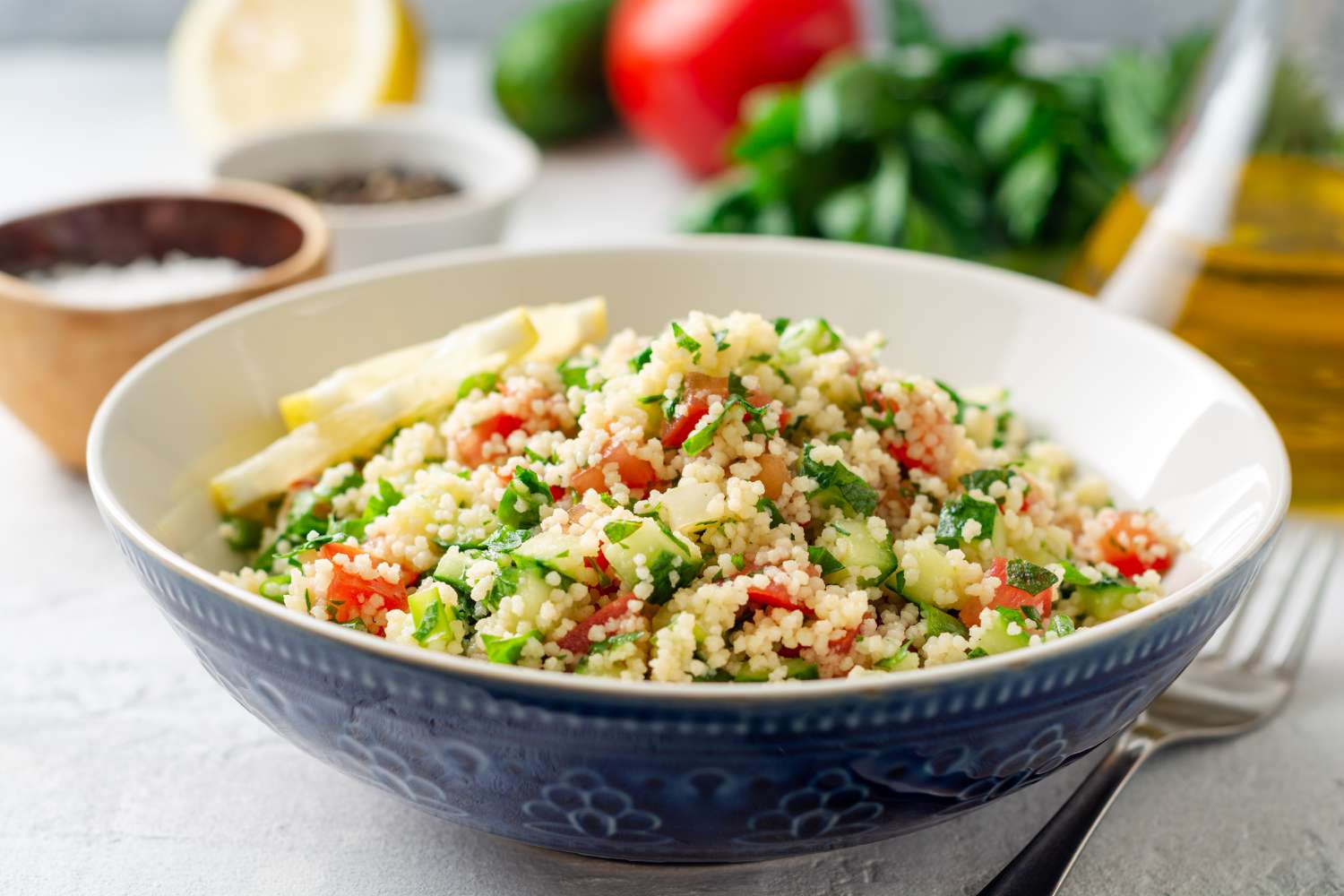
- Prepare tabouli salad according to instructions, using the chicken from the day before. Tip: chop up the vegetables while the quinoa is cooking. Use parsley or cilantro, whichever you bought.
- Serve with fresh fruit
- Pack leftovers for tomorrow’s lunch.
Snack/Dessert:
- Prepare peanut butter banana yogurt parfait according to instructions. Break up the dark chocolate bar and use it instead of the cacao nibs called for in the recipe.
- Popcorn
Friday Breakfast Prep:
- Chop up the onion, bell pepper, garlic, jalapeno, cilantro (or parsley, if that’s what you bought), and tomato to have on hand for quick-cooking your Mexican scramble in the morning.
Friday
Breakfast:
- Prepare Mexican scramble according to directions, using pre-chopped veggies from the night before. Enjoy with a cup of creamy matcha latte, prepared according to instructions.
- Note: double the latte recipe for two people.
Lunch:
- Enjoy leftover tabouli salad with a piece of fruit.
Dinner:
- Prepare black bean tostadas according to directions. Use the rest of your spinach instead of arugula. Omit the red onion.
- Enjoy two tostadas per person.
Snack/Dessert:
- Prepare dark chocolate avocado mousse according to directions.
- Note: Halve the recipe to make only two servings.
Which Foods Could Impact Your Thyroid Health?
Certain foods can affect your thyroid. “Goitrogens” are compounds in plant foods, released when raw cruciferous veggies like kale and broccoli are digested. They can hinder your body’s ability to use iodine, needed for thyroid hormone production.
If you have an iodine deficiency—a common cause of hypothyroidism—goitrogens might pose a problem. Cooking these veggies deactivates goitrogens, reducing their impact. Consult your healthcare provider to address any iodine deficiency.
Soy has isoflavones, which may interact with your medications and affect the thyroid. Discuss with your provider if you need a soy-free diet.
This meal plan is soy-free, and all included recipes have cooked cruciferous veggies to diminish goitrogen effects. While iodine supports thyroid health, too much can worsen thyroid issues.
In some cases, if you receive radioactive iodine therapy, you may be asked to follow a low iodine diet for several weeks before getting your treatment to increase its effectiveness.
Key Dietary Tips for Thyroid Health
The relationship between thyroid disease, metabolism, and body weight is highly complex. Those with underactive thyroids often burn fewer calories at rest, while those with overactive thyroids tend to burn more calories at rest.
Here are a few healthy diet tips to follow when you have thyroid disease:
- Avoid low-calorie diets: Your calorie needs will depend on height, weight, activity level, and gender. It’s important to avoid going on a strict, very low-calorie diet as they often do more harm than good and may slow down your metabolism.
- Eat nutrient-rich foods: Instead of focusing on calories to satiate your hunger, focus on eating nutrient-rich foods to promote satiety while nourishing your body and supporting healthy energy levels.
- Stay hydrated: Pair your meals with refreshing beverages and keep sipping throughout the day. Water is always a smart choice. If you want to switch up the flavors, try peach mint iced green tea, freshly steeped mint and lemon tea, or a light strawberry basil sparkler.
- Work with a dietician: Because thyroid disease can present unique challenges, it’s important to work closely with your healthcare team and registered dietitian to develop a plan tailored to your individual needs.
Are there foods you shouldn’t eat if you have thyroid disease?
Possibly. Soy, for example, may hinder the absorption of certain thyroid medications.
Cabbage and other cruciferous vegetables can alter iodine levels when eaten raw. However, cooking these vegetables can negate these effects.
Iodine-rich foods like kelp may have a negative impact on some people with thyroid disease. Talk to your healthcare provider to find out if there are any foods you need to avoid.
What Is Thyroid Disease?
There are several types of thyroid diseases that can cause your thyroid to make too little or too much of the thyroid hormones.
The thyroid is a small, butterfly-shaped gland in the front of your neck that makes hormones that control your body’s most important functions, including breathing, heart rate, weight, digestion, and mood.
Some of the different thyroid diseases include:
- Goiter: an enlargement of the thyroid gland
- Hyperthyroidism: the thyroid gland makes more thyroid hormones than your body needs
- Hypothyroidism: the thyroid gland does not make enough thyroid hormones
- Thyroid cancer
- Thyroid nodules: lumps in the thyroid gland
- Thyroiditis: swelling and inflammation of the thyroid
Symptoms of hypothyroidism include weight gain, fatigue, dry skin, and sensitivity to cold. Thyroid hormones heavily influence your metabolism, body temperature, and appetite regulation. Having an underactive thyroid (hypothyroidism) slows down your body’s processes, which can lead to weight gain.
:max_bytes(150000):strip_icc()/Untitleddesign-a323e5ba02c44d7b86cc842d63420c70.jpg)