

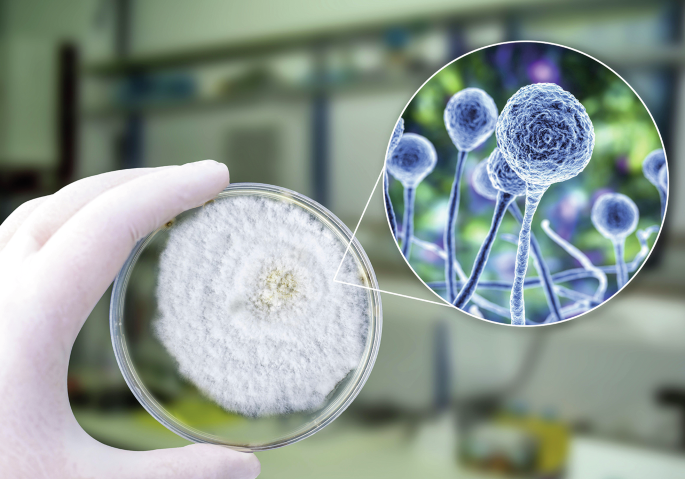
A recent study in Nature describes a new antifungal role for serum albumin, showing it binds and prevents the oxidation of free fatty acids (FFAs), which then render Mucorales fungi avirulent.
Pikoulas et al. initially showed that although sera from healthy individuals inhibits hyphal growth of the clinical Mucorales isolate Rhizopus arrhizus var. delemar (hereafter R. delemar) sera from individuals with mucormycosis had mostly lost this capacity. Severe hypoalbuminaemia is common in individuals with metabolic abnormalities that increase the risk of mucormycosis, so the authors explored whether albumin has antifungal properties. They found that individuals who developed pulmonary mucormycosis had significantly lower serum levels of albumin compared with control individuals with the same underlying disease who developed bacterial or fungal (Aspergillus fumigatus-associated) pneumonia. Very low levels of serum albumin were also linked to greater mortality from mucormycosis. Depleting albumin from the sera of healthy individuals significantly decreased the antifungal activity of the sera against R. delemar but did not affect the response against A. fumigatus. Furthermore, albumin purified from human serum and then added at physiological concentrations to culture medium showed potent antifungal activity against R. delemar.