

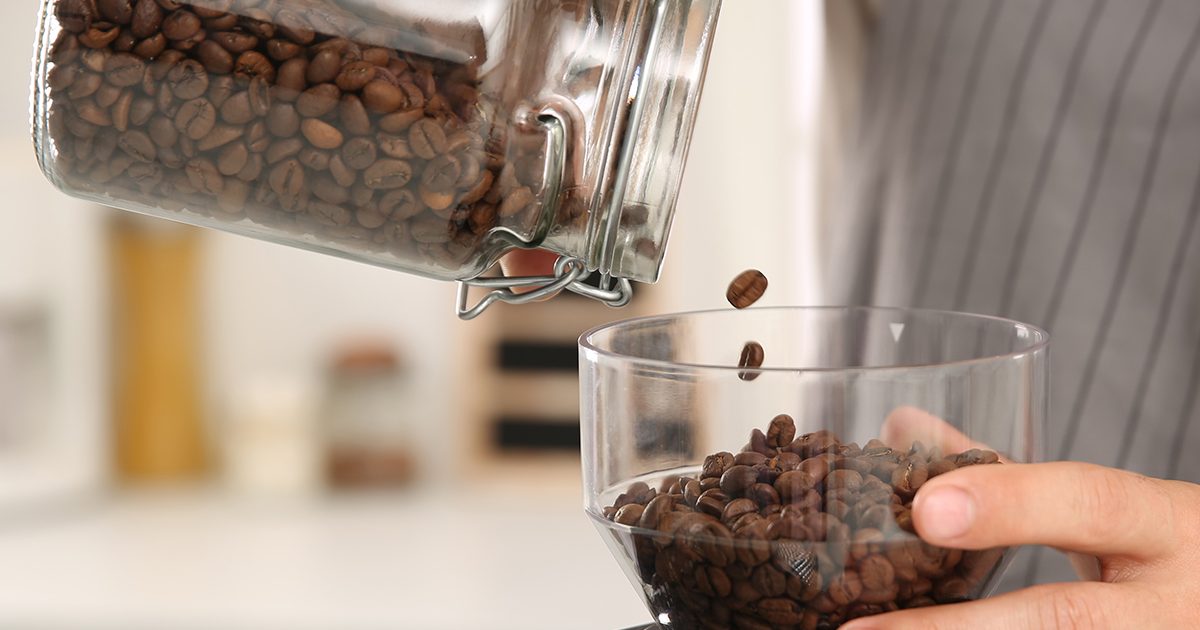
If you’re serious about good coffee, investing in a reliable coffee grinder is a game-changer. Grinding your beans just before brewing ensures you capture the full aroma and flavour, unlike pre-ground coffee, which quickly loses its freshness and potency.
But it isn’t just about unlocking extra flavour – grinding your coffee beans at home also provides more flexibility in your choice of brewing types.
Whether you’re making a strong espresso in a coffee machine or moka pot, a silky pour-over filter coffee or French press, each brew type requires a slightly different consistency of coffee grounds, and most good coffee grinders can be adjusted to achieve the perfect consistency for your chosen method.
There are many different coffee grinders on the market, from simple, manual grinders to high-tech electric models. We’ve researched and tested a wide variety of coffee grinders to suit different needs, budgets and kitchen sizes. Read on for our pick of the best coffee grinders for 2026.
For more inspiration, check out our guide to picking the best coffee machine for your budget. We’ve also outlined our tried-and-tested picks of the best espresso machines, best coffee pod machines, best bean-to-cup coffee machines and best filter coffee machines.
The latest additions were tested and reviewed by Sarah Finley.
Best coffee grinders at a glance
Electric coffee grinders
- Best mid-range coffee grinder: Wilfa Svart Aroma Precision grinder, £135
- Best electric coffee grinder: Fellow Opus grinder, £155
- Best luxury coffee grinder: Smeg Mini Grinder CGF02SSUK, £249.95
- Best everyday coffee grinder: Cuisinart Conical Burr Grinder, £99.99
- Best budget burr coffee grinder: Cuisinart Professional Burr Mill, £59.99
- Best budget blade coffee grinder: Cuisinart Coffee Grinder DCG20BKNU, £24.99
- Most stylish coffee grinder: Smeg CGF01 grinder, £138
- Best coffee grinder for precise results: Sage the Smart Grinder Pro, £209.95
Manual coffee grinders
- Best manual coffee grinder: Kilner coffee grinder set, £46.50
- Best mid-range hand coffee grinder: Hario Mini Mill Plus, £35
Jump to:
How we test coffee grinders
Our reviews experts test coffee grinders based on a range of core and contributing criteria, including product design, the quality of coffee produced and ease-of-use factors likely to affect the experience of domestic users.
The following are all covered in our reviews:
- How easy is it to store and clean?
- How noisy is the grinder?
- What’s the coffee bean capacity?
- Safety and ease of use
- Number of grind options
- Design and aesthetics
- How much non-recyclable packaging is used?

The grinders featured here were selected from a long list of coffee grinders tested by Good Food. They performed best against our list of criteria, relative to other grinders that were either of a similar type or sold at a similar price.
We tested the grinders by using them to grind several varieties of coffee bean, at levels of fineness to suit three of the most common brewing methods: cafetière, filter and espresso machine.
Best coffee grinders to buy in 2026
Wilfa Svart Aroma Precision coffee grinder
Available from Kiss the Hippo (£125), Amazon (£129.85), Borough Kitchen (£135)

Best mid-range coffee grinder
Pros:
- 32 grind settings
- Relatively compact
- Works efficiently
- Made from UV-protected materials
Cons:
- Not suited to espresso
- Some parts feel a little plasticky
Star rating: 5/5
Wattage: 155W
Made by Norwegian kitchenware brand Wilfa, this grinder is an excellent all-rounder for those who enjoy pour-over, French press or AeroPress. There are 32 grind settings in total across five categories, with clear labels on the front of the machine and a 250g bean hopper.
It’s also built with durable stainless-steel burrs, which operated efficiently in test and delivered a consistent grind size each time.
Like the Fellow Opus below, this model relies on a timer that’s adjustable via a dial on the front, allowing for ultra-precise results when dosing for a single cup.
The container and tray also have UV filters to protect against sun damage – because light is no friend to fresh coffee beans. Certain components, like the container, do feel a little plasticky, but otherwise this is an impressively versatile grinder with a large capacity, too.
Available from:
Fellow Opus coffee grinder
Available from Amazon (£195), Harrods (£210)

Best electric coffee grinder
Pros:
- 41 grind settings
- Attractive and compact
- Efficient
- Easy to use
- Mostly recyclable packaging
Cons:
Star rating: 5/5
Wattage: 140W
Understated and intuitive, the Opus grinder comes with 41 grind settings, a volumetric dosing lid to help with measuring beans and a spouted catch to minimise mess. We also love its smooth, rounded shape and textured panel across the top.
There’s capacity for 200g ground coffee, which is enough for about 12 cups, and a simple turn of the dial is all that’s needed to modify the grind size. Grinding is measured in seconds rather than cup size or dose, which means you’ll need to measure your beans out before you grind. While a little inconvenient for some, this allows for ultra-precise dosing and the measurements on the lid do make this easier.
We found the performance excellent: there was solid consistency across the board, with noticeable differences in texture between fine, medium and coarse grounds. The noise the Opus generated wasn’t too intrusive, and the timings were accurate when measured on a stopwatch, too.
Available from:
Smeg Mini Grinder CGF02SSUK
Available from Currys (£249), John Lewis and Partners (£249), Smeg (£249.95)

Best luxury coffee grinder
Pros:
- Aesthetically pleasing design
- 50 micro-grinding settings
- Consistent grinds
Cons:
Star rating: 4.5/5
Lightweight and genuinely attractive, this is one of the easiest grinders to set up and use: it was ready to go within minutes. The Tritan bean hopper holds up to 240g and the transparent, BPA-free plastic makes it easy to see when beans are running low.
There are 50 micro-grinding settings adjusted via a silver lever, though the clearest differences came when switching between the three main settings: superfine, fine and medium. Grounds are produced via a conical burr – generally associated with less heat buildup and more even particle size than blade grinders – and in testing, output was consistent across different settings. It is slightly noisy and at times grounds were dispensed faster than expected, so dose carefully.
At £250, it’s the priciest grinder in this guide. What you’re paying for is build quality, reliable performance and a design that genuinely looks good on a worktop. If aesthetics matter as much as function, it earns its place, but if you’re focused on performance per pound, there are solid options at half the price.
Cuisinart conical burr grinder
Available from Cuisinart (£79.99)

Best everyday coffee grinder
Pros:
- Good value
- 35 grind settings
- Anti-static technology
Cons:
- Practical design
- Some spillage
Star rating: 4/5
At under £100 this is significantly cheaper than the Smeg grinder above, but still gets you a conical burr and 35 grind settings, from ultra-fine to extra-coarse, which is solid at this price point. The boxy black finish won’t win any design awards, but it’s lightweight and takes up minimal worktop space.
The hopper holds up to 225g of beans – around 14 cups’ worth – and comes off easily for cleaning, which matters if you’re using this daily. There is some spillage when grinding directly into a portafilter, though the anti-static technology meant stray grounds wiped off the counter without much fuss. Across settings, grounds were even and doses predictable, though the ultra-fine proved too fine for espresso so it’s worth starting a step up if that’s your main brew method. For French press and filter, it performed well.
It’s not the most refined grinder in this guide, but for everyday use across multiple brew methods, it’s dependable, easy to maintain and reasonably priced.
Available from:
Cuisinart Professional Burr Mill
Available from Cuisinart (£59.99)

Best budget burr coffee grinder
Pros:
- 18 grind settings
- 4-8 cup selector
- Well written instruction manual
- Spare parts are easy to purchase
Cons:
- Very loud in use
- Some non-recyclable packaging
Star rating: 4/5
Wattage: Not specified
Most burr grinders can be pricey, so if you’re after a budget-friendly option that still delivers good results, this model from Cuisinart is definitely worth considering. It doesn’t have the breadth of settings that you get with more sophisticated grinders, but offers a reasonable amount of choice if you want to flit between brewing different styles of coffee.
We loved how detailed the instruction manual was – it’s packed with diagrams, tips and advice, as well as charts to help you decipher which setting you’ll need. We sped through the range of settings with ease, with the process taking roughly 12 seconds each time.

Though a little plasticky in places, it’s also a relatively good-looking piece of kit with a generously sized chamber for the grounds to fall into. The only thing that bothered us was the noise it generated in test – it’s incredibly loud and quite unpleasant to listen to, so may be less ideal if you live in an open-plan space or noise is a concern for you.
Available from:
Cuisinart Coffee Grinder DCG20BKNU
Available from Cuisinart (£24.99)

Best budget blade coffee grinder
Pros:
- Lightweight design
- Built-in measurement markings
- Comprehensive instruction manual
- Cord storage
Cons:
- Not the most precise way of grinding coffee
- Some non-recyclable packaging
Star rating: 4/5
Wattage: Not specified
This blade model from Cuisinart is a good entry-level choice for anyone less bothered about precision, and more focused on price point and convenience.
It’s ultra-compact and comes with cord storage, so if you have a smaller kitchen, it can easily be tucked away or stored in a cupboard when not in use.
There are handy measurement markings inside the chamber to help with dosing, and like the burr grinder above, the manual is impressively detailed, too – with diagrams and guidance on how many seconds to grind for (depending on the type of coffee you want to brew). From there, just hold down the button next to the lid and let the blades get to work.

We tested the recommended timings in the instructions for fine (30 seconds), medium (20 seconds) and coarse (10 seconds) grounds, and though we’d probably let our espresso grounds run for longer next time, we achieved relatively uniform, lump-free results all round.
Available from:
Smeg CGF01 grinder
Available from Amazon (£138), Coffee Friend (£169)

Best high-end coffee grinder
Pros:
- Comes in a range of colours
- Attractive
- Anti-slip feet
Cons:
- Not ideal for small kitchens
- Expensive
Wattage: 150W
This model is as smooth to operate as it is to look at. Secure the hopper and burr via an integrated ‘twist and lock’ system; choose your grinding level (there are 30 options) with a rounded stainless steel lever; and use an equally-tactile dial to select the desired number of cups.
Every element of this grinder clicks together so seamlessly, and it’s also surprisingly quiet for such a big machine. A stainless steel conical burr produced consistent grounds, there are anti-sleep feet to prevent movement, and the grinder comes in cream, black and pastel blue colours, so you can match it to your kitchen.
It was the largest machine we tested, so you’ll need worktop space for it. But it’s so pretty to look at that you’d want it on display anyway. Try as we might, we couldn’t find anything wrong with this grinder. So if you can afford the price tag, it’s definitely one to consider.
Sage the Smart Grinder Pro
Available from Coffee Friend (£189), Amazon (£189.95), John Lewis & Partners (£189.95), Sage (£189.95)

Best coffee grinder for precise results
Pros:
- Ultra-precise results
- Intelligent grinding
- 60 settings
Cons:
Wattage: 165W
Of all the grinders tested, this Sage model produced the most aromatic results. The canister can be sealed to keep coffee fresh and there were no issues with static. From grind size to grind time, everything is measured with the utmost precision and the grounds themselves are highly customisable (there are 60 unique settings in total).
Use the smooth, rounded dial to select which type of coffee you’d like and it will work out the corresponding grind time to decimal-point precision. We also loved the grind-time countdown and that the grounds canister slotted magnetically into place.
It has slimline and discreet appearance, with a matte black satin-feel finish and dots of stainless steel throughout. There’s a ring-pull on the lid which, though useful, made the model too tall to fit under our wall-mounted kitchen cupboards.
Best manual coffee grinders
Kilner Coffee Grinder Set
Available from Amazon (£31.96)

Star rating: 4.5/5
Best manual grinder
Pros:
- Small footprint
- Easy to use
- No electricity needed
Cons:
- Fiddly changing the grind
We loved the simplicity of this manual grinder. The set is small, with no leads, plugs, switches or buttons. The jar is just 500ml, while the grinder is 21cm high – perfect for even the smallest kitchens.
The adjustable burr grinder mechanism is ceramic and high-quality stainless steel. There’s a manual detailing how to adjust the grinding grade, a process we initially found a little fiddly. First, we had to remove the handle, hold the thread, change the cog for a fine or coarser grind, and then put it back together again. However, after a few times, it does become almost intuitive.
Each of the three grades produced well-textured, rich-flavoured coffee, each noticeably different, although all left a tad of sediment in the cup. That said, we were impressed by how easy and quick it is to use, and briskly turning the smooth handle and watching the coffee powder tip gently into the jar is a very satisfying process.
Hario Mini Mill Plus
Available from Amazon (£25.99)

Best mid-range hand grinder
Pros:
- Sturdy handle
- Markings on cup
- Compact
Cons:
- Expensive
- Not great for large quantities
If you’re working with a smaller budget, consider this pocket-sized Hario grinder. One of its best features is a handle that stays firmly in place – essential if you’re grinding horizontally and can’t afford any slips. A reinforced hexagonal adapter keeps things sturdy and, unlike other hand grinders we tested, it doesn’t take too much effort to operate.
The grounds chamber is etched with cup markings so you know how much to prepare, and you can change the grind size with the click of a tiny wheel. But because Hario’s model is so compact, you can only fit two cups-worth of grounds in it. This is fine if you’re the only coffee drinker in the house, but a touch too petite if you want to make multiple cups every day.
Other coffee grinders tried and tested
How do coffee grinders work?
The mechanisms used in coffee grinders fall into one of two categories: burr grinders (which grind coffee between a pair of revolving abrasive surfaces) and blade grinders, which use a rotating blade.
Much is made of the difference between the two – blade types are usually the more affordable option, but burr grinders tend to grind more consistently, and therefore produce uniformly ground coffee.
Ensuring the grounds in a batch of coffee are similarly sized matters to coffee aficionados, because the size of the grounds will determine which brewing methods the coffee is well-suited for.
Espresso machines require a very fine grind, cafetières are best filled with coarse granules, and filter coffee should be somewhere in-between. If ground coffee is a mixture of fine and coarse, it can’t be considered ideally prepared for any purpose.
Which coffee grinder should I buy?
The best coffee grinders or mills can grind coffee beans to various specific levels of fineness, so the ground coffee can be used in different ways.
Burr grinders achieve this versatility with mechanisms to adjust the distance between their grinding surfaces, while blade grinders tend to use the less effective method of a manual on/off control.
Another defining feature of a coffee grinder will be how it is powered: by electricity or by hand. Electric grinders have the advantages of power and convenience. They grind much faster (and at the expense of far less effort) than any manual grinder we’ve come across. Crucially, they’re also more likely to grind consistently.
Grinding coffee by hand also has its benefits. Manual grinders tend to be small and easy to store. They don’t use electricity and are therefore more economical and eco-friendly.
Coffee recipes and guides
Best coffee machines
Best cafetières
Best coffee gadgets
Best reusable coffee cups
Best espresso machines
Best bean-to-cup coffee machines
Best iced coffee makers and accessories
Best coffee scales
Best De’Longhi coffee machines
How long do coffee beans last?
Best coffee kit essentials
Are Sage coffee machines worth it?
Appliance deals
Air fryer deals
Microwave deals
Dishwasher deals
Pizza oven deals