

:max_bytes(150000):strip_icc():format(jpeg)/VWH-cooked-vs-raw-spinach1-ff24443d4d154978ba6ded942cf32381.jpeg)
Key Takeaways
- Spinach is an overall healthful food, whether it is raw or cooked.
- Raw spinach may retain certain nutrients, such as folate and vitamin C, while cooking spinach can enhance the absorption of certain vitamins.
- If you prefer to cook spinach, steaming results in less nutrient loss compared to boiling.
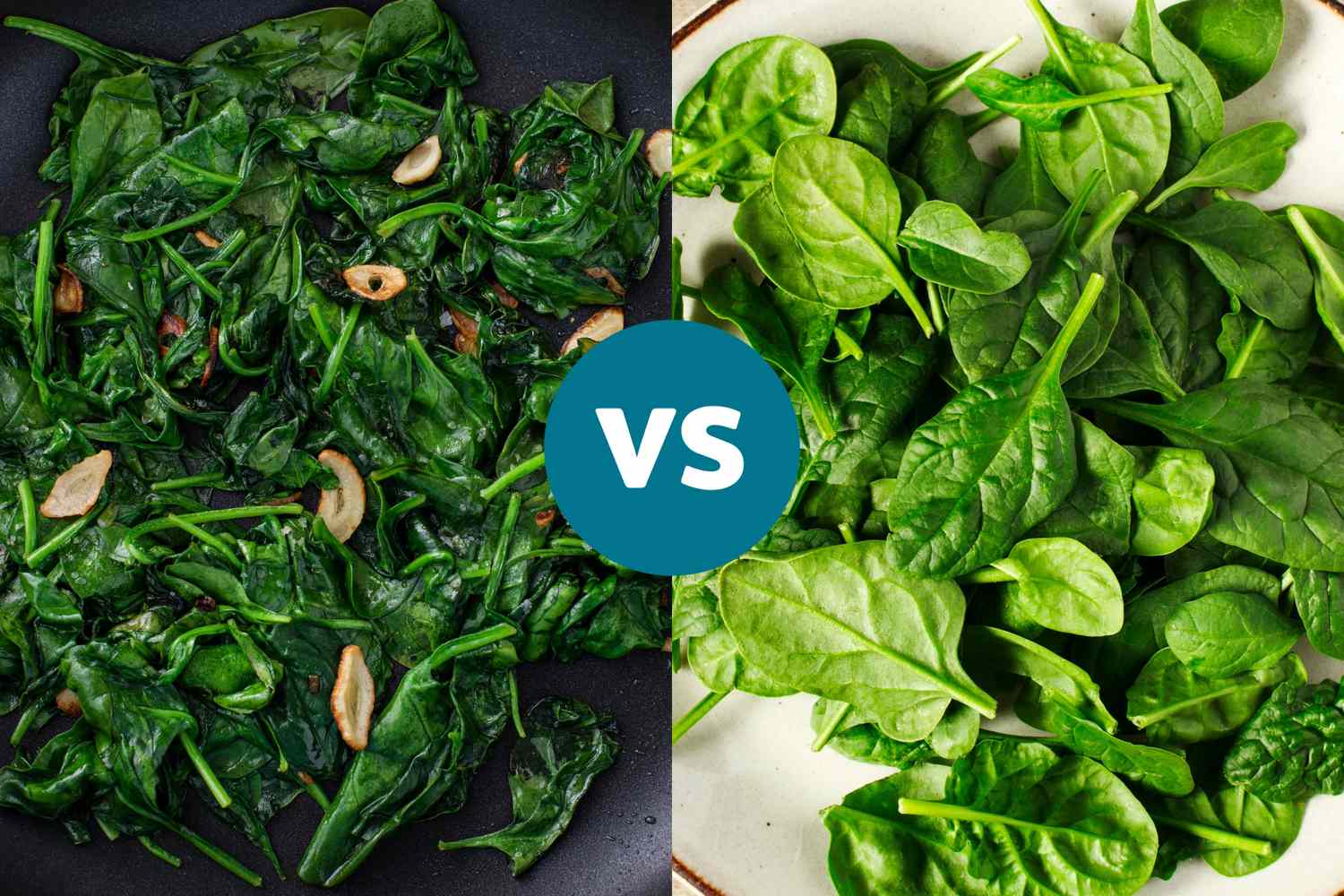
Both raw and cooked spinach are highly nutritious. Cooking spinach can reduce certain vitamins and minerals while enhancing the absorption of others. Raw spinach, on the other hand, retains nutrients like folate and vitamin C that may be lost through cooking.
Benefits of Cooked Spinach
Cooking spinach can offer certain advantages. Cooking spinach may reduce its oxalate content, which can improve vitamin and mineral bioavailability (the amount absorbed and used in the body). Raw spinach contains higher oxalates, which may reduce the bioavailability of calcium and iron.
Some people with gastrointestinal disorders (e.g, irritable bowel syndrome, inflammatory bowel disease) may also find cooked spinach more tolerable.
Benefits of Raw Spinach
Raw spinach is a great source of heat-sensitive nutrients that may be otherwise lost during cooking. These nutrients include:
- Vitamin K
- Folate
- Potassium
- Vitamin C
- Magnesium
- Beta-carotene
- Zinc
- Phenolic compounds
- Flavonoid compounds
While cooking spinach does result in some nutrient loss, the amount of raw spinach needed for the desired amount of cooked spinach may not make a big difference overall in the nutrients you get.
Does Cooking Method Matter?
Boiling spinach appears to result in the greatest nutrient loss. The longer spinach is boiled, the greater the nutrient loss. Steaming and microwaving don’t cause as much loss as boiling.
You may be able to retain these nutrients by adding raw spinach to soups or sauces. Additionally, liquids from boiled spinach can be reserved and used elsewhere in cooking, but there is little evidence about the bioavailability of those nutrients.
Both Are Healthy Choices
Most Americans don’t eat enough fruits and vegetables. Spinach is one of many leafy green vegetables that are nutritious options.
Although boiling reduces the amount of certain nutrients per weight, cooked spinach still appears more nutrient-dense per cup than raw spinach due to volume reduction, not because cooking makes it inherently more nutritious.
Nutrient-dense means it’s a food rich in essential nutrients (vitamins, minerals, antioxidants, and fiber) but provides minimal energy (calories). You may need several cups of raw spinach to get 1 cup of cooked spinach.
Most nutritionists are generally less concerned with whether spinach is raw or cooked and more focused on overall vegetable intake. Both cooked and raw spinach will add a nutrient-dense food to your diet.
Easy Ways to Add Spinach to Your Diet
Spinach is available fresh, frozen, or canned. Frozen or canned spinach can also be an affordable and nutritious option.
Raw spinach can be used:
- In salads
- Added to sandwiches
- Blended into smoothies
- Blended into scrambled eggs or added to an omelet
Cooked spinach can be added to:
- Soups or stews
- Pasta sauces or other sauces
- Casseroles
- Slow cooker recipes