

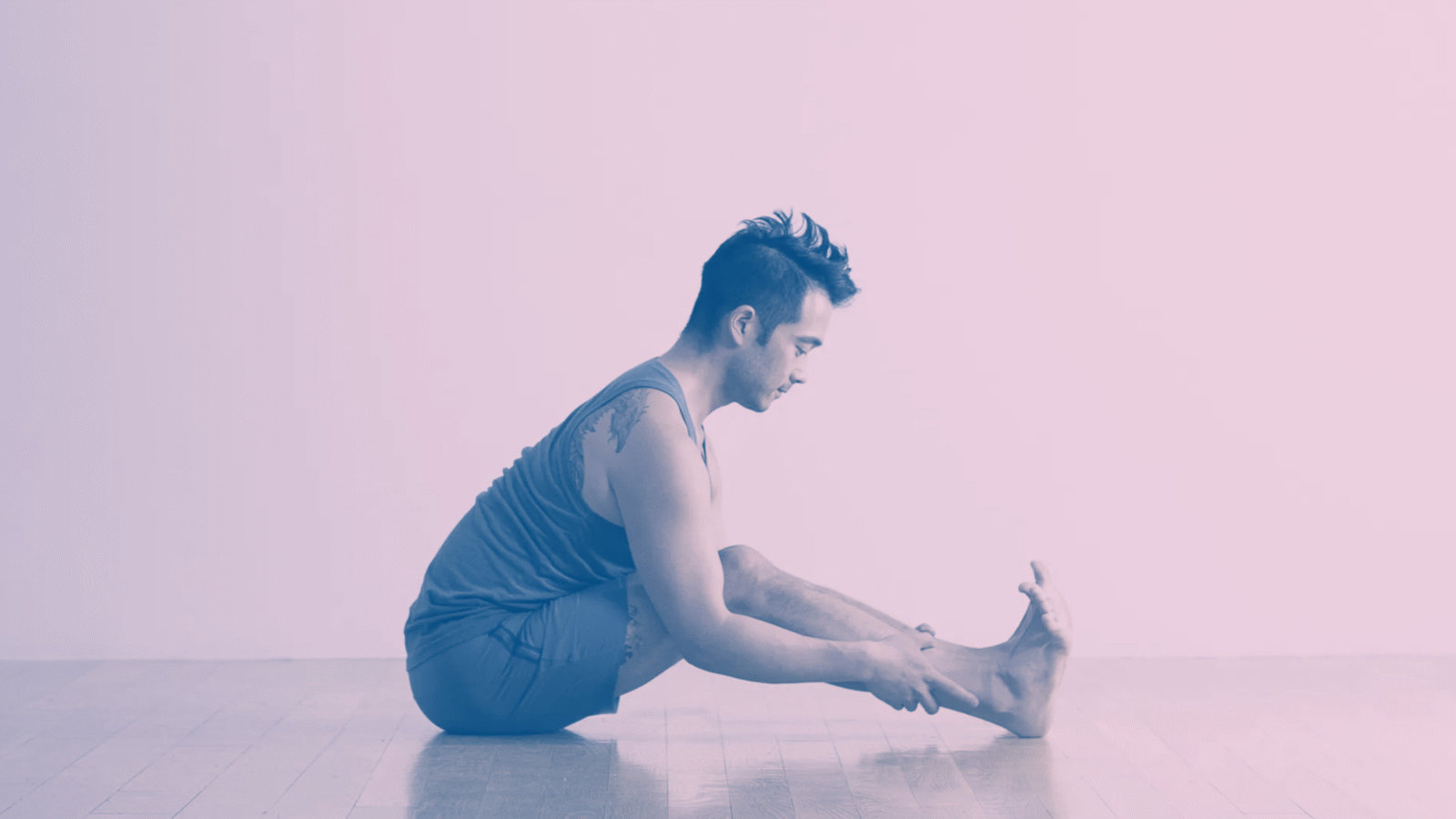
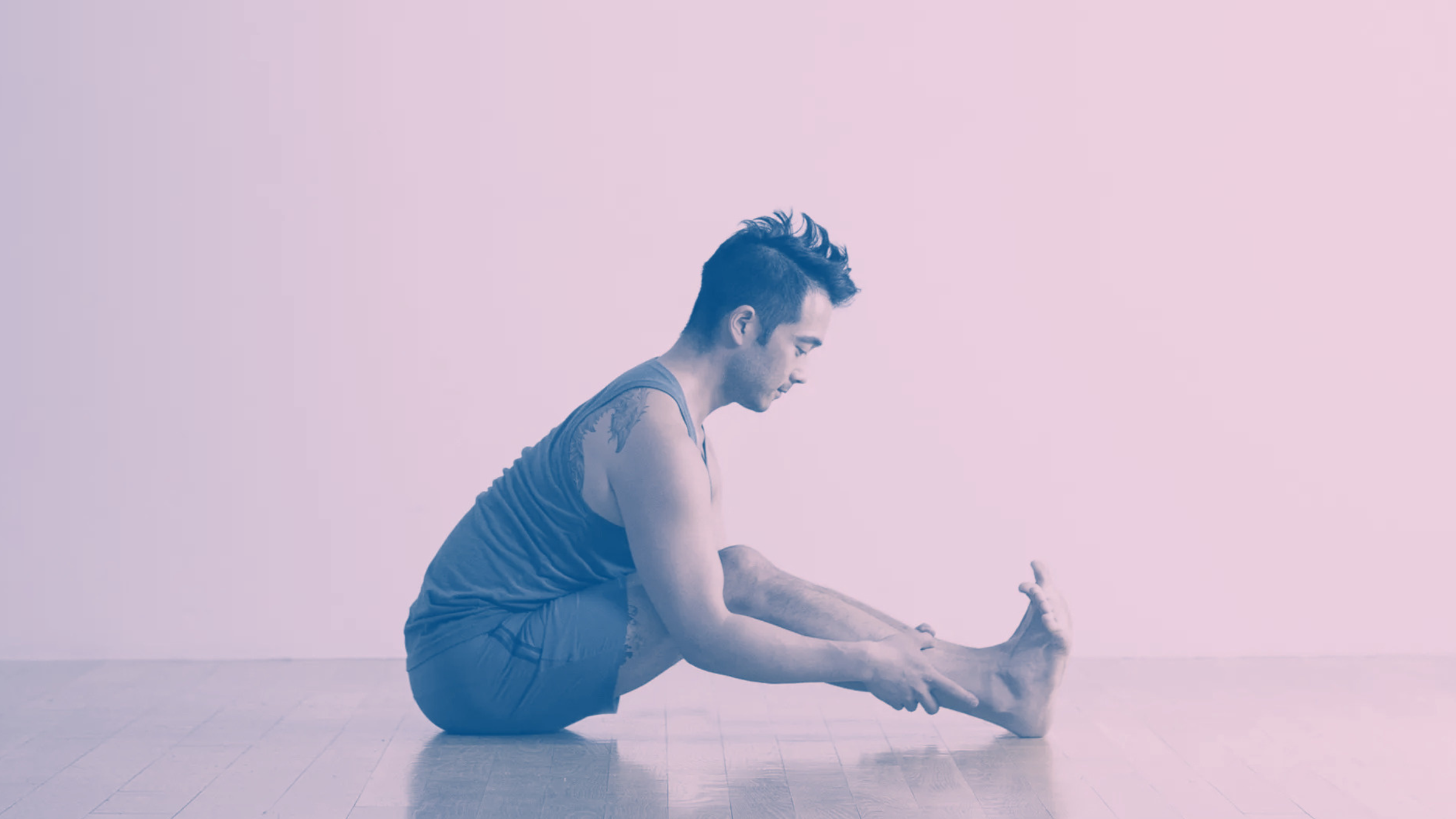
(Photo: Andrew Clark; Design in Canva)
Published March 30, 2026 11:02AM
Tight hamstrings can make a yoga class feel like a somewhat stilted experience—at least for me. Although yoga is about accepting how something feels in your unique body, there are moments in almost every class in which I wish I was just a little more flexible.
This is particularly true in forward bends. Whenever the teacher instructs the class to hinge forward, I wait for the caveat that’s meant for my ears: if this isn’t accessible to you, keep your knees bent to avoid strain or injury in my hamstrings. It’s usually said a bit more eloquently, but the point is always the same.
Yet I often find myself rebelling against this cue. Instead of bending my knees so I can fold more forward in poses such as Standing Forward Bend, Wide-Angled Seated Forward Bend, or Head-to-Knee Pose, I keep my legs straight, reaching as far as I’m able in an effort to get the most out of the stretch. When I’m consistent with my practice, I notice a slight improvement in my flexibility over time, whereas bent knees tend to keep me where I am.
It turns out this intuitive choice might just be exactly what’s best for my body.
Tight Hamstrings and Bending Your Knees
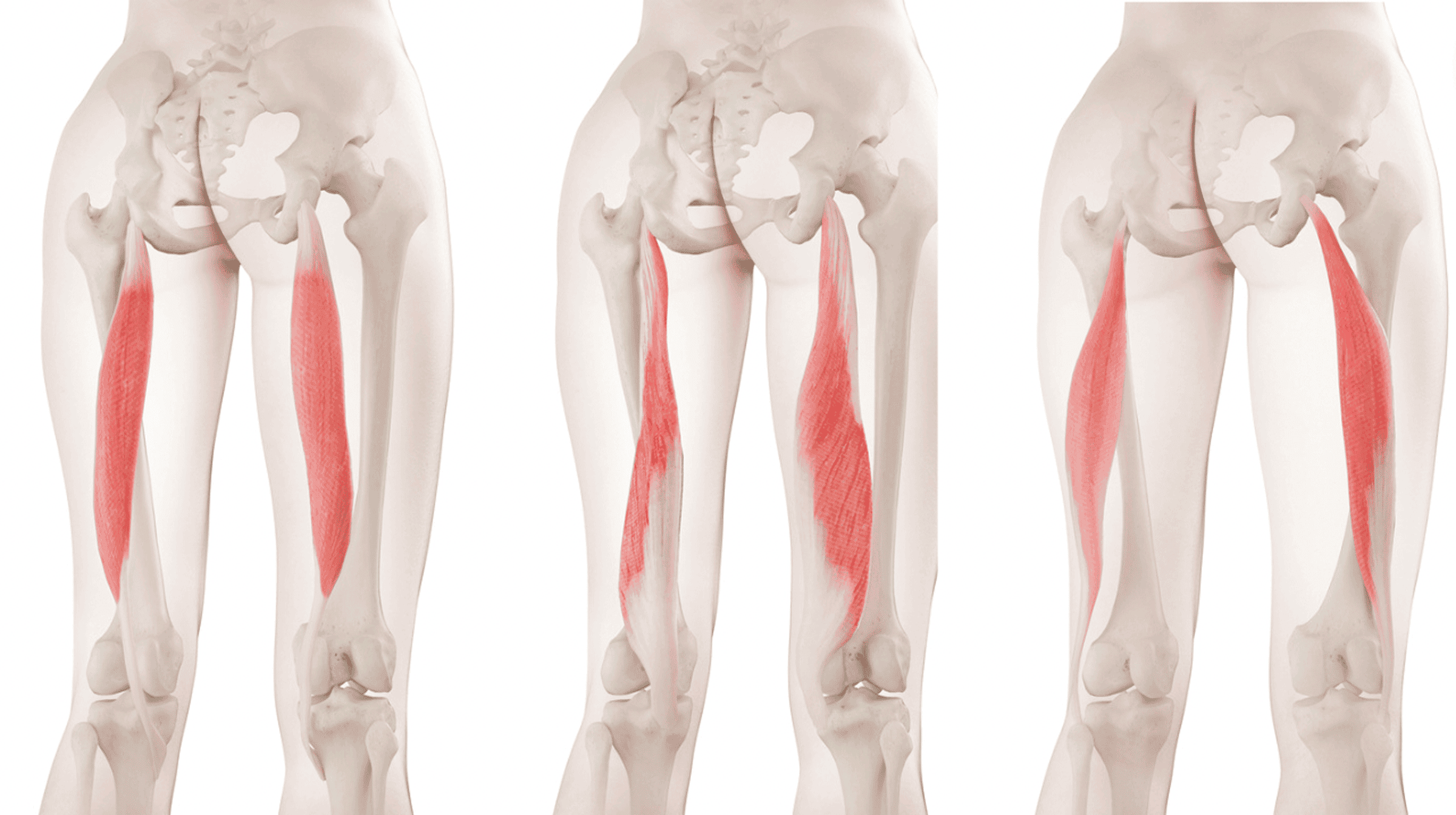
Physical therapist and yoga instructor William Klein, clinical director at Spear Physical Therapy in New York, points out that the hamstrings cross both the knee and the hip joints, making your bent knee just one part of the stretching equation.
As such, he points out that although cueing a bent knee makes the stretch more tolerable, it does so by decreasing the amount that the hamstrings are lengthened. “There’s no real drawback to doing it this way, but it will lessen the stretch a bit,” he says.
Alternatively, keeping the legs straight and easing only as far forward into a pose as is accessible keeps the stretch relatively intense and supports overall flexibility, although it isn’t the most comfortable choice, as I have experienced and Klein confirms. This can be particularly problematic for those with tight or sensitive muscles or a low tolerance for discomfort.
Klein suggests striking a a balance between the two options. This means continually checking in with yourself about when to stretch more deeply and when to bend that knee. Rather than always taking the same strategy, change it up. As Klein explains, the most important element of increasing flexibility over time is consistency and variety.
“Evidence tends to suggest that an intense—but tolerable—stretch held for a long time (at least 30 seconds but ideally much longer) can help improve muscle length,” says Klein, noting there is also research that supports other types of movement improving flexibility.
The takeaway? To bend or not to bend is a decision that only you can make—and it might change from day to day or from pose to pose. So approach each pose in the way that’s best for your body—regardless of whatever cue your teacher might have shared.