

Key Takeaways
- Hormonal birth control can prevent ovulation by stopping the signals that trigger hormones needed to release an egg.
- If taken correctly, hormonal birth control methods like the pill, the patch, and the vaginal ring are reliable for preventing ovulation.
Hormonal birth control is designed to stop ovulation by supplying a steady level of estrogen and/or progestin every day. For pregnancy to occur, an egg must be present in the fallopian tube for the sperm to fertilize. So, when hormonal contraceptives stop ovulation, an egg is not released from the ovary. With no egg for the sperm to join, pregnancy is prevented.
Combined hormonal pills, NuvaRing, the patch, Depo-Provera, Nexplanon, Slynd, and the mini pill prevent ovulation. Other hormonal birth control methods like Mirena, Skyla, Kyleena, and Liletta thicken the cervical mucus, which impairs the sperm’s ability to bind to an egg.
This article discusses how birth control stops ovulation, how different forms of birth control work, and how to tell if you’re ovulating.
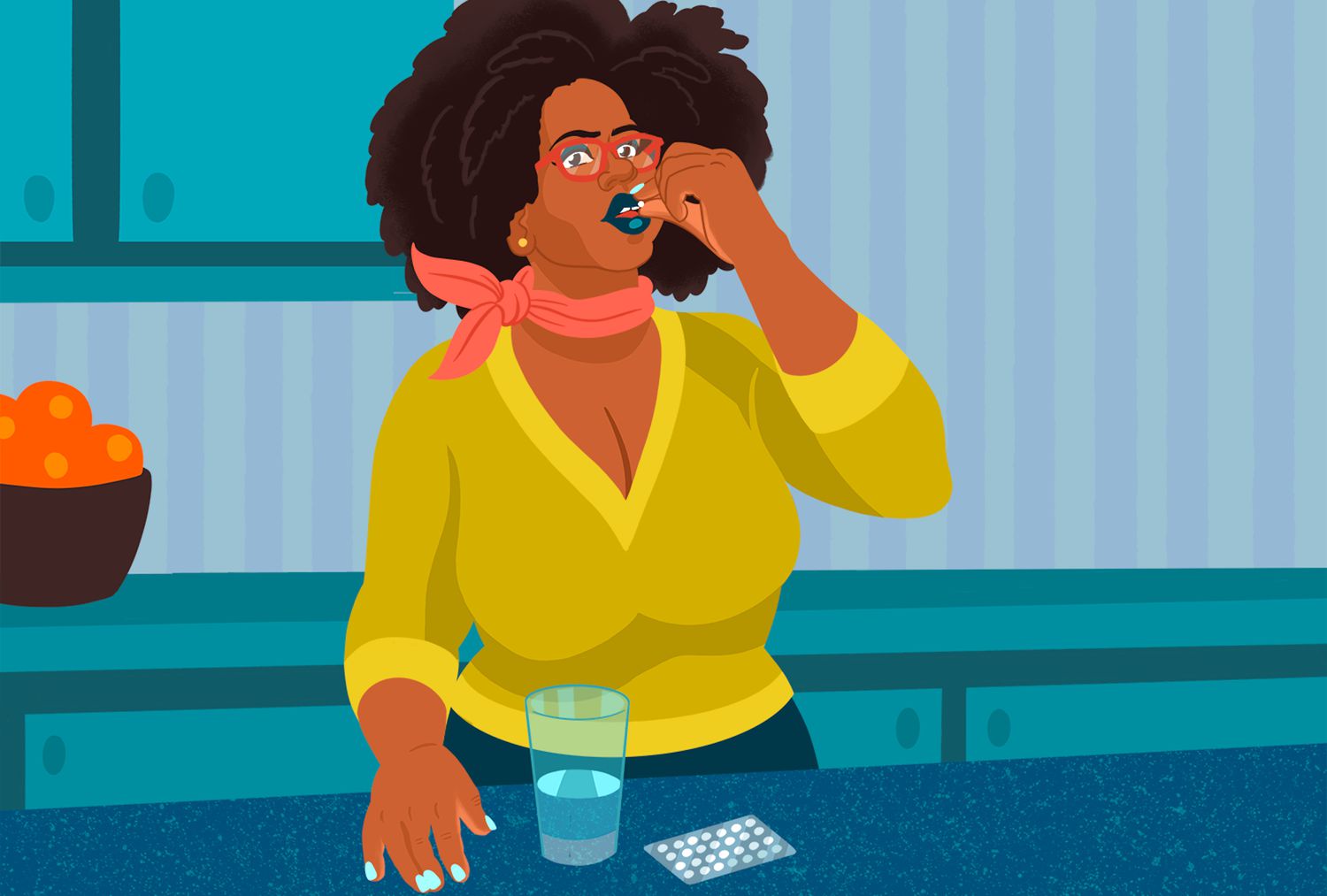
Illustration by Ellen Lindner for Verywell Health
How Does Birth Control Stop Ovulation?
Hormonal birth control prevents ovulation by blocking the signals that trigger two key hormones involved in ovulation: follicle-stimulating hormone (FSH) and luteinizing hormone (LH). These two hormones begin production when your body detects low levels of estrogen and progesterone.
Hormonal birth control provides just enough synthetic estrogen and progesterone to prevent the release of FSH and LH.
- The hypothalamus, a part of your brain, senses when estrogen levels are low, typically at the start of your menstrual cycle.
- During certain phases of your menstrual cycle, your hypothalamus releases gonadotropin-releasing hormone (GnRH), which signals the pituitary gland to produce FSH and LH.
- Birth control stops this message from reaching the pituitary gland, so FSH isn’t produced. Without FSH, egg follicles in the ovaries don’t grow and develop.
- Ovulation usually occurs after a surge in LH, which releases an egg from the ovary. With hormonal birth control, there is no LH surge, so the egg is not released, preventing ovulation.
Hormonal birth control keeps you in a continued phase of your menstrual cycle, blocking GnRH and stopping ovulation.
Non-Hormonal Birth Control
Ovulation is a hormone-driven process, so non-hormonal birth control won’t stop ovulation. Instead, non-hormonal methods prevent pregnancy by blocking sperm from reaching the uterus.
The three main types of non-hormonal birth control are:
Copper intrauterine device (IUD): The copper IUD is a small, T-shaped plastic device wrapped in copper that slowly releases copper ions into the uterus. These ions are toxic to sperm and prevent them from entering the uterus and fallopian tubes. The copper IUD is more than 99% effective at preventing pregnancy. The FDA-approved brands of the copper IUD are Paragard and Miudella.
Barrier methods: Diaphragms and cervical caps are small devices that are placed inside the vagina and work by blocking sperm from entering the cervix. They are less effective than the IUD; about 17 out of 100 women will still get pregnant despite using a diaphragm as birth control. Condoms are another barrier method that is about 98% effective at preventing pregnancy.
Spermicide: Available as a cream, foam, gel, or suppository, spermicides are made of chemicals that kill sperm before they enter the cervix. Spermicide may be used alone or as extra protection along with a barrier method. “The sponge” is another barrier method that releases spermicide when activated with water. Used by itself, spermicide is about 82% effective at preventing pregnancy.
What Is Ovulation?
Ovulation is the phase of the menstrual cycle when the ovary releases an egg. The average menstrual cycle is 28 days long, with ovulation occurring mid-cycle, around day 14.
Leading up to the ovulation, the body produces a surge of estrogen, which causes the uterine lining (endometrium) to thicken in preparation for a possible pregnancy. This surge of estrogen eventually triggers the egg to release into the fallopian tubes. The egg then travels to the uterus and implants in the uterine lining.
The mature egg survives for just about 24 hours in the reproductive tract. If it is fertilized by sperm during this window, then pregnancy occurs. If it is not fertilized, the body sheds the egg along with the thickened uterine lining. This shedding results in menstrual bleeding, otherwise known as a period.
Sperm can survive for several days within the female reproductive tract. Therefore, a biological female is most likely to get pregnant if they have intercourse a few days before or during ovulation.
How Do You Know If You’re Ovulating?
Ovulation results in several telltale signs and symptoms. Signs that ovulation is about to happen or is already happening include:
- Change in cervical fluid: You may notice increased vaginal discharge that resembles “egg whites” shortly before and during ovulation.
- Change in basal body temperature: Just before ovulation, most women have a slight decline in basal body temperature (temperature when fully at rest). The temperature will increase sharply after ovulation.
- Change in cervix position and firmness: To prepare for the possibility of fertilization, the cervix becomes soft, high, open, and wet during ovulation.
Some people also experience a combination of the following symptoms:
- Light spotting
- Slight cramping on one side of the pelvis
- Tender breasts
- Abdominal bloating
- Increased libido (sex drive)
- Heightened senses
Why It Matters Whether Birth Control Stops Ovulation
You cannot get pregnant if you do not ovulate. However, it’s important to know that some people may continue to ovulate despite taking certain types of hormonal birth control. About 40% of people who take progestin-only birth control, particularly the mini pill, will still ovulate. Also, persons with hormonal or non-hormonal IUDs may continue to ovulate, though it does not change the efficacy of these contraceptive methods.
Furthermore, hormonal birth control can only stop ovulation and prevent pregnancy when it is used properly. If you miss a few pills in a row or do not use your hormonal birth control perfectly, you could still ovulate.
Research shows that hormonal birth control methods that stop ovulation do not affect fertility long-term. With that being said, there is some evidence that people who use or have recently used hormonal birth control may be at an increased risk of breast cancer; however, this risk was found to be low.
If you are looking into starting hormonal birth control, these are important factors to discuss with your gynecologist or healthcare provider.
:max_bytes(150000):strip_icc()/DawnNew-59495c603df78c537b14cb54.jpg)