

Key Takeaways
- Some COPD inhalers should not be used together because they can cause dangerous side effects.
- Using inhalers from the same drug class can increase the risk of overdose and side effects.
- Always check with a healthcare provider or pharmacist if you’re using more than one inhaler to ensure they are safe together.
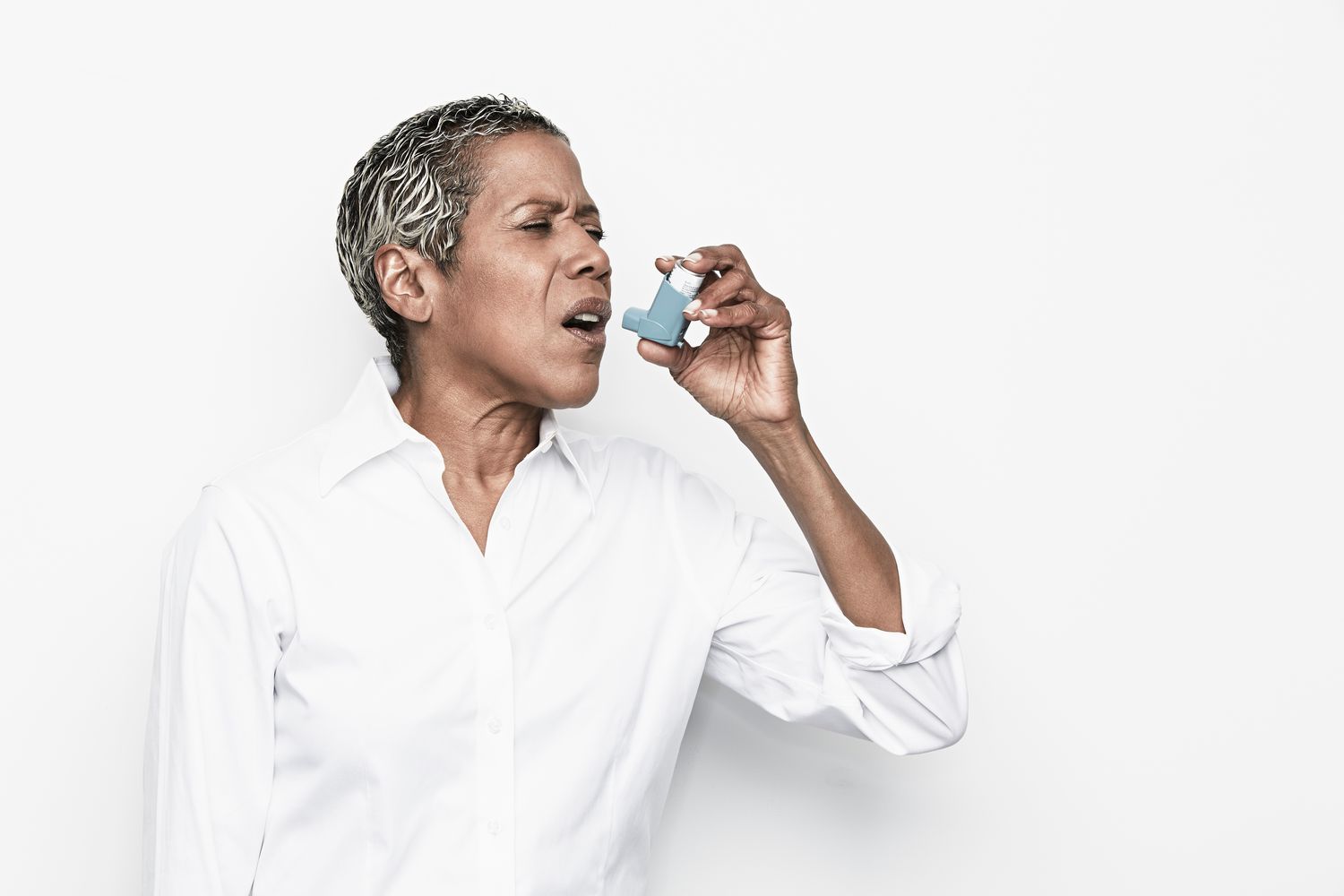
Most people with chronic obstructive pulmonary disease (COPD) use an inhaler every day to control shortness of breath and other symptoms of this progressive lung disease.
There are many different kinds of inhalers. Some are used once or twice a day to manage COPD and prevent acute exacerbations (attacks). Others are used as needed when an exacerbation occurs. As a result, most people with COPD use several different inhalers as part of the treatment plan.
Cultura RM / JPM / Getty Images
Classes of COPD Inhaler Medications
There are different classes of inhaled medications used in the treatment of COPD.
Among them are:
- Antimuscarinic drugs: These reverse airway narrowing by acting on a nerve transmitter called acetylcholine.
- Long-acting beta-agonists (LABAs):These relax the airways by working on receptors in the lungs known as beta-2 adrenergic receptors.
- Short-acting beta-agonists (SABAs): These work like LABAs but are used as rescue inhalers rather than for daily use.
- Inhaled steroids: These improve breathing by reducing inflammation.
- Combination phosphodiesterase (PDE) 3 and 4 inhibitors:These relax airway muscles and lessen inflammation by targeting PDE3 and PDE4 receptors in the lungs
Possible Concerns
While multiple inhalers may be prescribed for COPD, not all can be used together safely. Combining certain inhalers can lead to health risks.
Possible concerns include:
- Overdosing: Some inhalers contain one drug, while others have two or three. This raises the risk of an overdose if the same drug is present in different inhalers.
- Increased side effects: Inhalers from the same drug class can cause similar symptoms. Using two inhalers from the same class can heighten the risk or severity of side effects.
- Interactions: Certain inhaler drugs can interact with others, potentially leading to severe low blood potassium (hypokalemia) and heart rhythm problems (cardiac arrhythmia).
Combinations That Are Safe or Unsafe
Some inhalers can be used together safely, while others cannot. It’s important to be aware of these combinations if you or a loved one is undergoing treatment for COPD.
Antimuscarinic Inhalers
Controller medications are those used to control symptoms of COPD and prevent exacerbations. Antimuscarinic drugs are controller medications used once or twice daily.
| Drug | Class | Consideration | Reason | |
| Atrovent HFA (ipratropium) | Antimuscarinic | Should not be used with other medications containing antimuscarinic drugs | Increased risk of side effects | |
| Incruse Ellipta (umeclidinium) | Antimuscarinic | Should not be used with other medications containing antimuscarinic drugs | Increased risk of side effects | |
| Spiriva (tiotropium) | Antimuscarinic | Should not be used with other medications containing antimuscarinic drugs | Increased risk of side effects | |
| Tudorza (aclidinium) | Antimuscarinic | Should not be used with other medications containing antimuscarinic drugs | Increased risk of side effects | |
| Anoro Ellipta (umeclidinium/vilanterol) | Antimuscarinic, LABA | Should not be used with other medications containing antimuscarinic drugs | Increased risk of side effects | |
| Bevespi Aerosphere (glycopyrrolate/formoterol) | Antimuscarinic, LABA | Should not be used with other medications containing antimuscarinic drugs | Increased risk of side effects | |
| Stiolto Respimat (tiotropium/olodaterol) | Antimuscarinic, LABA | Should not be used with other medications containing antimuscarinic drugs | Increased risk of side effects | |
| Trelegy Ellipta (fluticasone/umeclidinium/vilanterol) | Antimuscarinic, LABA, inhaled steroid | Should not be used with other medications containing antimuscarinic drugs | Increased risk of side effects | |
| Combivent Respimat (ipratropium/albuterol) | Antimuscarinic, SABA | Should not be used with other medications containing antimuscarinic drugs | Increased risk of side effects | |
Beta-Agonists
Beta-2 adrenergic agonists (also known as beta-agonists) are a mainstay treatment for COPD. There are short-acting versions used as rescue inhalers and long-acting versions that are used to control COPD.
| | Class | Consideration | Reason |
| Albuterol (generic) | SABA | OK to take with LABAs | N/A |
| Brovana (arformoterol) | LABA | OK to take with SABAs | N/A |
| Foradil (formoterol) | LABA | OK to take with SABAs | N/A |
| Perforomist (formoterol) | LABA | OK to take with SABAs | N/A |
| Serevent (salmeterol) | LABA | OK to take with SABAs | N/A |
| Striverdi Respimat (olodaterol) | LABA | OK to take with SABAs | N/A |
Inhaled Steroids
Inhaled glucocorticoids (also known as inhaled steroids) are commonly used in combination with other inhaled drugs to control COPD. They are mainly used in people with a history of exacerbations.
| | Class | Consideration | Reason |
| Advair (fluticasone/ salmeterol) | Inhaled steroid and LABA | OK to take with SABAs | N/A |
| Symbicort (budesonide/formoterol) | Inhaled steroid and LABA | OK to take with SABAs | N/A |
| Fluticasone (generic) | Inhaled steroid | Do not use with Advair or Symbicort as they contain similar steroids | Increased risk of hypokalemia and heart rhythm problems |
| QVAR (beclomethasone) | Inhaled steroid | Do not use with Advair or Symbicort as they contain similar steroids | Increased risk of hypokalemia and heart rhythm problems |
| Breo Ellipta (fluticasone/vilanterol) | Inhaled steroid and LABA | OK to take with SABAs | N/A |
:max_bytes(150000):strip_icc()/Lauren-Van-Scoy-1000-30bd26fc55ba422ea1e9e494e6111ea0.jpg)