

:max_bytes(150000):strip_icc():format(jpeg)/VWH-Eggs-vs-Salmon-82415c6d99734047adc57253f34b5ee8.jpeg)
Key Takeaways
- Salmon supports heart health by helping lower cholesterol and blood pressure, thanks to its omega-3 fatty acids.
- Eggs are a healthy, affordable protein that does not raise cholesterol or blood pressure for most people when eaten in moderation.
- Eating both eggs and salmon as part of a balanced diet is better for heart health than focusing on just one food.
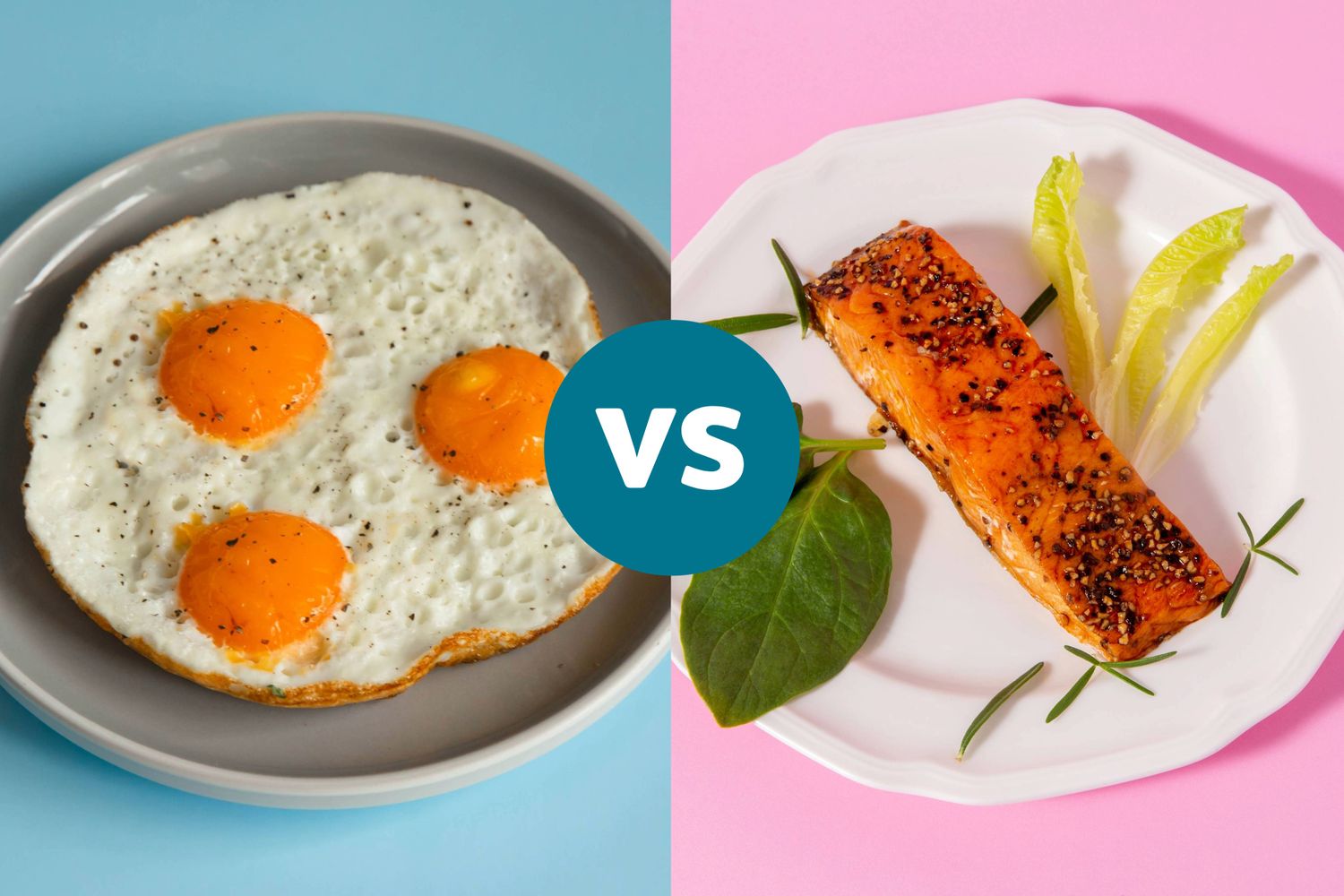
Eggs and salmon are both high-protein foods that often come up in conversations about heart health. While eggs are affordable and common at breakfast, and salmon is known as a heart-healthy dinner option, they affect cholesterol and blood pressure differently.
Cholesterol: What Eggs and Salmon Do in the Body
Eggs are known for being high in cholesterol. One large egg contains about 185 milligrams (mg) of cholesterol, mostly in the yolk. For a long time, people were told to avoid eggs because of this. But now it’s known that cholesterol in food does not affect blood cholesterol as much as once thought:
Salmon affects cholesterol in a different way. It is low in saturated fat and contains omega-3 fatty acids:
- Omega-3s help lower triglycerides, a type of fat in the blood linked to heart disease.
- Omega-3s also help make LDL cholesterol less harmful and reduce inflammation in the body.
This means:
- Salmon might be a better choice for people who already have high cholesterol or heart disease.
- Eggs are still safe for many people, but salmon offers extra heart protection.
Blood Pressure: How Each Food Supports Healthy Numbers
Blood pressure is affected by many things, including salt intake, blood vessel health, and body weight. Protein-rich foods like eggs and salmon can help, but again, they work in different ways.
Eggs don’t raise blood pressure:
- Eggs are naturally low in sodium, and reducing sodium intake helps manage blood pressure. Note that this benefit is reduced if you add salt to eggs.
- They also provide high-quality protein, which helps you feel full and supports healthy muscles. Maintaining a healthy weight makes it easier to keep blood pressure in a normal range.
- Eggs contain small amounts of potassium, a mineral that helps balance sodium in the body. While eggs aren’t a major source of potassium, they do not raise blood pressure and are safe for most people to eat regularly.
Salmon has a stronger effect on blood pressure:
- The omega-3 fats in salmon help blood vessels relax and improve blood flow. This can lead to small but meaningful drops in blood pressure over time.
- Salmon also provides potassium and magnesium, two minerals that support healthy blood pressure.
For people with high blood pressure or those trying to prevent it, salmon may be more beneficial than eggs.
Other Health Benefits of Eggs and Salmon
Both foods provide important nutrients beyond cholesterol and blood pressure.
Eggs are packed with vitamins and minerals. They contain vitamin B12, selenium, iodine, and choline. Eggs also provide vitamin D, which supports bone and immune health.
Salmon also contains vitamin D, and salmon’s omega-3 fatty acids also support brain health, joint health, and inflammation control.
How you cook these foods matters:
- Eggs cooked with lots of butter or paired with processed meats may be less heart-healthy.
- Salmon that is baked, grilled, or roasted is a better choice than salmon that is fried or covered in salty sauces.
Which One Should You Choose?
If your goal is lowering cholesterol or blood pressure, salmon might be better because of its omega-3 fats. But that doesn’t mean eggs are bad. For many people, eggs can be eaten regularly without harming heart health.
The best choice is not one or the other, it’s variety. Eating both foods as part of a balanced diet that includes vegetables, fruits, whole grains, and healthy fats is the most effective way to protect your heart.
Heart health is not about cutting out foods you enjoy. It’s about making smart choices most of the time and building habits you can stick with for life.