

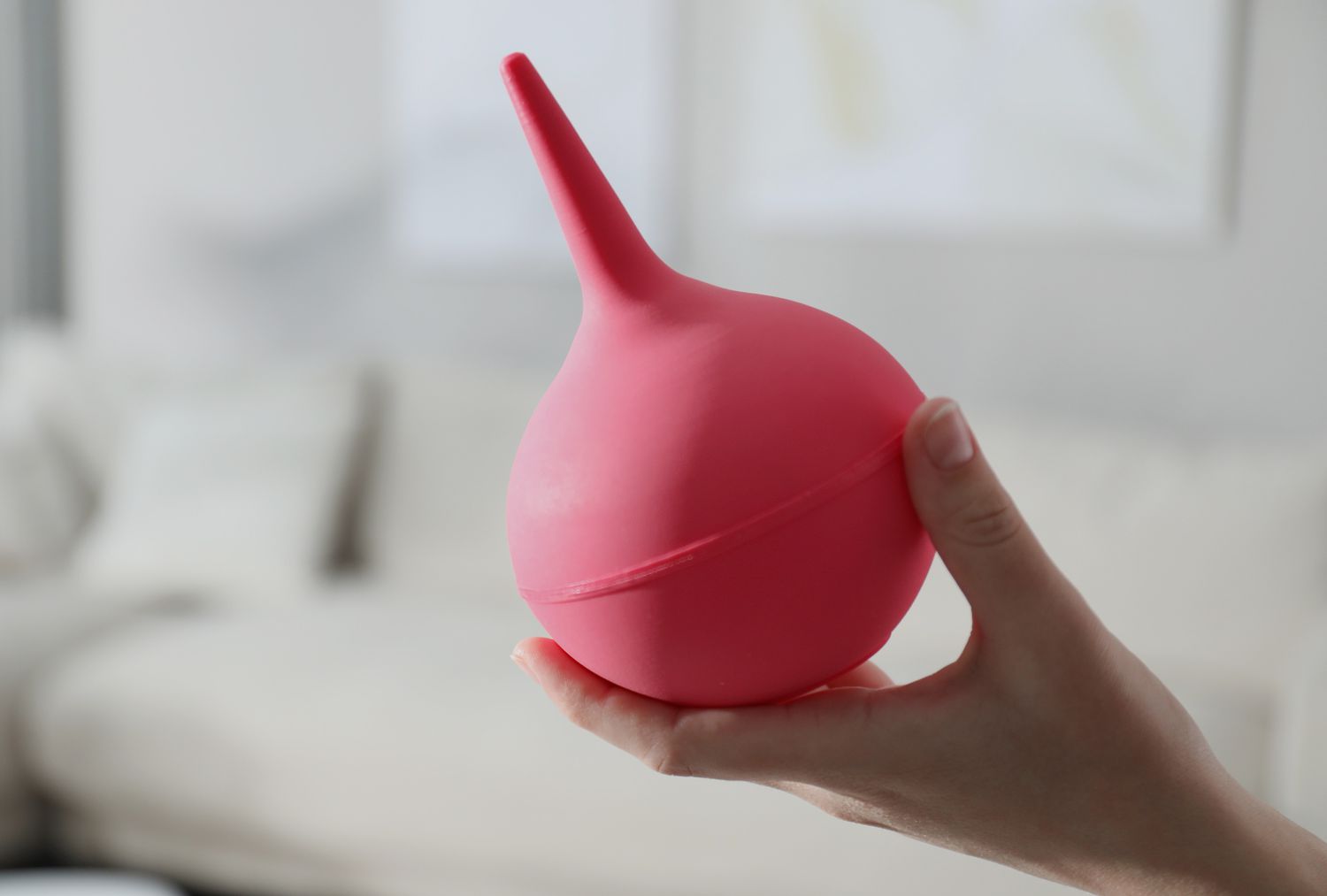
Key Takeaways
- Enemas can cause nausea, vomiting, and abdominal pain as side effects.
- Warm water enemas are generally safer than soapy enemas. Talk with your healthcare provider before using.
- Sodium phosphate enemas should not be used in children under age 2 or people over 55.
Enemas can be effective for relieving constipation and preparing for procedures, but they come with potential side effects, ranging from nausea to serious complications like sepsis. Understand their risks and follow expert advice to help ensure safer use.
Illustration by Nusha Ashjaee for Verywell Health
Purpose of Enemas
Enemas work by getting fluid into your large intestine so it can soften up your stool and help it pass. The fluid is administered into the rectum and large intestine through the anus. Enemas are used for a variety of reasons:
- Before tests: One or more enemas might be used before having a test such as a colonoscopy, to clear the large intestine of all stool.
- During imaging of the colon: To get the large intestine to show up better on imaging, healthcare providers use barium enemas. Barium is a metallic substance that coats the lining of your colon. This makes it easier to detect abnormalities, such as colon cancer.
- To deliver medication: Certain medications can be delivered directly to the rectum or the sigmoid colon (the lowest part of the large intestine) as a treatment for conditions such as inflammatory bowel disease (IBD).
- To relieve constipation: Enemas can effectively relieve occasional constipation when nothing else works.
Plain water is used in some enemas but be sure to use a reputable product rather than making them at home. In some cases, the liquid used in an enema is just salt water or water mixed with baking soda. Some enemas contain a laxative.
Enema Kit Use: Water or Oil
If your healthcare provider suggests an at-home enema, purchase an over-the-counter enema kit. These kits typically contain either water and salt, mineral oil, or a mild laxative. Buy the one your provider recommends. Follow the instructions carefully, and do not attempt a DIY enema with your own supplies.
Potential Side Effects of Water Enemas
Water enemas can cause side effects, which is a risk with all enema products. Side effects may include:
- Nausea and vomiting
- Abdominal pain or bloating
- Cold sweats
- Palpitations
- Dizziness
A study on warm water and saline enemas in children before colonoscopy showed fewer side effects than in those using mineral oil laxatives.
Side effects also depend on other factors, including underlying health conditions and age. In older adults, warm water enemas may be needed to treat fecal impaction or prepare for a procedure.
Water-based enemas are generally safer than soapy enemas that can damage the lining of the colon. They also can limit the effects of electrolyte imbalance.
Sodium Phosphate Enemas
In 2014, the Food and Drug Administration (FDA) issued a warning against the repeated use of store-brand enemas containing sodium phosphate. It is especially dangerous for people over 55 and should never be used in children under age 2. It can lead to hyperphosphatemia—an electrolyte disorder that involves high phosphate levels and low calcium levels in the blood.
Oli-Based Enema Side Effects
The side effects of enemas that contain mineral oil (like Fleet brands) are similar to other adverse reactions to an enema. You may experience stomach cramping or pain, or have nausea and diarrhea. This also can occur with a glycerin laxative.
When you use a mineral oil enema, watch out for oily leakage from your rectum and general rectal irritation.
Some people may have a more serious and systemic allergic response to oil-based enemas. People with a latex allergy, for example, should choose a latex-free product.
Call your healthcare provider or contact 911 if you experience:
- A skin rash
- Itching or hives (urticaria)
- Swelling of the face, lips, or tongue
- Difficulty breathing
Stop using a mineral oil enema if you don’t have a bowel movement within 15 minutes, and contact your healthcare provider for directions. Keep in mind, though, that how fast an enema or laxative works will depend on the specific product, like the 60-minute window for glycerin products (often used for children).
In older adults, mineral oil is considered a safer enema choice than phosphate enemas. Some products are sodium-free.
If you have hemorrhoids, enemas may cause extra pain. If you have a rectal prolapse (in which the end of the lower intestine protrudes from the rectum), you should avoid using an enema. The overuse of laxatives is one cause of rectal prolapse.
Drug Interactions
Enema products do have a few known drug interactions, often with drugs that regulate fluid and electrolytes in your body or affect the kidneys (since enema products shift your body’s fluids to aid in passing stool).
These medications can include nonsteroidal anti-inflammatory drugs (NSAIDs) and diuretics like Lasix (furosemide). They also can include the following blood pressure medications:
- Angiotensin converting enzyme (ACE) inhibitors
- Angiotensin receptor blockers (ARBs)
Coffee, Herbs, and Other Enemas
Never use ingredients that have not been approved by your healthcare provider to give yourself an enema for cleansing or to improve digestive health. Enemas that contain coffee, herbs, minerals such as Epsom salts, soap suds, acidic solutions, and more are generally not recommended by the medical community and lack proven benefits.
Complications and Warnings
Using an enema at home always comes with certain risks. An enema-related perforation is rare but it can result in serious and potentially fatal injury, including sepsis (a serious blood infection).
Other risks may include:
- Damage to or perforation (puncturing) of rectum or intestines due to stretching
- Disruption of the natural microflora in your gut
- Pain caused by using liquid that is too hot or cold
- Introducing too much liquid, which may stay in the body and come out without warning
- Infection introduced by equipment that’s not sterile. This is especially a problem for people with autoimmune diseases or an otherwise compromised immune system.
Safe Alternatives
Water-based enemas and mineral oil enemas should be a last resort for treating constipation. In most cases, constipation can be relieved with lifestyle changes, such as:
- Adding fiber to your diet
- Exercising
- Drinking more water
Over-the-counter laxatives may be an option for you, but they also come with risks. Talk to your healthcare provider about them, especially if you have regular constipation.
:max_bytes(150000):strip_icc()/AmberJ.Tresca_1000-03288146de15463da9ec7713d9c70c40.jpg)