

:max_bytes(150000):strip_icc():format(jpeg)/Ensalada-Nochebuena-Christmas-Eve-Salad-1x1-0508_preview_maxWidth_4000_maxHeight_4000_ppi_300_quality_100-a184f5bbc56c409fb0814d75766d25e9.jpg)
The foods that I look forward to eating every Christmas Eve include traditional Mexican dishes like tamales, pozole and a surprisingly lesser-known salad named after the holiday itself, the ensalada nochebuena, or Christmas Eve salad. Its festive layers of fruits and vegetables offer a refreshing contrast to the rich main dishes that fill my family’s table.
Ensalada nochebuena was first documented as early as 1831 in a cookbook called El Cocinero Mexicano, and it’s a dish that’s popular in central and southern Mexico. The original recipe featured a mix of sweet and savory ingredients, but over the years, many regions have evolved the dish into a more dessert-like salad with a sweet cream dressing.
When I began hosting my own posadas (holiday celebrations), I, like many, decided to put my own spin on the salad. My recipe brings together all of my favorite elements from the 1831 recipe and from the versions I grew up eating, like the one from my grandmother. It includes beets, apples, oranges and pumpkin seeds, while leaving out some of the more savory and spicy ingredients, like radishes, olives and chile peppers, so that it remains a crowd-pleaser. Instead of a creamy dressing, I’ve opted for a citrusy vinaigrette, which gets its sweetness from agave and its optional spice from serrano pepper.
While the ingredient list may appear intimidating at first glance, only the beets require cooking (and you can easily find precooked beets at most grocery stores). Otherwise, the steps mostly involve peeling and chopping, which makes it a great opportunity for my family members who don’t consider themselves cooks to get involved in the making of our family feast. And watching my children grow their culinary skills over the years while making this salad has created special memories that I’ll never forget.
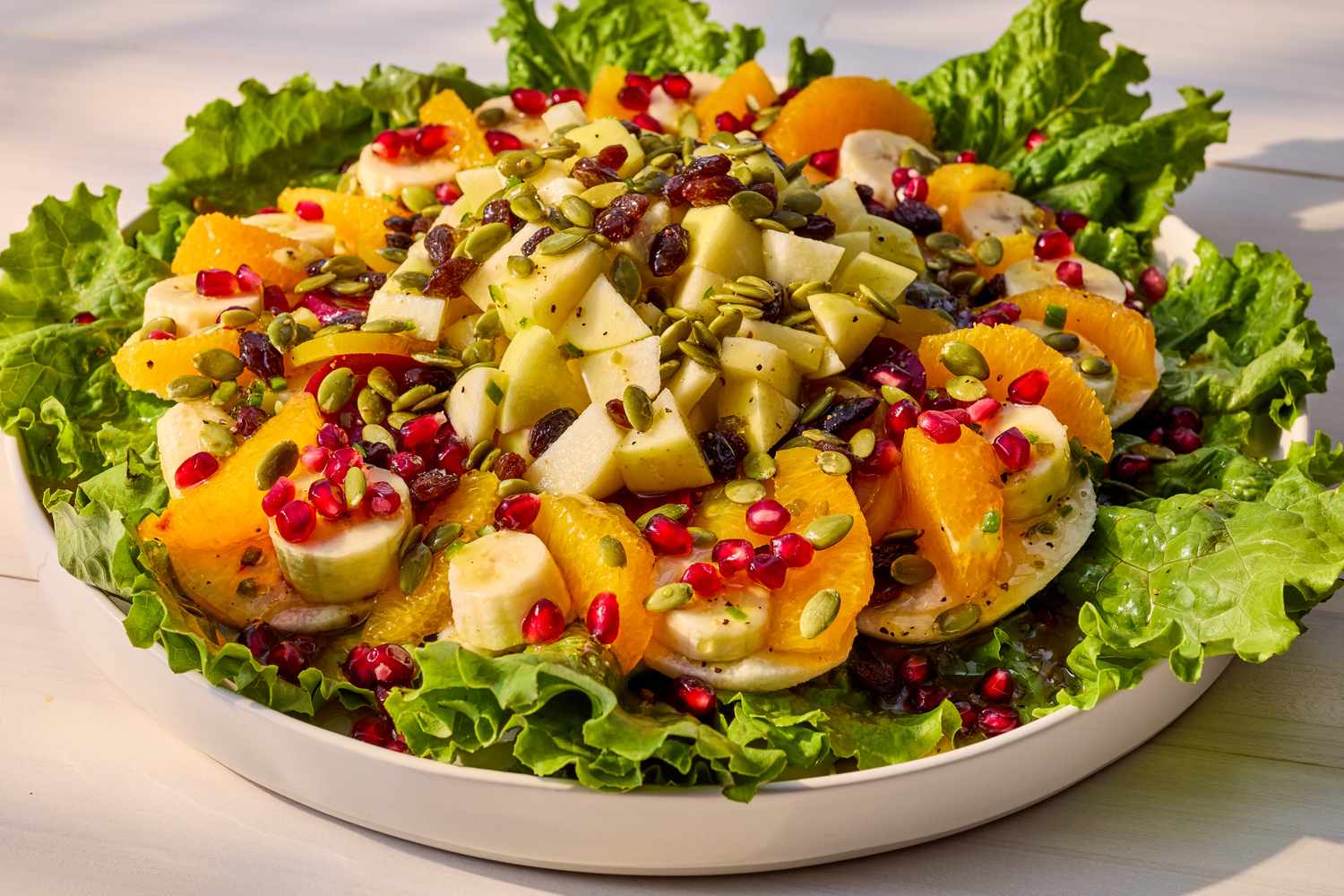
Another thing I love about this salad—aside from its abundant textures and flavors—is the way it looks. It features traditional Christmas colors that make for a stunning presentation, from the verdant lettuce to the ruby-like pomegranate seeds. I’ve always enjoyed that it’s a dish that allows me to get creative in the presentation. Some people opt for serving the salad in the reserved and sweetened beet cooking water, giving it the appearance of a hearty sangria, while others make it into more of an American-style fruit salad with loads of whipped cream. Meanwhile, there’s the original recipe that instructs readers to toss the greens with some of the ingredients, while saving the crispy jicama and sweet banana to adorn the top.
As for me, some years I may dice the fruits and vegetables and spread them over a bed of lettuce before adding the raisins and pomegranate and pumpkin seeds. Other times, I might break out my mandoline and meticulously slice the apples and jicama, arranging them in a retro circular pattern. But there truly is no right or wrong way to do it, and that’s what makes this salad the perfect recipe to try if you’re looking for an easy—and delicious—traditional Mexican dish to bring to your family’s table. No matter what ingredients you decide to add or omit, and no matter how you decide to arrange them, this salad is sure to become part of your Christmas Eve traditions.