

This year, the group is also calling attention to pesticides made with PFAS (perfluorinated and polyfluorinated substances) — man-made “forever chemicals” that rarely break down in nature and can linger in food and water. PFAS were among the most commonly detected pesticides in the analysis.
What Fruits and Vegetables Made the 2026 Dirty Dozen List?
To build the rankings, EWG scientists analyze data from the U.S. Department of Agriculture (USDA) on more than 54,000 produce samples after they have been washed, scrubbed, or peeled.
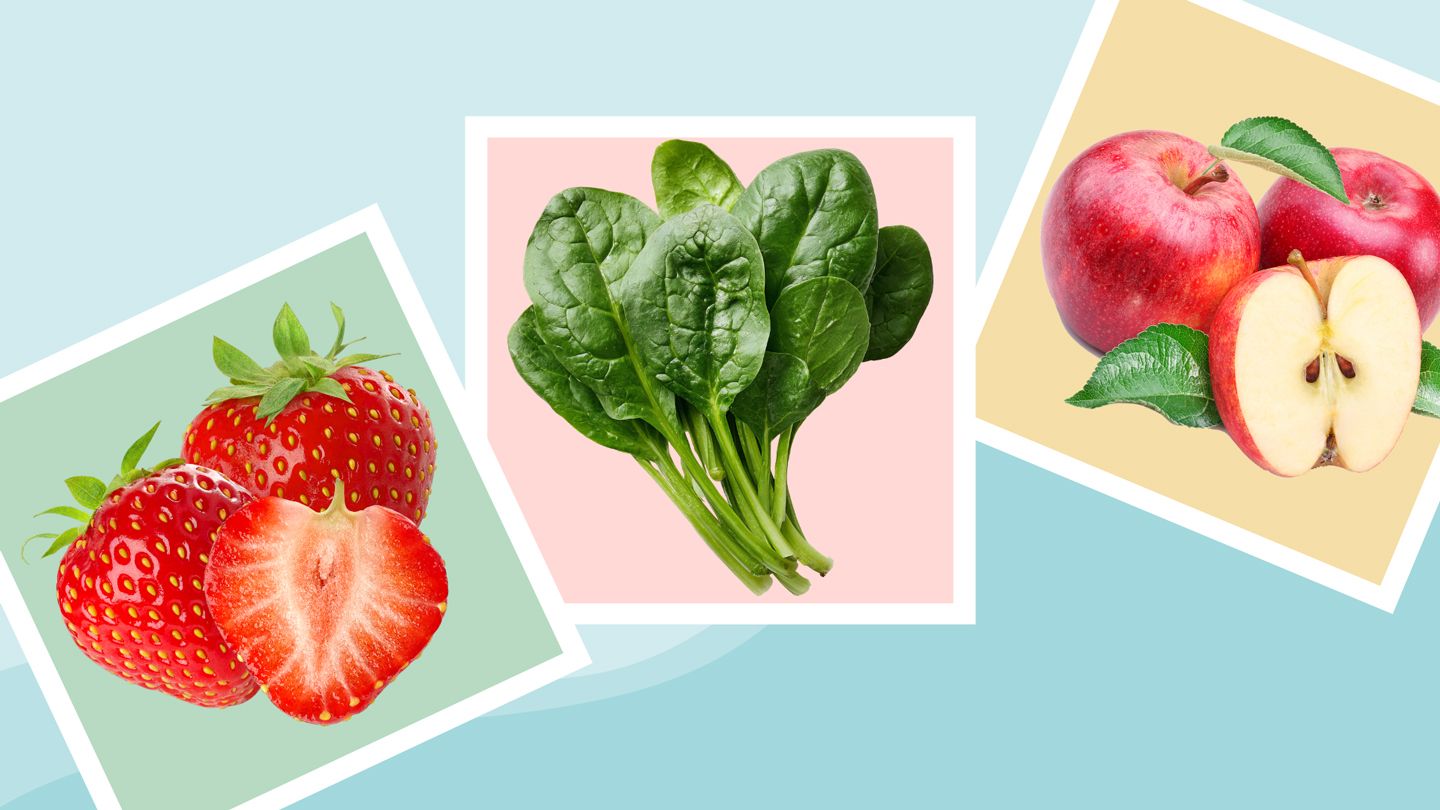
The Dirty Dozen list of produce with the highest levels of pesticide residue hasn’t changed much since last year, with many of the same fruits and vegetables showing up again — especially leafy greens and soft-skinned fruits that tend to hold onto pesticide residue.
This year EWG added two items to the list: Green beans and bell and hot peppers registered high levels of pesticide toxicity.
The 2026 Dirty Dozen Produce List
- Spinach
- Kale, collard, and mustard greens
- Strawberries
- Grapes
- Nectarines
- Peaches
- Cherries
- Apples
- Blackberries
- Pears
- Potatoes
- Blueberries
- Green beans
- Bell and hot peppers
Researchers found pesticides on 96 percent of Dirty Dozen samples, even after washing.
What’s on the 2026 Clean Fifteen List?
The Clean Fifteen lists the fruits and vegetables that consistently had little or no detectable pesticide residues. This list also looks much the same as last year.
- Pineapple
- Sweet corn (fresh and frozen)
- Avocados
- Papaya
- Onions
- Sweet peas (frozen)
- Asparagus
- Cabbage
- Cauliflower
- Watermelon
- Mangoes
- Bananas
- Carrots
- Mushrooms
- Kiwi
Nearly 60 percent of samples in this group had no detectable pesticide residues, and only 16 percent had residues of two or more pesticides, according to the report.
A common thread: built-in protection from peels and husks that people commonly remove, says Linda G. Kahn, PhD, MPH, an assistant professor of population health at the NYU Grossman School of Medicine in New York City. “This list includes a lot of food items that have outer coverings that we don’t eat. That means the edible portion is better protected from pesticide exposure,” she says.
But “clean” and “dirty” are relative rankings, says Luz Claudio, PhD, a professor of environmental medicine at the Icahn School of Medicine at Mount Sinai in New York City. All produce should be washed before eating, she says.
Industry Group Says Report Overstates Real-World Pesticide Exposure Risk
In a statement, the industry trade group Alliance for Food and Farming, which represents both conventional and organic farmers, said EWG’s approach overstates risk by focusing on trace detections rather than real-world exposure.
It’s also important to note that “detectable residue” is not the same thing as a demonstrated health risk, says Dr. Claudio.
The group also points to federal monitoring programs that consistently find pesticide levels well within safety standards when used according to regulations.
Scientists Don’t Know Yet if PFAS Pesticides Pose Any Risks
One of the biggest shifts in this year’s report is the focus on PFAS pesticides — a group of chemicals that can persist in the environment and, increasingly, in the food supply.
PFAS in food is still an emerging area of research, and scientists are working to understand how meaningful this exposure pathway is compared with more established sources like contaminated drinking water.
More than a third of the produce samples contained at least one PFAS pesticide, according to the EWG report, and several of the most commonly detected pesticides fell into this category.
So-called “forever chemicals” are added to some pesticides because they make them more stable and effective — but that same stability also means they don’t easily break down in the environment. Instead, they can linger in soil and water, move through the food chain, and in some cases build up over time.
“It’s very interesting that the EWG is expanding its definition of PFAS to include fluorinated pesticides — we typically don’t think of diet as an exposure route,” Dr. Kahn says.
Why You Should Still Eat Plenty of Fruits and Vegetables
A place on the “Dirty Dozen” list doesn’t mean people should avoid these fruits and vegetables, says Kahn.
Many of these items are nutritional heavy-hitters, she says. “Spinach and kale are great sources of folate, and blueberries and blackberries are packed with antioxidants.”
These foods are much too valuable to skip, agrees Claudio. The list is intended to give people more information about when they might want to opt for organic produce — not as a reason to avoid these fruits and vegetables, she says.
Because many of these foods, including berries and leafy greens, can’t be peeled, choosing organic when possible may help reduce pesticide exposure, says Kahn. “If you can’t manage organic, just wash thoroughly first,” she says.
“The health benefits of eating fruits and vegetables outweigh the risks of pesticide exposure. In practical terms, conventional produce is still a better choice than cutting back on fruits and vegetables,” Claudio says.
The EWG itself says its guide is not meant to discourage anyone from eating produce.
How to Reduce Pesticide Exposure From Nonorganic Produce
To lower potential pesticide exposure from nonorganic produce, a few simple steps can help.
Claudio recommends:
- Rinse and rub produce.
- Scrub firm items, and peel or trim when appropriate.
- Remove the outer leaves of leafy vegetables.