

Key Takeaways
- People with Parkinson’s should do 150 minutes of exercise per week, combining aerobic, strength, and balance activities.
- Exercising releases dopamine, which can help with movement and mood for those with Parkinson’s.
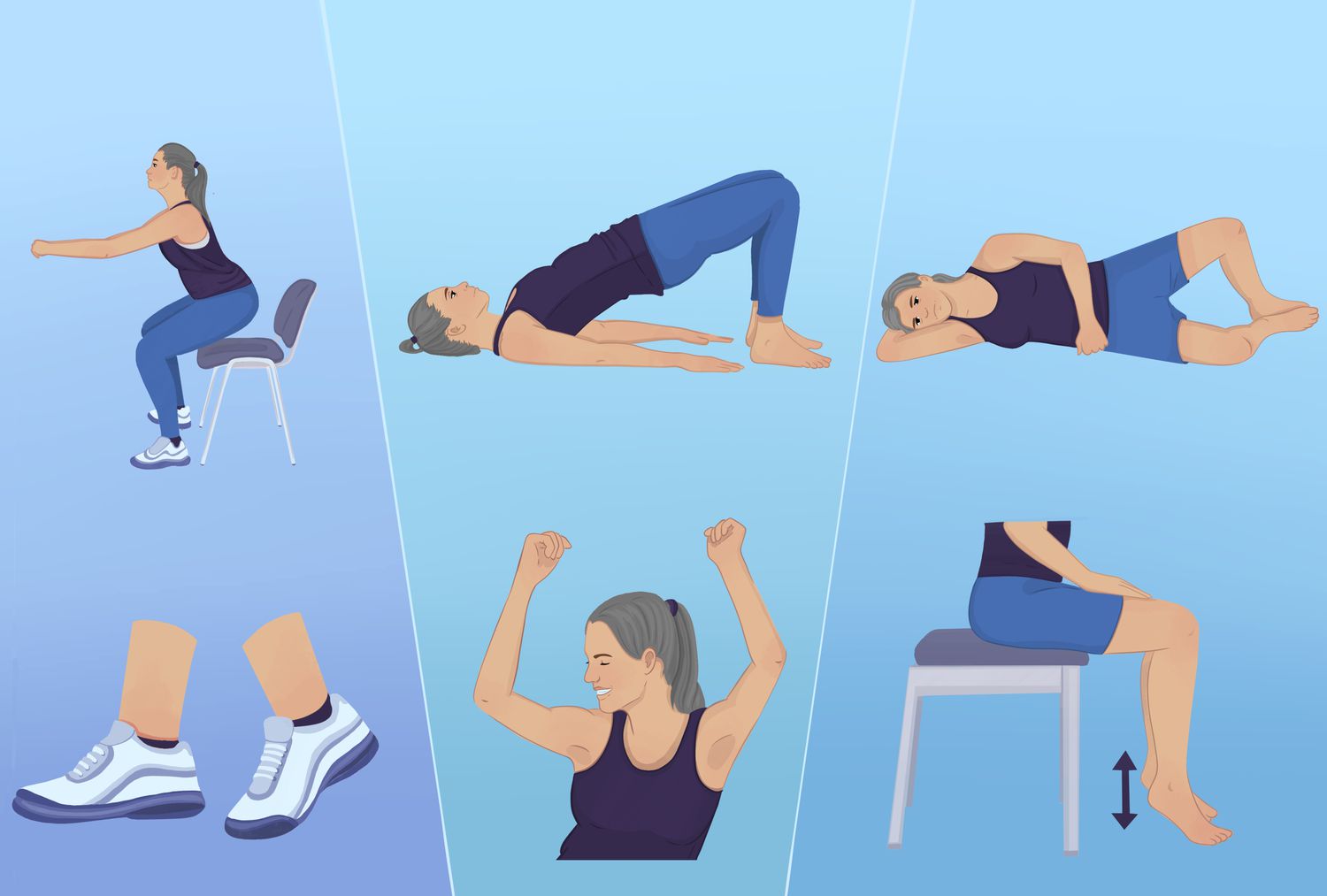
- Try home exercises like chair squats, push-ups, and dancing to stay active with Parkinson’s.
Parkinson’s disease is a neurological disorder that causes a wide variety of movement-related symptoms including resting tremors, rigidity in the arms or legs, slowed movement, and difficulty with walking or balance. These symptoms typically progress slowly, but can eventually cause significant disability and loss of independence.
While there is no cure for this condition, performing a Parkinson’s exercise program can help you manage your symptoms and may prolong your independence.
Illustration by Zoe Hansen for Verywell Health
Benefits of Exercise for People With Parkinson’s Disease
Exercise offers several significant benefits for people with Parkinson’s disease, likely due to two specific neurological changes:
- Dopamine release: This chemical positively affects movement, mood, and pain sensation.
- Changes in the cortical striatum: This brain area controls voluntary movements.
These changes can lead to benefits such as:
- Improved balance
- Reduced risk of falls
- Better walking quality
- Slower decline in quality of life
- Enhanced cognitive function
- Fewer sleep disruptions
How to Exercise With Parkinson’s
Whether you’re new to exercise or an experienced athlete, working out with Parkinson’s means moving regularly and safely in various ways. Your routine should include:
- Aerobic activities
- Strength or resistance training
- Balance, agility, and multitask exercises
- Stretching
Aim for at least three aerobic sessions weekly and two to three sessions of other exercise types.
The Parkinson’s Foundation recommends 150 minutes of moderate to vigorous weekly exercise. Here are tips to reach that goal:
Parkinson’s Home Exercise Program
You don’t need a gym membership or expensive equipment to stay active with Parkinson’s. Many effective exercises can be done at home, no matter what stage of the disease you’re in.
Here are some examples:
Early-Stage Parkinson’s Disease
These exercises appropriately challenge your body during the early stages of the disease. During this time, mobility impairments are minimal, and more vigorous exercising can typically be performed.
Chair Squats
This at-home strengthening exercise challenges the quadriceps muscles and can be made more challenging by using a shorter chair.
- Stand with a chair behind you and your arms extended in front of you.
- Sit your buttocks backward until you tap the chair with it.
- Stand back up again and repeat three sets of 8 to 12 repetitions.
Push-Up
This shoulder and chest exercise can be performed against a wall for an easier variation or on the floor to make it more challenging.
- Get on your hands and toes on the floor with your hands positioned just outside your shoulders.
- Bend your elbows as you slowly lower your chest down to the floor.
- When you are nearly in contact with the ground, push back up to the starting position. Complete three sets of between 8 to 12 pushups.
Brisk Walking or Jogging
Whether on a sidewalk or a treadmill, this common aerobic exercise helps improve your cardiovascular fitness.
- Begin walking or slowly jogging at a pace where you feel your heart rate increase, but could still have a conversation.
- As you move, try to swing your arms and focus on taking larger steps. Listening to a metronome app may also be helpful for improving the quality of your gait in people with Parkinson’s disease.
- When you feel fatigued, take a rest. Try to eventually increase your walking or jogging sessions to 30 minutes at least three times weekly.
Middle-Stage Parkinson’s Disease
During the middle stages of Parkinson’s disease, movement begins to get more challenging and falling becomes more of a concern. The following exercises are good options to challenge your body while remaining mindful of your safety.
Bridges
Use the bridge exercise to strengthen the leg muscles that help you stand up and climb the stairs.
- Lie on your back with your knees bent and your feet on the floor.
- Tighten your stomach muscles and lift your butt in the air.
- Hold it here for 10 seconds before lowering down again. Try two to three sets of 8 to 12 repetitions.
Jogging in Place
This safe aerobic exercise can be done with a chair or counter nearby for balance.
- Facing a sturdy surface, begin to jog in place at a pace that is challenging, but moderate in intensity. Lightly touch the surface if needed to keep from falling.
- Jog or step along with a metronome or a musical beat. When you become tired, stop and rest.
- Work up to 30-minute jogs and complete three sessions weekly.
Dancing
Moving along to your favorite type of music can provide cardiovascular benefits while also challenging your balance.
- In an obstruction-free area with surfaces to grab (if needed), turn on your favorite type of music.
- In a steady but controlled fashion, begin to perform a basic three- to four-step dance pattern. Try counting loudly along to the beat or singing to help exercise your vocal system simultaneously.
- Continue to vary both the song speed and the step patterns as you dance for up to 30 minutes at a time. Do this at least three times weekly.
Advanced-Stage Parkinson’s Disease
During late-stage Parkinson’s disease, standing and walking become very difficult, and finding safe ways to exercise becomes more challenging. Fortunately, there are still many options at your disposal to strengthen and stretch your muscles.
Clam Shells
This exercise strengthens the outer muscles of the hip that help to stabilize your
pelvis as you walk.
- Lie on your side in bed with your knees bent and your legs stacked on top of each
other. - Without rolling your body backward, lift your top knee up while keeping your feet in contact with each other.
- Once you’ve lifted your knee as high as you can, lower it back to the other leg. Try two to three sets of 12 repetitions.
Heel Lifts
Heel lifts are a safe and effective way to target the muscles in your calf that play an important role in your balance.
- Stand with your feet shoulder-width apart and hold onto a counter or a walker.
- Without leaning forward, lift both heels off the ground and roll up through your first and second toes.
- Once you’ve reached your highest point, lower your heels back to the floor.
- Try to do 8 to 12 heel lifts at a time and complete two to three sets.
Trunk Twist
Trunk twists help to increase the range of motion in your neck, upper back, and shoulders. This can make everyday movements and activities easier to perform.
- Lie on your back with your knees bent and your feet on the ground.
- Stretch both arms out at your side and gently nod your chin.
- Simultaneously turn your head to one side as you allow your legs to drop to the other.
- Once a stretch is felt, hold it for 30 to 60 seconds. Repeat this two to three times on each side.
Tips and Considerations
Staying consistent with your workouts can be challenging if you have Parkinson’s disease. Follow these tips to keep you safe and motivated:
- Arrange the room: Remove any obstacles that you may trip over, make sure the lighting is adequate, and ensure that you have something sturdy to grab should you lose your balance.
- Create a workout schedule: Try to work out at the same time each day to help create a lasting routine. Post your schedule somewhere visible for extra accountability.
- Find a family member or a friend to work out with: A workout buddy will help keep you accountable and prevent you from skipping your daily exercise.
- Mix things up: This will keep your routine fresh and exciting. The Parkinson’s Foundation YouTube page features Fitness Fridays and posts new exercise videos each week.
- Consult a physical or occupational therapist: Physical and occupational therapists can achieve advanced specialization in PD treatment, which includes programs to train people on specific home exercise programs catered to the person’s level of functioning, symptoms of PD, comorbidities, and safety concerns.
:max_bytes(150000):strip_icc()/IMG_36371-36db884b1cb041febec9cf44c1c6a1db.jpg)