

Nguyen, N. V. et al. Nationwide temporal trends in adverse pregnancy outcomes and treatments in systemic lupus erythematosus pregnancy over two decades in Sweden. Arthritis Rheumatol. https://doi.org/10.1002/art.70018 (2025).
Abheiden, C. N. H. et al. Systemic lupus erythematosus is associated with an increased frequency of spontaneous preterm births: systematic review and meta-analysis. Am. J. Obstet. Gynecol. 231, 408–416.e21 (2024).
Wind, M. et al. Pregnancy outcome predictors in systemic lupus erythematosus: a systematic review and meta-analysis. Lancet Rheumatol. 6, e667–e683 (2024).
Kroese, S. J. et al. Maternal and perinatal outcome in women with systemic lupus erythematosus: a retrospective bicenter cohort study. J. Immunol. Res. 2017, 8245879 (2017).
Eudy, A. M. et al. Effect of pregnancy on disease flares in patients with systemic lupus erythematosus. Ann. Rheum. Dis. 77, 855–860 (2018).
Jolving, L. R. et al. Prevalence of maternal chronic diseases during pregnancy — a nationwide population based study from 1989 to 2013. Acta Obstet. Gynecol. Scand. 95, 1295–1304 (2016).
Skomsvoll, J. F., Ostensen, M., Baste, V. & Irgens, L. M. Number of births, interpregnancy interval, and subsequent pregnancy rate after a diagnosis of inflammatory rheumatic disease in Norwegian women. J. Rheumatol. 28, 2310–2314 (2001).
Vinet, E. et al. A population-based assessment of live births in women with systemic lupus erythematosus. Ann. Rheum. Dis. 71, 557–559 (2012).
Vinet, E. et al. Decreased live births in women with systemic lupus erythematosus. Arthritis Care Res. 63, 1068–1072 (2011).
Kerola, A. M. et al. Patterns of reproductive health in inflammatory rheumatic diseases and other immune-mediated diseases: a nationwide registry study. Rheumatology 63, 2701–2710 (2024).
Clowse, M. E., Chakravarty, E., Costenbader, K. H., Chambers, C. & Michaud, K. Effects of infertility, pregnancy loss, and patient concerns on family size of women with rheumatoid arthritis and systemic lupus erythematosus. Arthritis Care Res. 64, 668–674 (2012).
Andreoli, L. et al. “Disease knowledge index” and perspectives on reproductive issues: a nationwide study on 398 women with autoimmune rheumatic diseases. Joint Bone Spine 86, 475–481 (2019).
Xia, X. Y. et al. Current investigation of the high prevalence of sexual dysfunction in female patients with systemic lupus erythematosus: a cross-sectional study. Rheumatol. Int. 44, 2147–2157 (2024).
Phuti, A., Hodkinson, B., Tikly, M. & Schneider, M. ‘The feeling of not being entitled to something’: fertility, pregnancy, and sexuality among women with systemic lupus erythematosus in South Africa. Scand. J. Rheumatol. 49, 214–220 (2020).
Hickman, R. A. & Gordon, C. Causes and management of infertility in systemic lupus erythematosus. Rheumatology 50, 1551–1558 (2011).
Krasselt, M. & Baerwald, C. Sex, symptom severity, and quality of life in rheumatology. Clin. Rev. Allergy Immunol. 56, 346–361 (2019).
Perez-Garcia, L. F. et al. Sexual function and reproduction can be impaired in men with rheumatic diseases: a systematic review. Semin. Arthritis Rheum. 50, 557–573 (2020).
Blomjous, B. S. et al. Desire to have children and preferences regarding to pre-pregnancy counselling in women with SLE. Rheumatology 60, 2706–2713 (2021).
Flint, J. et al. BSR and BHPR guideline on prescribing drugs in pregnancy and breastfeeding-part II: analgesics and other drugs used in. Rheumatology 55, 1698–1702 (2016).
Flint, J. et al. BSR and BHPR guideline on prescribing drugs in pregnancy and breastfeeding-part I: standard and biologic disease modifying anti-rheumatic drugs and corticosteroids. Rheumatology 55, 1693–1697 (2016).
Russell, M. D. et al. British Society for Rheumatology guideline on prescribing drugs in pregnancy and breastfeeding: immunomodulatory anti-rheumatic drugs and corticosteroids. Rheumatology 62, e48–e88 (2023).
Andreoli, L. et al. EULAR recommendations for women’s health and the management of family planning, assisted reproduction, pregnancy and menopause in patients with systemic lupus erythematosus and/or antiphospholipid syndrome. Ann. Rheum. Dis. 76, 476–485 (2017).
Sammaritano, L. R. et al. 2020 American College of Rheumatology guideline for the management of reproductive health in rheumatic and musculoskeletal diseases. Arthritis Care Res. 72, 461–488 (2020).
Ruegg, L. et al. EULAR recommendations for use of antirheumatic drugs in reproduction, pregnancy, and lactation: 2024 update. Ann. Rheum. Dis. 84, 910–926 (2025).
Luo, W., Mao, P., Zhang, L., Chen, X. & Yang, Z. Assessment of ovarian reserve by serum anti-Mullerian hormone in patients with systemic lupus erythematosus: a meta-analysis. Ann. Palliat. Med. 9, 207–215 (2020).
Silva, C. A. & Brunner, H. I. Gonadal functioning and preservation of reproductive fitness with juvenile systemic lupus erythematosus. Lupus 16, 593–599 (2007).
Shabanova, S. S., Ananieva, L. P., Alekberova, Z. S. & Guzov, I. I. Ovarian function and disease activity in patients with systemic lupus erythematosus. Clin. Exp. Rheumatol. 26, 436–441 (2008).
Aringer, M. & Smolen, J. S. Safety of off-label biologicals in systemic lupus erythematosus. Expert. Opin. Drug. Saf. 14, 243–251 (2015).
Clowse, M. E., Magder, L. S., Witter, F. & Petri, M. The impact of increased lupus activity on obstetric outcomes. Arthritis Rheum. 52, 514–521 (2005).
Boumpas, D. T. et al. Risk for sustained amenorrhea in patients with systemic lupus erythematosus receiving intermittent pulse cyclophosphamide therapy. Ann. Intern. Med. 119, 366–369 (1993).
Houssiau, F. A. et al. The 10-year follow-up data of the Euro-Lupus Nephritis Trial comparing low-dose and high-dose intravenous cyclophosphamide. Ann. Rheum. Dis. 69, 61–64 (2010).
Tamirou, F. et al. Brief report: the Euro-Lupus low-dose intravenous cyclophosphamide regimen does not impact the ovarian reserve, as measured by serum levels of anti-mullerian hormone. Arthritis Rheumatol. 69, 1267–1271 (2017).
McInerney, K. A. et al. Preconception use of pain-relievers and time-to-pregnancy: a prospective cohort study. Hum. Reprod. 32, 103–111 (2017).
Guballa, N., Sammaritano, L., Schwartzman, S., Buyon, J. & Lockshin, M. D. Ovulation induction and in vitro fertilization in systemic lupus erythematosus and antiphospholipid syndrome. Arthritis Rheum. 43, 550–556 (2000).
Ragab, A., Barakat, R., Ragheb, M., State, O. & Badawy, A. Subfertility treatment in women with systemic lupus erythematosus. J. Obstet. Gynaecol. 32, 569–571 (2012).
Roman, A., Ramirez, A. & Fox, N. S. Prevention of preterm birth in twin pregnancies. Am. J. Obstet. Gynecol. MFM 4, 100551 (2022).
Bellver, J. & Pellicer, A. Ovarian stimulation for ovulation induction and in vitro fertilization in patients with systemic lupus erythematosus and antiphospholipid syndrome. Fertil. Steril. 92, 1803–1810 (2009).
Orquevaux, P. et al. In vitro fertilization in 37 women with systemic lupus erythematosus or antiphospholipid syndrome: a series of 97 procedures. J. Rheumatol. 44, 613–618 (2017).
Reggia, R. et al. An observational multicentre study on the efficacy and safety of assisted reproductive technologies in women with rheumatic diseases. Rheumatol. Adv. Pract. 3, rkz005 (2019).
Lao, M. et al. Pregnancy outcomes in patients receiving assisted reproductive therapy with systemic lupus erythematosus: a multi-center retrospective study. Arthritis Res. Ther. 25, 13 (2023).
Andersson, K. The levonorgestrel intrauterine system: more than a contraceptive. Eur. J. Contracept. Reprod. Health Care 6, 15–22 (2001).
Tepper, N. K., Whiteman, M. K., Marchbanks, P. A., James, A. H. & Curtis, K. M. Progestin-only contraception and thromboembolism: a systematic review. Contraception 94, 678–700 (2016).
Rojas-Villarraga, A., Torres-Gonzalez, J. V. & Ruiz-Sternberg, A. M. Safety of hormonal replacement therapy and oral contraceptives in systemic lupus erythematosus: a systematic review and meta-analysis. PLoS ONE 9, e104303 (2014).
Teal, S. & Edelman, A. Contraception selection, effectiveness, and adverse effects: a review. JAMA 326, 2507–2518 (2021).
Petri, M. et al. Combined oral contraceptives in women with systemic lupus erythematosus. N. Engl. J. Med. 353, 2550–2558 (2005).
Cockrum, R. H., Soo, J., Ham, S. A., Cohen, K. S. & Snow, S. G. Association of progestogens and venous thromboembolism among women of reproductive age. Obstet. Gynecol. 140, 477–487 (2022).
Buyon, J. P., Kim, M. Y. & Salmon, J. E. Predictors of pregnancy outcomes in patients with lupus. Ann. Intern. Med. 164, 131 (2016).
Andreoli, L. et al. Management of pregnancy in autoimmune rheumatic diseases: maternal disease course, gestational and neonatal outcomes and use of medications in the prospectiveItalian P-RHEUM.it study. RMD Open. https://doi.org/10.1136/rmdopen-2024-004091 (2024).
Smyth, A. et al. A systematic review and meta-analysis of pregnancy outcomes in patients with systemic lupus erythematosus and lupus nephritis. Clin. J. Am. Soc. Nephrol. 5, 2060–2068 (2010).
Lateef, A. & Petri, M. Managing lupus patients during pregnancy. Best. Pract. Res. Clin. Rheumatol. 27, 435–447 (2013).
Clowse, M. E., Magder, L., Witter, F. & Petri, M. Hydroxychloroquine in lupus pregnancy. Arthritis Rheum. 54, 3640–3647 (2006).
Tani, C. et al. Are remission and low disease activity state ideal targets for pregnancy planning in systemic lupus erythematosus? A multicentre study. Rheumatology 60, 5610–5619 (2021).
Bobrie, G., Liote, F., Houillier, P., Grunfeld, J. P. & Jungers, P. Pregnancy in lupus nephritis and related disorders. Am. J. Kidney Dis. 9, 339–343 (1987).
Hayslett, J. P. Maternal and fetal complications in pregnant women with systemic lupus erythematosus. Am. J. Kidney Dis. 17, 123–126 (1991).
Larosa, M. et al. Evaluation of lupus anticoagulant, damage, and remission as predictors of pregnancy complications in systemic lupus erythematosus: the French GR2 study. Rheumatology 61, 3657–3666 (2022).
Saavedra, M. A. et al. Impact of previous lupus nephritis on maternal and fetal outcomes during pregnancy. Clin. Rheumatol. 31, 813–819 (2012).
Chen, Y. et al. Good pregnancy outcomes in lupus nephritis patients with complete renal remission. Nephrol. Dial. Transpl. 37, 1888–1894 (2022).
Buyon, J. P., Tamerius, J., Ordorica, S., Young, B. & Abramson, S. B. Activation of the alternative complement pathway accompanies disease flares in systemic lupus erythematosus during pregnancy. Arthritis Rheum. 35, 55–61 (1992).
Yang, Y. et al. Risk and protective factors of disease flare during pregnancy in systemic lupus erythematosus: a systematic review and meta-analysis. Clin. Rheumatol. 44, 887–899 (2025).
Saavedra, M. A. et al. Primigravida is associated with flare in women with systemic lupus erythematosus. Lupus 24, 180–185 (2015).
Mehta, B. et al. Trends in maternal and fetal outcomes among pregnant women with systemic lupus erythematosus in the United States: a cross-sectional analysis. Ann. Intern. Med. 171, 164–171 (2019).
Simard, J. F. et al. Maternal hypertensive disorders in pregnant women with systemic lupus erythematosus and future cardiovascular outcomes. Arthritis Care Res. 73, 574–579 (2021).
Liu, T., Xu, Y., Gong, Y., Zheng, J. & Chen, Z. The global burden of disease attributable to preterm birth and low birth weight in 204 countries and territories from 1990 to 2019: an analysis of the Global Burden of Disease Sstudy. J. Glob. Health 14, 04109 (2024).
Clowse, M. E., Jamison, M., Myers, E. & James, A. H. A national study of the complications of lupus in pregnancy. Am. J. Obstet. Gynecol. 199, 127.E1–127.E6 (2008).
Yasmeen, S., Wilkins, E. E., Field, N. T., Sheikh, R. A. & Gilbert, W. M. Pregnancy outcomes in women with systemic lupus erythematosus. J. Matern. Fetal Med. 10, 91–96 (2001).
Clark, C. A., Spitzer, K. A. & Laskin, C. A. Decrease in pregnancy loss rates in patients with systemic lupus erythematosus over a 40-year period. J. Rheumatol. 32, 1709–1712 (2005).
Petri, M., Daly, R. P. & Pushparajah, D. S. Healthcare costs of pregnancy in systemic lupus erythematosus: retrospective observational analysis from a US health claims database. J. Med. Econ. 18, 967–973 (2015).
Bramham, K. et al. Pregnancy outcomes in systemic lupus erythematosus with and without previous nephritis. J. Rheumatol. 38, 1906–1913 (2011).
Ko, H. S. et al. Pregnancy outcomes and appropriate timing of pregnancy in 183 pregnancies in Korean patients with SLE. Int. J. Med. Sci. 8, 577–583 (2011).
Ateka-Barrutia, O. & Khamashta, M. A. The challenge of pregnancy for patients with SLE. Lupus 22, 1295–1308 (2013).
Mankee, A., Petri, M. & Magder, L. S. Lupus anticoagulant, disease activity and low complement in the first trimester are predictive of pregnancy loss. Lupus Sci. Med. 2, e000095 (2015).
Abheiden, C. N. et al. Low-molecular-weight heparin and aspirin use in relation to pregnancy outcome in women with systemic lupus erythematosus and antiphospholipid syndrome: a cohort study. Hypertens. Pregnancy 36, 8–15 (2017).
McMillan, E. et al. Management of pregnancy in women with pulmonary hypertension secondary to SLE and anti-phospholipid syndrome. Lupus 11, 392–398 (2002).
Zhang, X. et al. The conditions that patients with systemic lupus erythematosus should fulfill before pregnancy to optimize outcomes: a large-scale multicenter cohort study from China. Arthritis Res. Ther. 27, 31 (2025).
Kaplowitz, E. T. et al. Contribution of socioeconomic status to racial/ethnic disparities in adverse pregnancy outcomes among women with systemic lupus erythematosus. Arthritis Care Res. 70, 230–235 (2018).
Clowse, M. E. B. et al. Implications of the accuracy of diagnostic algorithms for systemic lupus on our understanding of racial disparities in pregnancy outcomes. Rheumatology 63, 119–126 (2024).
Clowse, M. E., Magder, L. S. & Petri, M. The clinical utility of measuring complement and anti-dsDNA antibodies during pregnancy in patients with systemic lupus erythematosus. J. Rheumatol. 38, 1012–1016 (2011).
Clowse, M. E., Magder, L. S., Witter, F. & Petri, M. Early risk factors for pregnancy loss in lupus. Obstet. Gynecol. 107, 293–299 (2006).
Radin, M. et al. Complement levels during the first trimester predict disease flare and adverse pregnancy outcomes in systemic lupus erythematosus: a network meta-analysis on 532 pregnancies. Autoimmun. Rev. 22, 103467 (2023).
Abalos, E., Cuesta, C., Grosso, A. L., Chou, D. & Say, L. Global and regional estimates of preeclampsia and eclampsia: a systematic review. Eur. J. Obstet. Gynecol. Reprod. Biol. 170, 1–7 (2013).
He, W. R. & Wei, H. Maternal and fetal complications associated with systemic lupus erythematosus: an updated meta-analysis of the most recent studies (2017-2019). Medicine 99, e19797 (2020).
Tani, C. et al. Impact of low-dose acetylsalicylic acid on pregnancy outcome in systemic lupus erythematosus: results from a multicentre study. Lupus Sci. Med. https://doi.org/10.1136/lupus-2022-000714 (2022).
Gordijn, S. J. et al. Consensus definition of fetal growth restriction: a Delphi procedure. Ultrasound Obstet. Gynecol. 48, 333–339 (2016).
Chakravarty, E. F., Nelson, L. & Krishnan, E. Obstetric hospitalizations in the United States for women with systemic lupus erythematosus and rheumatoid arthritis. Arthritis Rheum. 54, 899–907 (2006).
Mok, M. Y. et al. Clinical predictors of fetal and maternal outcome in Chinese patients with systemic lupus erythematosus. Ann. Rheum. Dis. 63, 1705–1706 (2004).
Abou-Nassar, K., Carrier, M., Ramsay, T. & Rodger, M. A. The association between antiphospholipid antibodies and placenta mediated complications: a systematic review and meta-analysis. Thromb. Res. 128, 77–85 (2011).
Canti, V. et al. Low incidence of intrauterine growth restriction in pregnant patients with systemic lupus erythematosus taking hydroxychloroquine. Immunol. Med. 44, 204–210 (2021).
Kim, S. Y. & Lee, J. H. Prognosis of neonates in pregnant women with systemic lupus erythematosus. Yonsei Med. J. 49, 515–520 (2008).
Wei, S., Lai, K., Yang, Z. & Zeng, K. Systemic lupus erythematosus and risk of preterm birth: a systematic review and meta-analysis of observational studies. Lupus 26, 563–571 (2017).
Chakravarty, E. F. et al. Factors that predict prematurity and preeclampsia in pregnancies that are complicated by systemic lupus erythematosus. Am. J. Obstet. Gynecol. 192, 1897–1904 (2005).
Kaizer, A. M. et al. Reducing the burden of surveillance in pregnant women with no history of fetal atrioventricular block using the negative predictive value of anti-Ro/SSA antibody titers. Am. J. Obstet. Gynecol. 227, 761.e1–761.e10 (2022).
Brucato, A. et al. Risk of congenital complete heart block in newborns of mothers with anti-Ro/SSA antibodies detected by counterimmunoelectrophoresis: a prospective study of 100 women. Arthritis Rheum. 44, 1832–1835 (2001).
Llanos, C. et al. Recurrence rates of cardiac manifestations associated with neonatal lupus and maternal/fetal risk factors. Arthritis Rheum. 60, 3091–3097 (2009).
Buyon, J. P. et al. Prospective evaluation of high titer autoantibodies and fetal home monitoring in the detection of atrioventricular block among anti-SSA/Ro pregnancies. Arthritis Rheumatol. 76, 411–420 (2024).
Fredi, M. et al. First report of the Italian registry on immune-mediated congenital heart block (Lu.Ne Registry). Front. Cardiovasc. Med. 6, 11 (2019).
Izmirly, P. M. et al. Maternal and fetal factors associated with mortality and morbidity in a multi-racial/ethnic registry of anti-SSA/Ro-associated cardiac neonatal lupus. Circulation 124, 1927–1935 (2011).
Moak, J. P. et al. Congenital heart block: development of late-onset cardiomyopathy, a previously underappreciated sequela. J. Am. Coll. Cardiol. 37, 238–242 (2001).
Izmirly, P. et al. Hydroxychloroquine to prevent recurrent congenital heart block in fetuses of anti-SSA/Ro-positive mothers. J. Am. Coll. Cardiol. 76, 292–302 (2020).
Zuppa, A. A. et al. Neonatal lupus: follow-up in infants with anti-SSA/Ro antibodies and review of the literature. Autoimmun. Rev. 16, 427–432 (2017).
van Baar, P. M., Welters, S. M., Ravelli, A. C. J., de Boer, M. A. & de Groot, C. J. M. Cardiovascular mortality risk a decade after twin and singleton pregnancies complicated by hypertensive disorders of pregnancy. Pregnancy Hypertens. 28, 9–14 (2022).
Forger, F. & Villiger, P. M. Immunological adaptations in pregnancy that modulate rheumatoid arthritis disease activity. Nat. Rev. Rheumatol. 16, 113–122 (2020).
Ander, S. E., Diamond, M. S. & Coyne, C. B. Immune responses at the maternal-fetal interface. Sci. Immunol. 4, eaat6114 (2019).
Orefice, R. Immunology and the immunological response in pregnancy. Best. Pract. Res. Clin. Obstet. Gynaecol. 76, 3–12 (2021).
Tsokos, G. C. The immunology of systemic lupus erythematosus. Nat. Immunol. 25, 1332–1343 (2024).
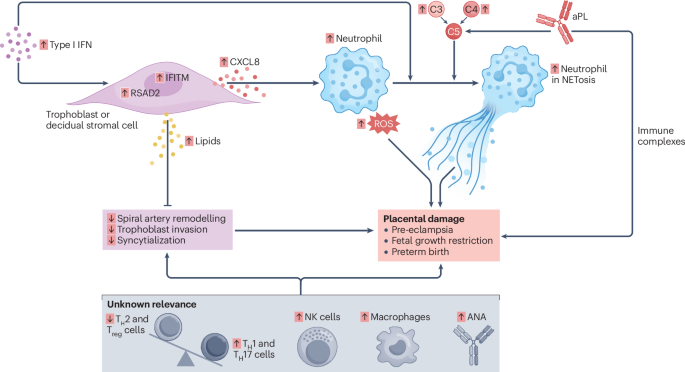
Girardi, G. et al. Complement C5a receptors and neutrophils mediate fetal injury in the antiphospholipid syndrome. J. Clin. Invest. 112, 1644–1654 (2003).
Yalavarthi, S. et al. Release of neutrophil extracellular traps by neutrophils stimulated with antiphospholipid antibodies: a newly identified mechanism of thrombosis in the antiphospholipid syndrome. Arthritis Rheumatol. 67, 2990–3003 (2015).
Jiang, M. et al. The enrichment of neutrophil extracellular traps impair the placentas of systemic lupus erythematosus through accumulating decidual NK cells. Sci. Rep. 11, 6870 (2021).
Redecha, P. et al. Tissue factor: a link between C5a and neutrophil activation in antiphospholipid antibody induced fetal injury. Blood 110, 2423–2431 (2007).
Matrai, C. E., Rand, J. H. & Baergen, R. N. Absence of distinct immunohistochemical distribution of annexin A5, C3b, C4d, and C5b-9 in placentas from patients with antiphospholipid antibodies, preeclampsia, and systemic lupus erythematosus. Pediatr. Dev. Pathol. 22, 431–439 (2019).
Marder, W. et al. Placental histology and neutrophil extracellular traps in lupus and pre-eclampsia pregnancies. Lupus Sci. Med. 3, e000134 (2016).
Grennan, D. M., McCormick, J. N., Wojtacha, D., Carty, M. & Behan, W. Immunological studies of the placenta in systemic lupus erythematosus. Ann. Rheum. Dis. 37, 129–134 (1978).
Shamonki, J. M., Salmon, J. E., Hyjek, E. & Baergen, R. N. Excessive complement activation is associated with placental injury in patients with antiphospholipid antibodies. Am. J. Obstet. Gynecol. 196, 167.e1–167.e5 (2007).
Medina, G. et al. The prognostic value of neutrophile/lymphocyte ratio and serum chemerin to predict maternal-fetal complications in pregnant systemic lupus erythematosus patients. Lupus 32, 1409–1417 (2023).
Sahin, R. et al. The role of first-trimester NLR (neutrophil to lymphocyte ratio), systemic immune-inflammation index (SII), and, systemic immune-response index (SIRI) in the prediction of composite adverse outcomes in pregnant women with systemic lupus erythematosus. J. Reprod. Immunol. 158, 103978 (2023).
Stockfelt, M. et al. Activated low-density granulocytes in peripheral and intervillous blood and neutrophil inflammation in placentas from SLE pregnancies. Lupus Sci. Med. https://doi.org/10.1136/lupus-2020-000463 (2021).
Torell, A. et al. Low-density granulocytes are related to shorter pregnancy duration but not to interferon alpha protein blood levels in systemic lupus erythematosus. Arthritis Res. Ther. 25, 107 (2023).
Girardi, G., Yarilin, D., Thurman, J. M., Holers, V. M. & Salmon, J. E. Complement activation induces dysregulation of angiogenic factors and causes fetal rejection and growth restriction. J. Exp. Med. 203, 2165–2175 (2006).
Hong, S. et al. Longitudinal profiling of human blood transcriptome in healthy and lupus pregnancy. J. Exp. Med. 216, 1154–1169 (2019).
Ding, X. et al. RSAD2: a pathogenic interferon-stimulated gene at the maternal-fetal interface of patients with systemic lupus erythematosus. Cell Rep. Med. 6, 101974 (2025).
Buchrieser, J. et al. IFITM proteins inhibit placental syncytiotrophoblast formation and promote fetal demise. Science 365, 176–180 (2019).
Hellwig, K., Duarte Caron, F., Wicklein, E. M., Bhatti, A. & Adamo, A. Pregnancy outcomes from the global pharmacovigilance database on interferon beta-1b exposure. Ther. Adv. Neurol. Disord. 13, 1756286420910310 (2020).
Hakkarainen, K. M. et al. Pregnancy outcomes after exposure to interferon beta: a register-based cohort study among women with MS in Finland and Sweden. Ther. Adv. Neurol. Disord. 13, 1756286420951072 (2020).
Klehmet, J., Begus-Nahrmann, Y., Taipale, K., Niemczyk, G. & Rehberg-Weber, K. Impact of interferon beta exposure on birth outcome and child development – results from the post-authorisation safety study PRIMA. Mult. Scler. Relat. Disord. 77, 104844 (2023).
Baechler, E. C. et al. Interferon-inducible gene expression signature in peripheral blood cells of patients with severe lupus. Proc. Natl Acad. Sci. USA 100, 2610–2615 (2003).
Bjorkander, S. et al. Pregnancy-associated inflammatory markers are elevated in pregnant women with systemic lupus erythematosus. Cytokine 59, 392–399 (2012).
Bjorkander, S., Heidari-Hamedani, G., Bremme, K., Gunnarsson, I. & Holmlund, U. Peripheral monocyte expression of the chemokine receptors CCR2, CCR5 and CXCR3 is altered at parturition in healthy women and in women with systemic lupus erythematosus. Scand. J. Immunol. 77, 200–212 (2013).
Zhang, S. et al. Th1/Th2 associated transcription factors and cytokines in pregnancies with systemic lupus erythematosus. Clin. Exp. Rheumatol. 43, 105–111 (2025).
Li, H. H. et al. Systemic lupus erythematosus dysregulates the expression of long noncoding RNAs in placentas. Arthritis Res. Ther. 24, 142 (2022).
Fierro, J. J. et al. Immunohistochemical analysis reveals higher myxovirus resistance protein 1 expression and increased macrophage count in placentas from patients with systemic rheumatic diseases. Rheumatol. Int. 45, 90 (2025).
Chakravarty, E., Clowse, M. E., Pushparajah, D. S., Mertens, S. & Gordon, C. Family planning and pregnancy issues for women with systemic inflammatory diseases: patient and physician perspectives. BMJ Open. 4, e004081 (2014).
Skorpen, C. G. et al. Influence of disease activity and medications on offspring birth weight, pre-eclampsia and preterm birth in systemic lupus erythematosus: a population-based study. Ann. Rheum. Dis. 77, 264–269 (2018).
Humbert, M. et al. 2022 ESC/ERS guidelines for the diagnosis and treatment of pulmonary hypertension. Eur. Heart J. 43, 3618–3731 (2022).
Goldstein, R. F. et al. Association of gestational weight gain with maternal and infant outcomes: a systematic review and meta-analysis. JAMA 317, 2207–2225 (2017).
Shard, A., Prodger, C. & Pavord, S. Venous thromboembolism still leads on maternal death. Res. Pract. Thromb. Haemost. 9, 102675 (2025).
Esposito, G. et al. Parents’ age and total fertility rate in selected high-income countries from Europe and North America, 1990-2020. Eur. J. Obstet. Gynecol. Reprod. Biol. 299, 32–36 (2024).
Normand, G. et al. Not only disease activity but also chronic hypertension and overweight are determinants of pregnancy outcomes in patients with systemic lupus erythematosus. Lupus 28, 529–537 (2019).
Miyakis, S. et al. International consensus statement on an update of the classification criteria for definite antiphospholipid syndrome (APS). J. Thromb. Haemost. 4, 295–306 (2006).
Barbhaiya, M. et al. 2023 ACR/EULAR antiphospholipid syndrome classification criteria. Ann. Rheum. Dis. 82, 1258–1270 (2023).
Ruiz-Irastorza, G. & Khamashta, M. A. Managing lupus patients during pregnancy. Best. Pract. Res. Clin. Rheumatol. 23, 575–582 (2009).
Schreiber, K. et al. British Society for Rheumatology guideline on prescribing drugs in pregnancy and breastfeeding: comorbidity medications used in rheumatology practice. Rheumatology 62, e89–e104 (2023).
Hu, Z., Gao, R., Huang, W., Wang, H. & Qin, L. Effect of hydroxychloroquine on lupus activity, preeclampsia and intrauterine growth restriction in pregnant women with systemic lupus erythematosus and/or antiphospholipid syndrome: a systematic review and meta-analysis. J. Clin. Med. https://doi.org/10.3390/jcm12020485 (2023).
Do, S. C., Rizk, N. M., Druzin, M. L. & Simard, J. F. Does hydroxychloroquine protect against preeclampsia and preterm delivery in systemic lupus erythematosus pregnancies? Am. J. Perinatol. 37, 873–880 (2020).
Schreiber, K. et al. Global comment on the use of hydroxychloroquine during the periconception period and pregnancy in women with autoimmune diseases. Lancet Rheumatol. 5, e501–e506 (2023).
Rolnik, D. L. et al. Aspirin versus placebo in pregnancies at high risk for preterm preeclampsia. N. Engl. J. Med. 377, 613–622 (2017).
Roberge, S., Bujold, E. & Nicolaides, K. H. Aspirin for the prevention of preterm and term preeclampsia: systematic review and metaanalysis. Am. J. Obstet. Gynecol. 218, 287–293.e1 (2018).
Bleau, N., Patenaude, V. & Abenhaim, H. A. Risk of venous thromboembolic events in pregnant patients with autoimmune diseases: a population-based study. Clin. Appl. Thromb. Hemost. 22, 285–291 (2016).
Griffin, M. M. et al. Risk assessment model for postpartum venous thromboembolism prevention in patients with systemic lupus erythematosus. Am. J. Perinatol. 40, 1732–1737 (2023).
van Vollenhoven, R. F. et al. 2021 DORIS definition of remission in SLE: final recommendations from an international task force. Lupus Sci. Med. https://doi.org/10.1136/lupus-2021-000538 (2021).
Moghib, K. et al. Efficacy of vitamin D supplementation on the incidence of preeclampsia: a systematic review and meta-analysis. BMC Pregnancy Childbirth 24, 852 (2024).
Bultink, I. E. M. Bone disease in connective tissue disease/systemic lupus erythematosus. Calcif. Tissue Int. 102, 575–591 (2018).
Hofmeyr, G. J., Lawrie, T. A., Atallah, A. N., Duley, L. & Torloni, M. R. Calcium supplementation during pregnancy for preventing hypertensive disorders and related problems. Cochrane Database Syst. Rev. https://doi.org/10.1002/14651858.CD001059.pub4 (2014).
Cluver, C. A., Rohwer, C. & Rohwer, A. C. Calcium supplementation during pregnancy for preventing hypertensive disorders and related problems. Cochrane Database Syst. Rev. 12, CD001059 (2025).
Borges, M. C., Moura dos Santos, F. de M., Telles, R. W., Lanna, C. C. & Correia, M. I. Nutritional status and food intake in patients with systemic lupus erythematosus. Nutrition 28, 1098–1103 (2012).
Pocovi-Gerardino, G. et al. Dietary intake and nutritional status in patients with systemic lupus erythematosus. Endocrinol. Diabetes Nutr. 65, 533–539 (2018).
Balevic, S. J. et al. Hydroxychloroquine PK and exposure-response in pregnancies with lupus: the importance of adherence for neonatal outcomes. Lupus Sci. Med. https://doi.org/10.1136/lupus-2021-000602 (2022).
Schreiber, K. et al. Impact of conflicting information on the use of antirheumatic drugs in pregnancy and breastfeeding: perspectives of healthcare providers from the global PRAISE survey. Ther. Adv. Musculoskelet. Dis. 17, 1759720X251350087 (2025).
Simeoni, U., Messer, J., Weisburd, P., Haddad, J. & Willard, D. Neonatal renal dysfunction and intrauterine exposure to prostaglandin synthesis inhibitors. Eur. J. Pediatr. 148, 371–373 (1989).
Dong, Y. et al. Risk of gestational diabetes mellitus in systemic lupus erythematosus pregnancy: a systematic review and meta-analysis. BMC Pregnancy Childbirth 19, 179 (2019).
Pluma, A. et al. Antirheumatic drugs in reproduction, pregnancy, and lactation: a systematic literature review informing the 2024 update of the EULAR recommendations. Ann. Rheum. Dis. 84, 1561–1590 (2025).
Giles, I., Yee, C. S. & Gordon, C. Stratifying management of rheumatic disease for pregnancy and breastfeeding. Nat. Rev. Rheumatol. 15, 391–402 (2019).
Michael, A. et al. Use of antenatal fluorinated corticosteroids in management of congenital heart block: systematic review and meta-analysis. Eur. J. Obstet. Gynecol. Reprod. Biol. X 4, 100072 (2019).
Giles, I. et al. The time of equipoise on the use of biological DMARDs in for inflammatory arthritis during pregnancy is finally over: a reappraisal of evidence to optimise pregnancy management. Lancet Rheumatol. 6, e546–e559 (2024).
Siegel, C. H. & Sammaritano, L. R. Biologic disease-modifying antirheumatic drug use during pregnancy and lactation. Obstet. Gynecol. https://doi.org/10.1097/AOG.0000000000006193 (2026).
Lorenzo-Vizcaya, A. & Isenberg, D. A. The use of anti-TNF-alpha therapies for patients with systemic lupus erythematosus. Where are we now? Expert. Opin. Biol. Ther. 21, 639–647 (2021).
Kao, J. H. et al. Pregnancy outcomes in patients treated with belimumab: report from real-world experience. Semin. Arthritis Rheum. 51, 963–968 (2021).
Chakravarty, E. F., Murray, E. R., Kelman, A. & Farmer, P. Pregnancy outcomes after maternal exposure to rituximab. Blood 117, 1499–1506 (2011).
Klink, D. T., van Elburg, R. M., Schreurs, M. W. & van Well, G. T. Rituximab administration in third trimester of pregnancy suppresses neonatal B-cell development. Clin. Dev. Immunol. 2008, 271363 (2008).
Victora, C. G. et al. Breastfeeding in the 21st century: epidemiology, mechanisms, and lifelong effect. Lancet 387, 475–490 (2016).
Acevedo, M., Pretini, J., Micelli, M., Sequeira, G. & Kerzberg, E. Breastfeeding initiation, duration, and reasons for weaning in patients with systemic lupus erythematosus. Rheumatol. Int. 37, 1183–1186 (2017).
Li, W. & Wang, T. Breastfeeding initiation, duration, and associated factors in mothers with systemic lupus erythematosus. Breastfeed. Med. 17, 958–963 (2022).
Lieber, S. B. et al. Infant feeding experiences of women with systemic lupus erythematosus: a qualitative study. Lupus 34, 365–373 (2025).
Berwick, M. A. P., Heuberger, A. J., Martin, J. V., Hale, T. W. & Louis-Jacques, A. F. Drugs in Lactation. Semin. Perinatol. 49, 152077 (2025).
Datta, P., Baker, T. & Hale, T. W. Balancing the use of medications while maintaining breastfeeding. Clin. Perinatol. 46, 367–382 (2019).
Verstegen, R. H. J. & Ito, S. Drugs in lactation. J. Obstet. Gynaecol. Res. 45, 522–531 (2019).
Lien, H. J. T. et al. Single-cell resolution of longitudinal blood transcriptome profiles in rheumatoid arthritis, systemic lupus erythematosus and healthy control pregnancies. Ann. Rheum. Dis. 83, 300–311 (2024).
Schreiber, K. et al. Challenges of designing and conducting cohort studies and clinical trials in populations of pregnant people. Lancet Rheumatol. 6, e560–e572 (2024).