

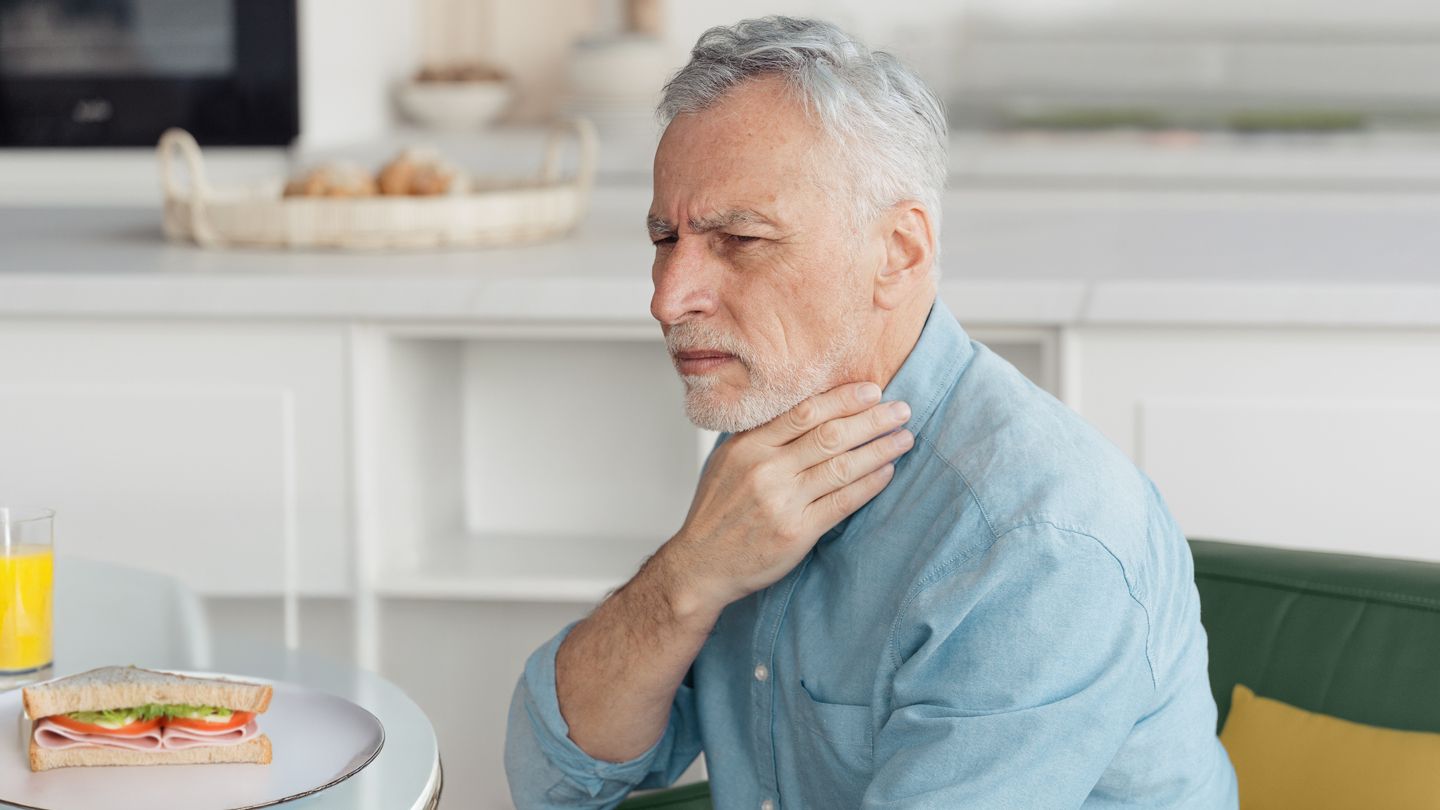
Over time, inflammation from EoE can damage and narrow the esophagus, causing a food impaction, which is “when food is stuck in the esophagus and cannot be propelled down into the stomach by the esophagus,” says Mary Ann Huang, MD, a hepatologist and gastroenterologist at HCA HealthONE Presbyterian St. Luke’s in Denver. “Typically, a food bolus, or clump of food, is stuck somewhere in the esophagus.”
A food impaction can cause symptoms such as chest pain, choking, drooling, and dysphagia (trouble swallowing).
People usually know they need to seek urgent care, because symptoms are so extreme, says Ashkan Farhadi, MD, a gastroenterologist at MemorialCare Orange Coast Medical Center in Fountain Valley, California. “Nothing goes down — not even your saliva.”
Not everyone with EoE will develop a food impaction. One study found it affected 16 percent of people with EoE and tended to affect men more often than women. But because it can quickly become critical, it’s important to know how to respond if you feel like you’re experiencing symptoms.