

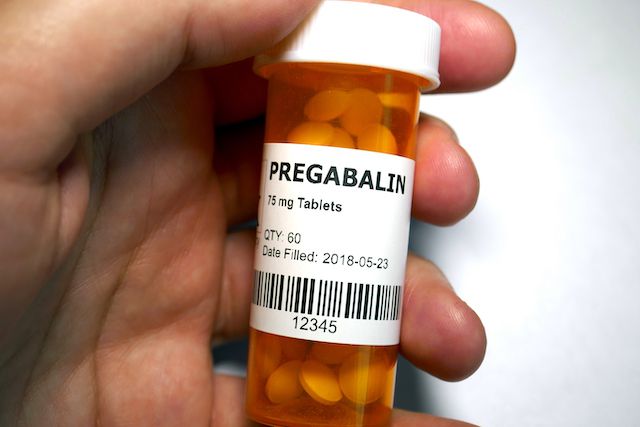
| Brand Name: | Active Ingredient: | Dosage Forms and Strengths: |
| Neurontin | Gabapentin | · Oral capsule: 100 mg, 300 mg, 400 mg · Oral tablet: 600 mg, 800 mg · Oral solution: 50 milligrams per milliliter (mg/mL) |
| Gralise | Gabapentin | · Oral tablet: 300 mg, 600 mg |
| Horizant | Gabapentin enacarbil | · ER tablet: 300 mg, 600 mg |
| Lyrica | Pregabalin | · Oral capsule: 25 mg, 50 mg, 75 mg, 100 mg, 150 mg, 200 mg, 225 mg, 300 mg · Oral solution: 20 mg/mL |
| Lyrica CR | Pregabalin | · ER tablet: 82.5 mg, 165 mg, 330 mg |
Gabapentin and pregabalin doses depend on the condition being treated. Your healthcare provider will usually start you on a lower dose and gradually increase it to find the effective dosage for you.
For certain situations, such as kidney problems, your healthcare provider might maintain you on a lower dosage. Forms and strengths for both medications vary, so consult with a healthcare provider for specifics on what might be best for your needs.
Pregabalin Dosages
Here are common dosages for pregabalin in adults:
- Postherpetic neuralgia: 75–150 mg two times daily or 50–100 mg three times daily; maximum dosage of 600 mg daily
- Nerve pain due to diabetic neuropathy: 50–100 mg three times daily; maximum dosage of 600 mg daily
- Fibromyalgia: 75–150 mg twice daily; maximum 450 mg daily
- Nerve pain due to spinal cord injury: 75–300 mg two times daily; maximum 600 mg daily
- Adjunct treatment of partial seizures: 150–600 mg, divided into two or three doses throughout the day
Pregabalin is only approved for treating partial seizures in children. The dosage depends on the child’s body weight.
The drug is used in children aged 1 month and older. It’s typically prescribed in combination with other seizure medications. A healthcare provider can supply information about the pediatric dosage of pregabalin.
Pregabalin may be prescribed for other uses that are considered off-label. Conversely, a healthcare provider can give you more details about pregabalin dosage for off-label uses.
Gabapentin Doses
Here are some examples of the typical doses for gabapentin in adults:
- Postherpetic neuralgia: 300–600 mg three times a day; maximum dosage of 1,800 mg daily
- Adjunct treatment of partial seizures: 300–1,200 mg three times daily; maximum dosage of 3,600 mg daily
To treat partial seizures in children, the dosage of gabapentin depends on the child’s body weight. The drug may be prescribed for children aged 3 years and older.
A healthcare provider can provide more details about the pediatric dosage of gabapentin. Other available versions of gabapentin are Gralise and Horizant. These brands come in ER forms that are usually taken once a day.
Gabapentin is commonly prescribed for other uses that are considered off-label.
Therefore, if needed, your healthcare provider can offer more details about the dosage of gabapentin for these or other off-label uses.
Warning
You shouldn’t suddenly stop taking gabapentin or pregabalin.
If you want to control the medication, consult a provider about how to stop it safely, usually by slowly reducing your dose over a couple of weeks before stopping it completely.
How Effective Are They?
Numerous clinical trials have examined whether pregabalin or gabapentin is more effective for treating specific conditions. Some of the trial findings are explained below.
Keep in mind that clinical trial results might not predict individual responses to treatment outside the trial.
Seizure: Some evidence suggests that pregabalin is more effective than gabapentin for treating partial seizures in people with epilepsy.
However, other studies have shown that pregabalin was not any better than gabapentin in reducing the frequency of seizures.
Gabapentin and pregabalin are adjunct treatments for partial seizures, meaning they are taken with other antiseizure medications.
Pain: A study found no significant difference in the effectiveness of pregabalin and gabapentin for treating nerve pain after spinal cord injury.
However, another study found gabapentin to be superior to pregabalin for the treatment for chronic sciatica.
Anxiety: In a small clinical trial, gabapentin was shown to be more effective for anxiety, insomnia, and fatigue symptoms in adults with low-back pain. However, the trial found that pregabalin was more effective for pain reduction.
Consult a healthcare provider if your current medication isn’t helping your symptoms. They can determine if a different dose or another drug would be more effective.
Which Drug Lasts Longer?
The chart below compares the half-life of gabapentin and pregabalin. It usually takes about five half-lives for a drug to be cleared from your system.
The chart also shows how long each drug takes to reach its maximum concentration in your blood:
| Brand Name: | Active Ingredient: | Half-Life: | Peak Concentration: |
| Neurontin | Gabapentin | 5–7 hours | 3–4 hours |
| Lyrica | Pregabalin | 6 hours | 1–1.5 hours |
Gabapentin and pregabalin are available in immediate-release (IR) and ER versions.
In general, ER versions of drugs require less frequent dosing than IR forms.
Brand names of gabapentin include Neurontin, Gralise, and Horizant.
Horizant is an ER tablet that contains gabapentin enacarbil and is approved to treat restless legs syndrome and postherpetic neuralgia.
The brand name of pregabalin IR is Lyrica; an extended-release version is Lyrica CR.
Side Effects & Safety
Examples of common side effects associated with the use of gabapentin and pregabalin include the following:
Rarely, more severe side effects of gabapentin and pregabalin may include:
- Suicidal thoughts or behaviors
- Respiratory depression (slow, shallow breathing), especially if taken with other drugs or substances that are central nervous system (CNS) depressants, such as alcohol
- Severe symptoms that indicate a harsh allergic reaction to gabapentin or pregabalin
Talk to a Healthcare Provider
Gabapentin and pregabalin are not safe for everyone. Before starting gabapentin or pregabalin, talk to a healthcare provider about your health history.
This includes any surgeries, allergic reactions, and any medical conditions you have or have had, as this information helps healthcare providers determine which medications are safe for your situation.
What Drug Interactions Should I Know About?
Pregabalin can interact with alcohol as well as other drugs.
Examples include:
- Hydrocodone or other opioids
- Ativan (lorazepam) or other benzodiazepines
Gabapentin can also interact with alcohol as well as other drugs. Examples include:
- Benzodiazepines
- Opioids
- Antacids, such as Maalox (magnesium/aluminum hydroxide), can slightly reduce the concentration of gabapentin
- Morphine can increase the concentration of gabapentin
:max_bytes(150000):strip_icc()/Patricia52-8acd6aaad385492b90873f769f7f3b69.jpg)