

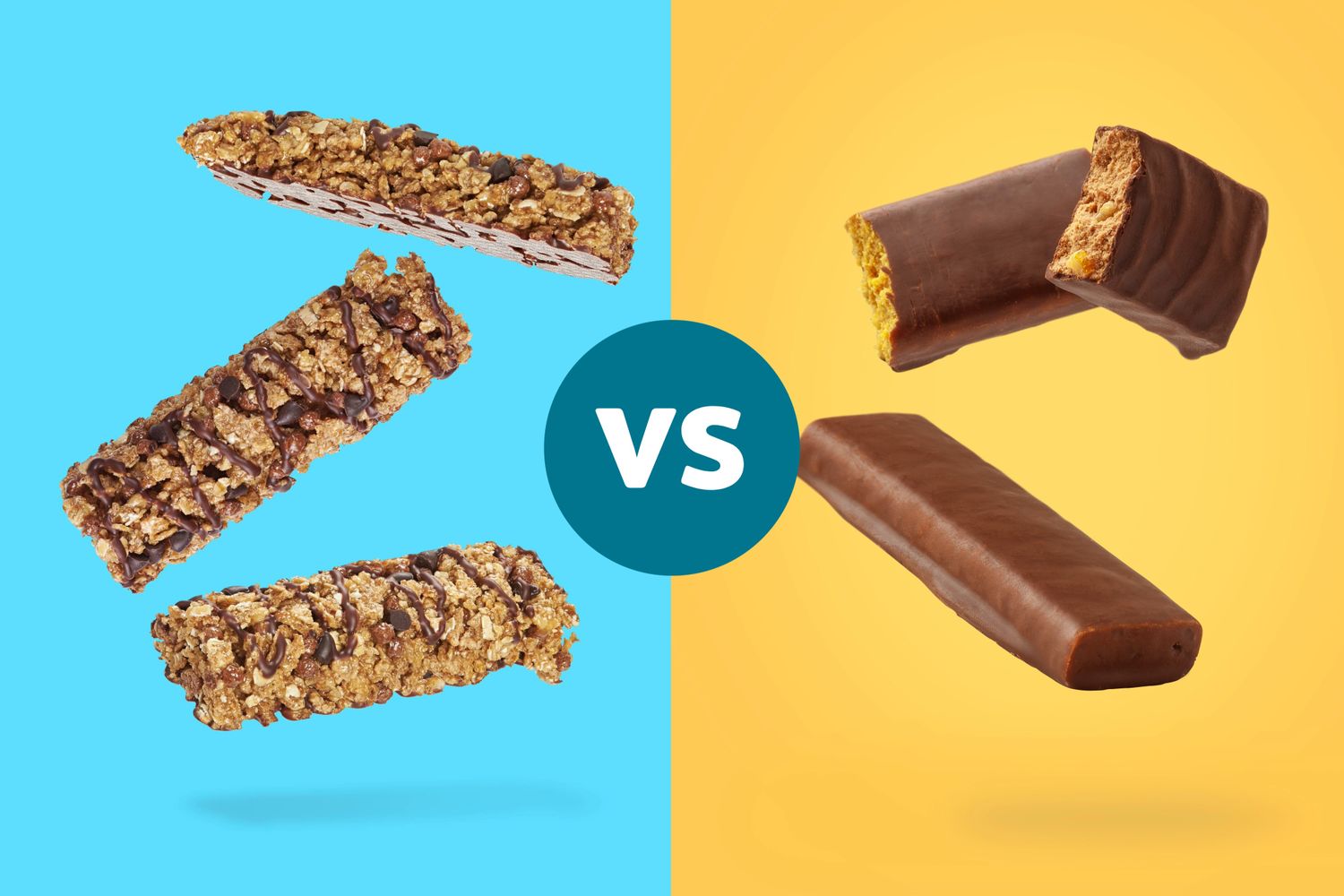
:max_bytes(150000):strip_icc():format(jpeg)/VWH-Granola-vs-Protein-Bar-d5c8b5c6ce574b0eaa20a081a31d44ca.jpeg)
Key Takeaways
- Granola bars mainly provide carbohydrates for quick energy, while protein bars offer more protein to support fullness and muscle health.
- Both types of bars can be high in sugar or heavily processed, so reading labels is important.
- The healthiest choice depends on your personal goals, such as energy, fullness, or convenience.
Granola bars and protein bars are easy snacks to grab and go. They may look similar, but they are made for different purposes. Knowing what sets them apart can help you choose the option that best fits your needs.
What Are Granola Bars?
Granola bars are usually made from oats, grains, nuts, seeds, and sweeteners like honey or syrup. Many also include dried fruit or chocolate chips. They are often marketed as a “natural” or “wholesome” snack.
Because they are based on grains, granola bars are mostly a source of carbohydrates:
- Carbs give your body quick energy, which can be helpful before a walk or workout.
- Some granola bars also provide fiber, which supports digestive health and helps you feel full.
However, many granola bars are closer to a dessert than a health food:
- Added sugars can be high, sometimes matching or exceeding what you’d find in a candy bar.
- Some also contain fillers, such as refined grains and oils, that don’t provide much nutritional value.
- While there can be healthier options, not all granola bars are created equal.
What Are Protein Bars?
Protein bars are designed to deliver a higher amount of protein. They often contain protein from sources like whey, soy, pea protein, or nuts. Many also include added vitamins and minerals.
Protein helps build and repair muscles, supports immune function, and keeps you feeling full longer. Because of this, protein bars are often used as post-workout snacks or meal replacements.
However, protein bars can also be highly processed. Some contain sugar alcohols or artificial sweeteners, which may cause bloating or stomach upset in some people. Others are very calorie-dense, which may not be ideal if you’re just looking for a light snack.
Comparing Nutrition: Protein, Fiber, and Sugar
Protein content is one of the biggest differences between granola bars and protein bars:
- Granola bars usually have 2 to 6 grams of protein.
- Protein bars often have 10 to 20 grams or more.
- If your goal is to stay full or support muscle health, protein bars are likely the better option.
Fiber is another important factor. Some granola bars made with whole oats, nuts, and seeds can provide a good amount of fiber. Fiber supports gut health and helps control blood sugar. Protein bars may or may not contain much fiber, depending on the brand.
Sugar content is where many bars fall short. Both types can be high in added sugars, but granola bars often contain more. Protein bars may use sugar substitutes instead, which lowers sugar but can cause digestive issues for some people. Reading the label is key.
Ingredients Matter More Than the Name
The words “granola” or “protein” on the front of the package don’t tell the whole story. A bar made with whole grains, nuts, and little added sugar can be a healthy snack. On the other hand, a bar with a long ingredient list, artificial flavors, and lots of sweeteners may not be a healthy choice:
- Look for bars with short ingredient lists and ingredients you recognize.
- Whole foods like oats, nuts, seeds, nut butter, and dried fruit are good signs.
- Try to avoid bars where sugar is listed as one of the first ingredients.
Which Is Better for Different Goals?
Goal-based choices include:
- Quick energy: If you need quick energy, such as before a workout or during a busy day, a granola bar can work well, especially one with whole grains and fiber. It provides carbs that your body can use right away.
- Snack that keeps you full: If you want a snack that keeps you full longer, a protein bar is often the better choice. The higher protein content helps control hunger and may reduce the urge to snack again soon.
- For weight managment: For weight management, either bar can fit into a healthy diet, but portion size matters. Some bars are very high in calories, even if they seem small. Eat them mindfully and check the nutrition label to help prevent overdoing it.
Are Homemade Bars Healthier?
Making your own bars at home can give you more control over ingredients. You can adjust sugar levels, choose healthier fats, and use whole foods. Homemade bars can be either granola-style or protein-focused, depending on what you add. However, store-bought bars can still be convenient and healthy if chosen carefully.