

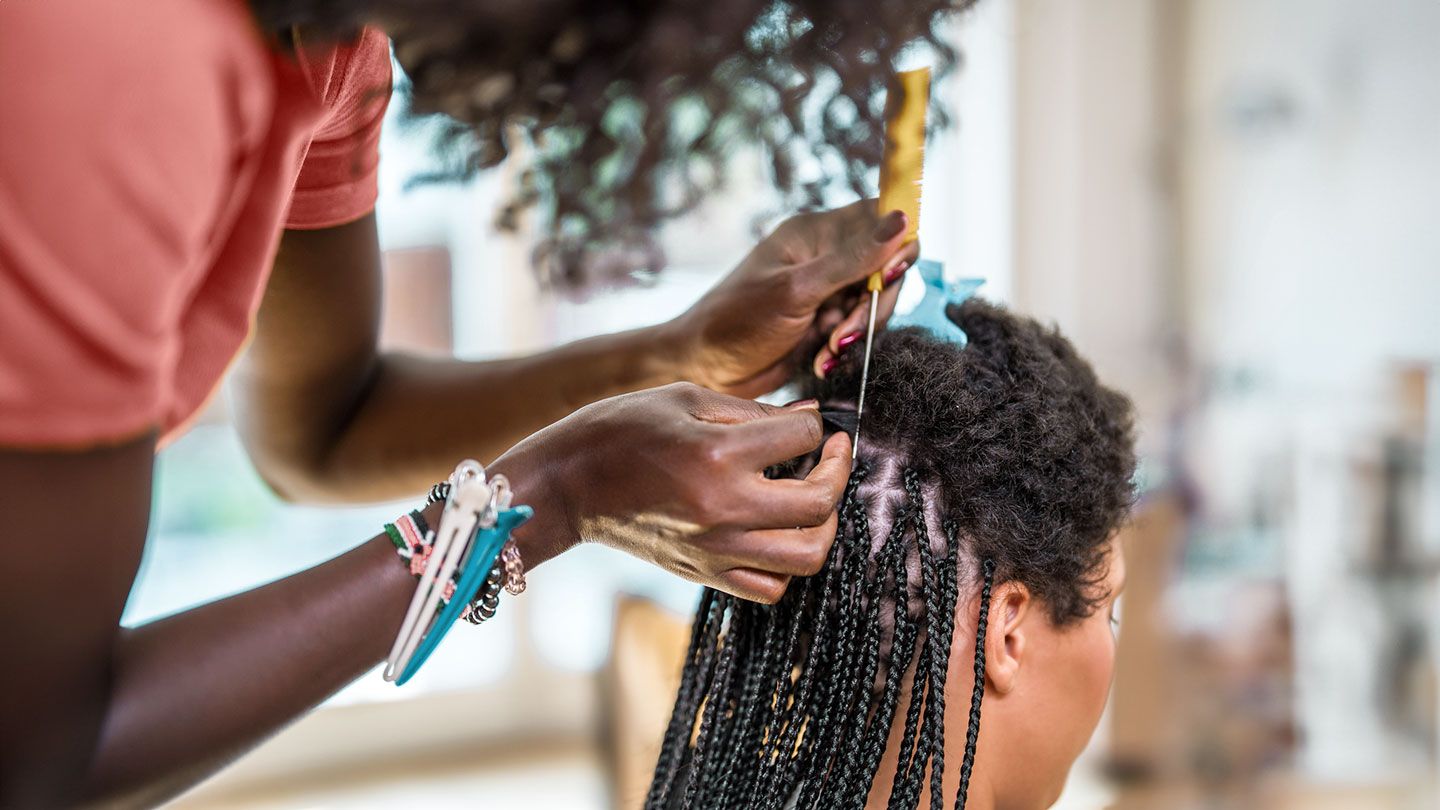
Hair extensions — a styling staple for millions of women, particularly women of color — may contain far more potentially harmful chemicals than researchers once realized.
Hair extensions may not be as harmless as previously thought, says the lead author, Elissia Franklin, PhD, a research scientist at the Silent Spring Institute in Newton, Massachusetts, a scientific research organization dedicated to investigating links between everyday chemicals and women’s health.
And it’s not just extensions made with synthetic hair that could pose health risks. “We also found several harmful chemicals in human hair,” says Dr. Franklin.
Hair Extensions Contained Flame Retardants, Pesticides, and Known Carcinogens
Hair extensions are often used in so-called protective hair styles like braids, twists, and weaves. Producers manufacture them from synthetic fibers and bio-based materials, including human hair, often treated with chemicals to make them flame resistant, waterproof, or antimicrobial.
Companies rarely disclose the chemicals used to make extensions, which leaves consumers in the dark about the health risks from prolonged wear, Franklin says.
She and her team purchased 43 popular hair extension products online and from beauty supply stores. The products included synthetic fibers (mostly plastic polymers) and bio-based materials, including human hair.
Rather than testing for just a handful of known chemicals, the researchers used a broad screening method designed to detect a wide range of compounds, including ones not typically evaluated in consumer products.
In total, the team identified 169 chemicals across the samples.
Key findings include:
- All but two products contained at least one chemical considered hazardous.
- 48 chemicals appeared on major hazard lists.
- 12 chemicals were listed under California’s Proposition 65 as linked to cancer, birth defects, or reproductive harm.
- 17 chemicals associated with breast cancer were detected in more than three-quarters of the samples.
- Nearly 10 percent of samples contained organotins, chemicals used in plastics that have been linked to hormone disruption and cancer. In some cases, organotin levels exceeded safety thresholds set by the European Union.
Researchers also found flame retardants, phthalates, pesticides, and other compounds that have been associated in prior studies with hormone disruption, weakened immunity, and developmental concerns.
More Studies Are Warranted
Because the study looked only at the presence of certain chemicals, and not their impact on the short- or long-term health of women who use them, it didn’t prove that hair extensions cause cancer or other diseases.
But according to the chemical analyses, there is potential for carcinogenic and other toxic effects, says Sandy Tsao, MD, a dermatologist at Mass General Hospital in Boston, who was not involved in the research.
“Further studies are warranted to determine a possible association with reproductive or other cancers and systemic risks from chemical exposures in hair care,” says Dr. Tsao.
Why the Study Findings May Matter More for Black Women
“As the study highlights, this is especially dangerous for Black women, who are often the major consumers of hair extensions,” says Leandra Barnes, MD, a board-certified dermatologist and an instructor at Stanford University in California, who was not involved in the research.
“They are often worn continuously for weeks, increasing cumulative exposure to these chemicals. Because extensions sit near the scalp, face, and neck and are frequently heat-styled, there is potential for both skin absorption and inhalation,” says Dr. Barnes.
Exposure Risks May Add Up Over a Lifetime
Black women often start using extensions and chemical hair products at young ages, use them more frequently, and layer multiple practices — extensions, relaxers, dyes, and edge products, for example, Tsao says. “Even low-level chemicals become riskier when exposure is chronic and lifelong,” she adds.
Franklin agrees, saying, “We know that exposures are cumulative, and so what the study suggests is that hair extensions should be considered when thinking about our total exposure.”
Tsao points out that tight braiding and scalp irritation can disrupt the skin barrier.
“Micro-tears and inflammation could potentially increase chemical absorption,” says Tsao, though more research is needed to quantify that risk.
Beauty Industry Lacks Transparency and Oversight, Especially in Products Marketed to Black Women
“These findings highlight how the beauty industry, including an anticipated $14 billion hair extension market by 2028, has been allowed to operate with limited transparency and oversight — especially for products heavily marketed to and used by Black women,” says Barnes.
When products central to meeting social, cultural, and professional beauty expectations contain hazard-listed chemicals, the health burden is shifted onto Black women, raising serious concerns about equity, informed consent, and environmental justice, she says.
From an industry and regulatory standpoint, there should be mandatory ingredient disclosure for synthetic hair fibers and all chemicals incorporated onto any hair fiber type, says Tsao.
There should also be more testing, clear labeling, and studies on extension materials and the potential risks of cumulative exposure, she says.
Can You Use Hair Extensions Safely?
While there is no proven way to use chemical-laden hair extensions completely “safely,” harm reduction is possible, says Barnes.
If possible, try to find hair extensions that are free of toxins (there were two extensions that the study found to be free of harmful chemicals), she says.
Other ways to lower your risk include:
- Reduce how often and how long you wear extensions.
- Wash products before use.
- Avoid installation on irritated or broken scalp skin.
- Minimize high-heat styling and ensure good ventilation during styling.
“If sores, rashes, or itching are experienced after installation, even though it might have been an expensive hairstyle, it is important to remove the extensions,” says Barnes.
If you have an allergic reaction to the chemicals or ingredients in extensions, you may want to follow up with a dermatologist to get the right diagnosis and treatment, she says.
There may be ways to reduce the risk of wearing extensions, but the burden shouldn’t be on the consumer, says Barnes.
“These findings underscore the need for stronger regulation and full ingredient disclosure so that consumers can make truly informed choices about products they use on their bodies,” she says.