

:max_bytes(150000):strip_icc():format(jpeg)/VWH-GettyImages-1359070084-95a917a0af5345f29aac9e68bf42bbbf.jpg)
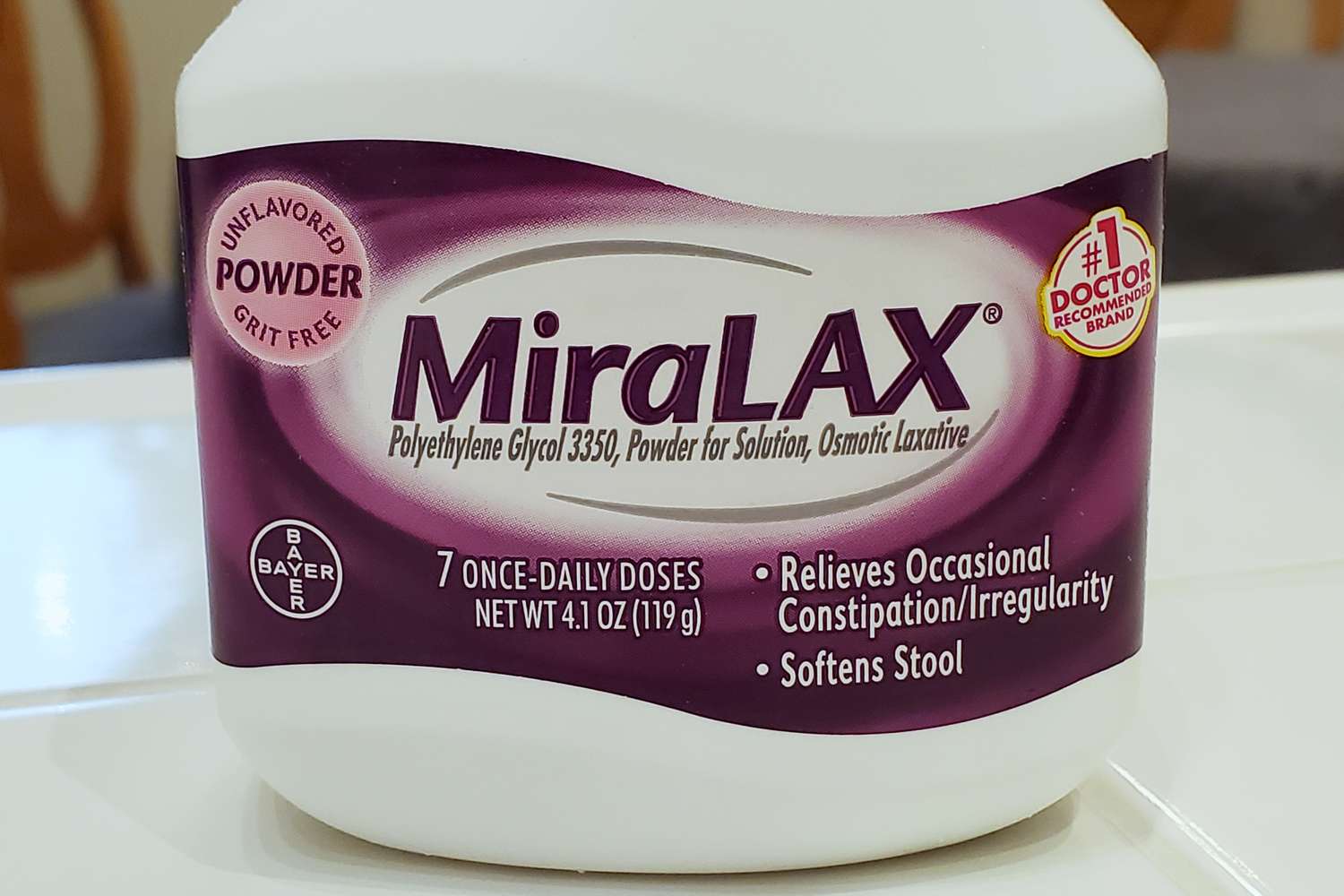
- MiraLax (PEG 3350) is an OTC osmotic laxative intended for the short-term treatment of occasional constipation.
- For most people, taking MiraLax will cause a bowel movement within one to three days.
- Repetitive dosing is required for a few days to achieve an effective result, but people should talk to a healthcare provider before taking larger doses or for longer than recommended.
MiraLax, containing the active ingredient polyethylene glycol (PEG) 3350, is an over-the-counter (OTC) orally administered osmotic laxative approved by the Food and Drug Administration (FDA) for treating occasional constipation. MiraLax typically takes effect within one to three days after consumption.
Smith Collection/Gado/Contributor/Getty Images
When Can You Expect a Bowel Movement?
MiraLax is FDA-approved for the short-term treatment of occasional (irregular) constipation in adults and children aged 17 years and older.
MiraLax, an osmotic laxative, works by preventing the reabsorption of water, which causes water retention in the stool. As a result, it makes the stool softer and easier to pass and increases the number of bowel movements.
Research is lacking on the time it takes for MiraLax’s active ingredient to leave the body. However, according to studies, peak levels of PEG-3350 in the bloodstream occurred two to four hours after taking a 17 gram (g) dose (although minimal levels are actually absorbed, so little is even detected in the bloodstream).
MiraLax typically starts working to produce bowel movements within one to three days, although some sources suggest it may take two to four days.
These studies confirmed that PEG-3350 is absorbed in a small quantity in the gastrointestinal (GI) tract, which includes the stomach and intestines, and is rapidly excreted from the body via the feces.
A typical Miralax dose is eliminated 48 to 72 hours after consumption.
The effects of MiraLax only last for a day or so. It works as it travels through your digestive system. Its effects gradually decrease as it is passed out of your body with the stool. Therefore, it is essential to take it daily to benefit from it.
MiraLax Ingredients
MiraLax is the brand name for polyethylene glycol 3350. PEG (not specifically PEG 3350) is a part of the laxative drug class, though it has many pharmaceutical and other uses.
Additionally, PEG 3350 is sometimes used off-label with other substances to cleanse the colon before a colonoscopy in adults.
PEG 3350 is also available in powder form in various generic formulations. It is also available under various brand names, such as GaviLax, HealthyLax, and SmoothLax.
Dosage Overview
The recommended dose of MiraLax is 17 g in adults and children 17 and older.
It only comes in bottles or packets containing powder for reconstitution (adding the medication into a liquid and letting it dissolve). MiraLax is gluten-free, sugar-free, as well as free of preservatives.
To prepare MiraLax:
- Measure 17 grams of the powder using a marked measuring cup or use a packet.
- Mix the powder into 4 to 8 ounces of any beverage such as water, juice, soda, coffee, or tea.
- Stir until fully dissolved and drink right away.
- Use the product once daily for up to seven days.
Bottles of MiraLax powder come in the following doses:
- 10 doses
- 20 doses
- 30 doses
- Twin packs containing 34 doses each
MiraLax is also sold in single-dose packets containing 17 grams (g) of powder.
Although it is often recommended by pediatricians, always ask your healthcare provider if MiraLax is safe for children younger than the indicated age before using.
Do not take a larger dose of MiraLax more often or take it longer than instructed.
Safely Taking MiraLax
Most laxatives are taken with meals or at bedtime. Do not take more than one laxative or medication, including mineral oil, without first getting approval from your healthcare provider.
Eat a well-balanced diet of fiber, fresh fruits, and vegetables, drink plenty of water, and exercise regularly. Drinking plenty of water is especially important, as MiraLax works by drawing water into the colon.
If you are constipated, eat all meals and avoid processed or fast foods, such as cakes and cookies, sausage, fast-food burgers, potato chips, and French fries.
Contact your healthcare provider if you have not had a bowel movement in three days, have a bloated stomach, or have blood in your stool.
Store Miralax at room temperature (between 68-77 degrees F). Also, keep MiraLax and other drugs locked away and out of reach of children and pets.
Side Effects and Safety
Like all drugs, MiraLax carries the potential for adverse effects. Therefore, while using MiraLax or caring for a loved one using the medication, watch closely for the emergence of side effects.
If side effects persist or worsen over time, contact your healthcare provider immediately for guidance. You may be advised to stop using MiraLax or any other laxative.
MiraLax is considered less habit-forming than other laxatives, meaning it becomes needed in order to have a bowel movement. But if used incorrectly, it can cause fluid and electrolyte imbalances.
Common Side Effects
Some common side effects associated with the use of MiraLax include:
Severe Side Effects
Call your healthcare provider immediately if you develop urticaria (hives), other allergic symptoms, or diarrhea.
Who Shouldn’t Take Miralax?
MiraLax should not be used in people with the following pre-existing conditions:
If you are pregnant or breastfeeding, contact your healthcare provider before taking MiraLax, as this medication may negatively affect breastfeeding or childbirth.
How Effective Is MiraLax?
Various studies show that oral administration of 17 g of MiraLax once daily for a week is effective, safe, and well-tolerated in people with occasional constipation.
Understanding Constipation
Constipation is a common gastrointestinal (GI) problem often defined by fewer than three bowel movements a week. It is characterized by not only a low frequency of stools, but by various symptoms, including hard stools, difficulty passing stool, incomplete evacuation, abdominal discomfort, and bloating.
Various causes of constipation include diet, inadequate fluid intake, genetic makeup, medications, advanced age, a low-fiber diet, a lack of exercise, and abdominal or pelvic surgery.
General treatment options for constipation include getting enough fiber, drinking sufficient fluids, and exercising. However, if your constipation does not improve, you can try an OTC laxative or ask your healthcare provider for a prescription laxative.
Laxatives are drugs used to manage constipation. They increase the frequency and ease of passing bowel movements by increasing the stool volume and stimulating the large intestinal muscle by increasing the intestinal pressure.
Some different types of laxatives include:
- Stool softeners, laxatives that increase the amount of water and fat your stool absorbs
- Lubricant laxatives, which make the stool slippery and, therefore, easier to pass by lubricating the intestinal walls
- Osmotic laxatives, which draw water into the colon, which can help to hydrate stool and speed up emptying time
- Bulk-forming laxatives (Metamucil and Citrucel), which increase the weight of stool, therefore stimulating your bowel
- Stimulant laxatives (like bisacodyl, which goes by the brand name Dulcolax) that trigger the muscles in the colon to move along stool, often producing a bowell movement within 6 to 12 hours.
Sometimes, constipation leads to chronic symptoms called chronic constipation and may need long-term treatment plans or surgical procedures.
Constipation is a common condition affecting all ages and populations. Nearly 16 out of 100 adults have symptoms of constipation. It is more prevalent in older people: About 33 out of 100 adults aged 60 and above have symptoms of constipation.