

:max_bytes(150000):strip_icc():format(jpeg)/image-56a2f5555f9b58b7d0cfdf1c.jpg)
Signs Your Finger Requires Buddy Taping
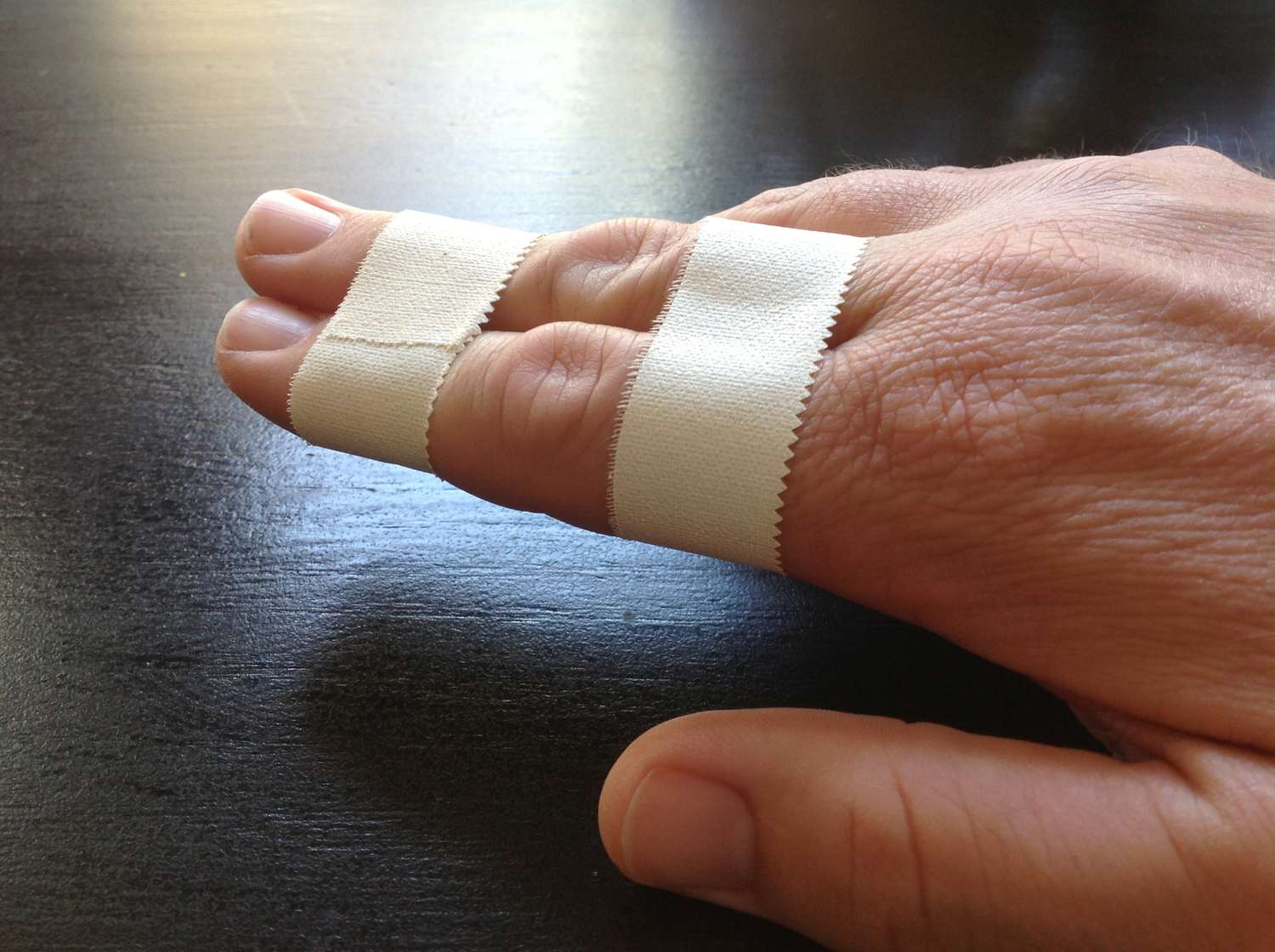
Buddy taping is suitable for minor injuries such as sprains. Healthcare providers may use it for minor fractures, but only after an X-ray confirms a normal healing process.
If there’s no open wound, check if the finger looks deformed. Seek immediate care if the finger is bent at an unusual angle, has a visible bump, or is very swollen.
Conditions like mallet finger, with the end bending toward the palm, or a dislocated finger, should not be treated at home.
You can buddy tape finger injuries when there’s no clear deformity, and they can be stabilized this way. It will help prevent the injury from getting worse.
Buddy taping at home should only be done when there are no physical deformities in the injured finger. If there is any chance that the finger has been fractured or dislocated, seek immediate treatment.