

:max_bytes(150000):strip_icc():format(jpeg)/GettyImages-515067375-c5aeed7661024113a097eea5a955a996.jpg)
Key Takeaways
- Protect the surgical drain by making sure it doesn’t dangle freely or get accidentally dislodged.
- Empty the drain twice a day or more often if it gets full, and record the drainage as directed by your healthcare provider.
- Avoid bathing in a tub until it is safe to do so, to prevent infections around the incision and drain site.
If you’ve never had a surgical drain, it’s no wonder why you may fear it; it’s an unknown. So it may help to know this: The device can speed healing, prevent complications, and reduce your post-surgery pain.
Even better, perhaps: It’s a low-maintenance device, and caring for it should be simple and straightforward.
Types of Surgical Drains
A surgical drain is meant to keep fluid or infectious material from building up at or near the site of a surgical procedure. It does exactly what it sounds like it does: drains blood and fluids away and out of the body, just like a plumbing drain.
There are many types of drains, ranging from chest tubes that keep fluid from accumulating around the heart after open-heart surgery and lung surgery to small, bulb-type drains that apply gentle suction. The bulb can be secured near the bandage or attached to your clothes with a safety pin.
The type of drain you will get depends on the type of surgery you will have, what part of your body the surgery will be performed on, and the personal preference of your surgeon. You may have one drain or several, depending on the nature of the problem.
Discomfort or Pain
By and large, drains are not painful to have in place. But they can cause discomfort, depending on how big they are and where they are placed.
Typically, the discomfort is mild. But it’s fair to say that the larger the drain, the greater the likelihood that it will cause some pain.
For example, after heart bypass surgery, many people report that chest tubes were more uncomfortable than the chest incision.
Caring for a Surgical Drain
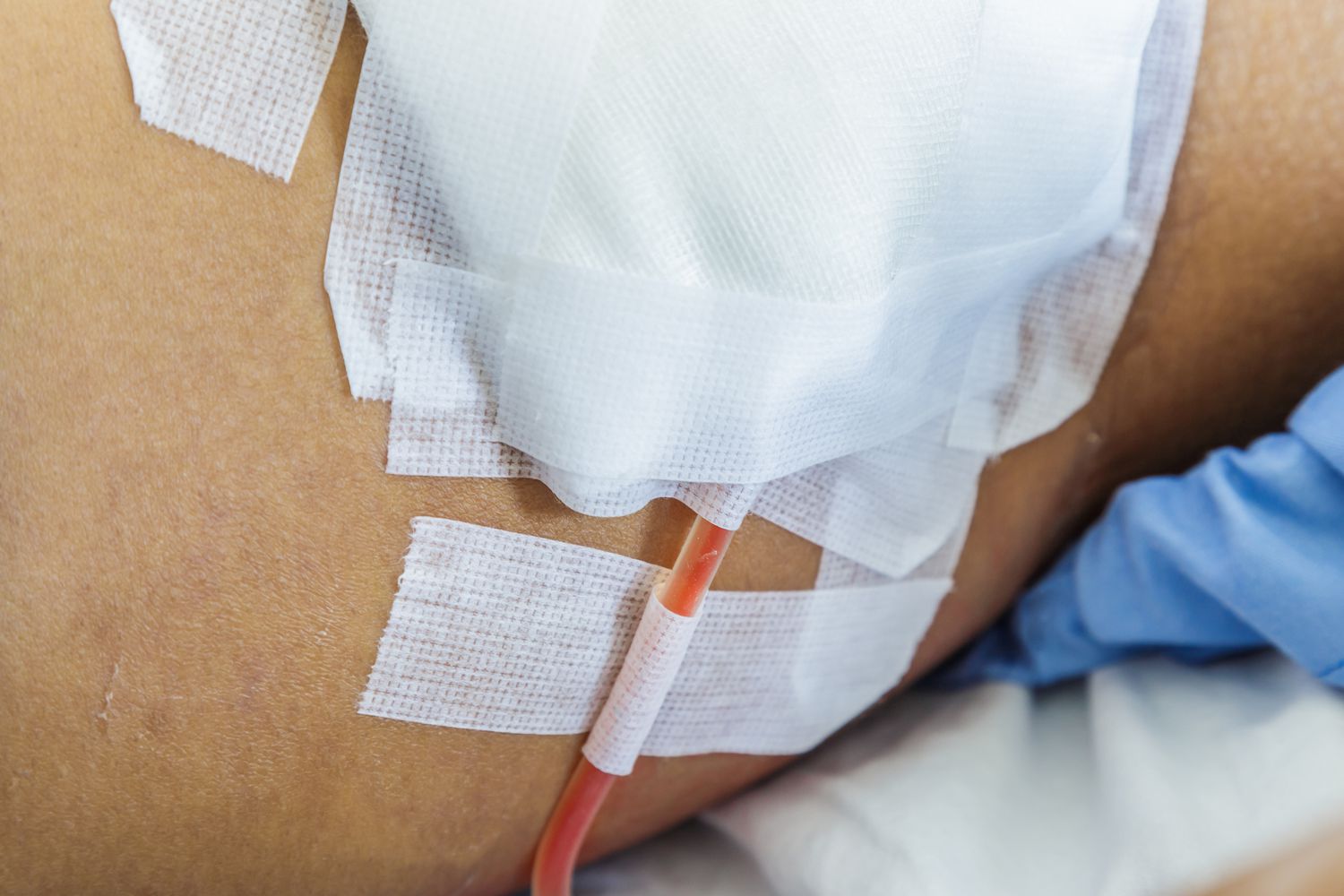
If you go home with a drain, ensure it stays secure. Avoid letting it dangle freely, as this can lead to accidental dislodging. Drains may come loose if too much weight is placed on them.
To secure the drain, you can use bandage tape available at drugstores to keep it near the incision site.
Do not take tub baths if your incision hasn’t fully healed or if the drain is still in place, unless your surgeon approves. Regularly check the area around the drain for any signs of infection, similar to how you would inspect a surgical incision.
You might need to empty the drain twice a day or more often if it fills up quickly. Keep a record of the drainage as instructed by your healthcare provider.
Changing the Dressing
Your doctor should tell you how often he expects you to change the dressing. He may even want you to document the times you do this and note the color of the fluid.
Good drain care is similar to good incision care. Wash your hands before the following steps:
- Remove the dressing from around the drain.
- Clean the skin around the drain site with soap and water. Use a cotton swab.
- Wait for the area to dry before putting on a new dressing. Follow the specific instructions from your doctor (since they can vary).
- Wash your hands again with soap and water.
When to Call a Healthcare Provider
Call your healthcare provider immediately if you experience:
- Chills
- Cloudy, pus-like fluid with a foul odor
- Fever of 100.5 degrees
- Redness, swelling, heat, or tenderness at the incision site
- The tube falling out or the stitches holding it in place coming loose
When the Drain Is Removed
Drains are removed when no further surgery or additional procedures are needed. In general, a drain is removed when there is less than 30 cubic centimeters (1 ounce) of fluid for two straight days or three weeks after surgery, whichever comes first.
How the drain goes out largely depends on how it went in. It may leave the body through the surgical incision. Or a new, small incision may be made specifically for the drain itself.
The drain may have sutures holding it in place to prevent it from being accidentally dislodged. In this case, the sutures are cut and the drain is gently pulled out.
This procedure may be done by a physician, a nurse, or other healthcare provider, depending on the type of drain that is in place and the reasons for the drain. If any resistance is felt while removing the drain, the procedure is stopped until it can be performed with no effects.
Having a drain removed usually does not hurt, but it can feel rather odd as the tubing slides out of the body. The incision is then covered with a dressing or left open to the air.
Stitches usually are not needed. But it’s a good idea to avoid swimming or soaking in a tub for several days.