

:max_bytes(150000):strip_icc():format(jpeg)/how-to-have-pretty-feet-1337693-5c3b8da5c9e77c000191fca2.png)
Key Takeaways
- You can have pretty feet by following a six-step pedicure at home.
- Soak your feet to soften skin and use a pumice stone to gently remove calluses.
- Apply an emollient moisturizer and wrap your feet in plastic wrap for better absorption.
You don’t have to go to an expensive salon to have pretty feet. With a little time and effort—and a few supplies you can find at your local drugstore—you can give yourself a fabulous foot makeover at home.
In six steps, this article tells you everything you need to know about giving yourself a home pedicure. Following other foot care tips might even have people convinced that you spent a bundle at a prestigious spa.
A Step-by-Step Foot Care Guide
It’s hard to match the heady feeling of being pampered. But who says you can’t match that feeling—and get similar results—by pampering yourself with a home pedicure? Before you do, make sure you have the following products at home before heading to the drugstore:
What You Will Need
- Non-acetone polish remover
- Aromatherapy oil
- Emollient moisturizer
- Toenail scrub brush
- Pumice stone, callus file, or emery board
- Stainless steel nail nipper
- A cuticle pusher or orange stick
- Four pounds of food-grade paraffin wax
- Double boiler or portable paraffin wax bath
- Reliable candy thermometer
- Pair of socks
- Box of plastic cling wrap
- Towels
Step 1: Remove Your Toenail Polish
Stripping nail polish allows you to inspect your toenails and look for any problems, such as onychomycosis (nail fungus) or hangnails. It’s best to use a non-acetone polish remover. Polish removers containing acetone are very harsh on the nails and may cause the thinning of the nail plate and the formation of unsightly ridges.
Every now and then, you should give your toenails a break from nail polish. Keeping your toenails constantly painted may cause them to become discolored, usually with a reddish or yellowish hue. If your nails do turn colors, leave them bare for a couple of weeks. They should soon return to their normal color.
Step 2: Soak Your Feet
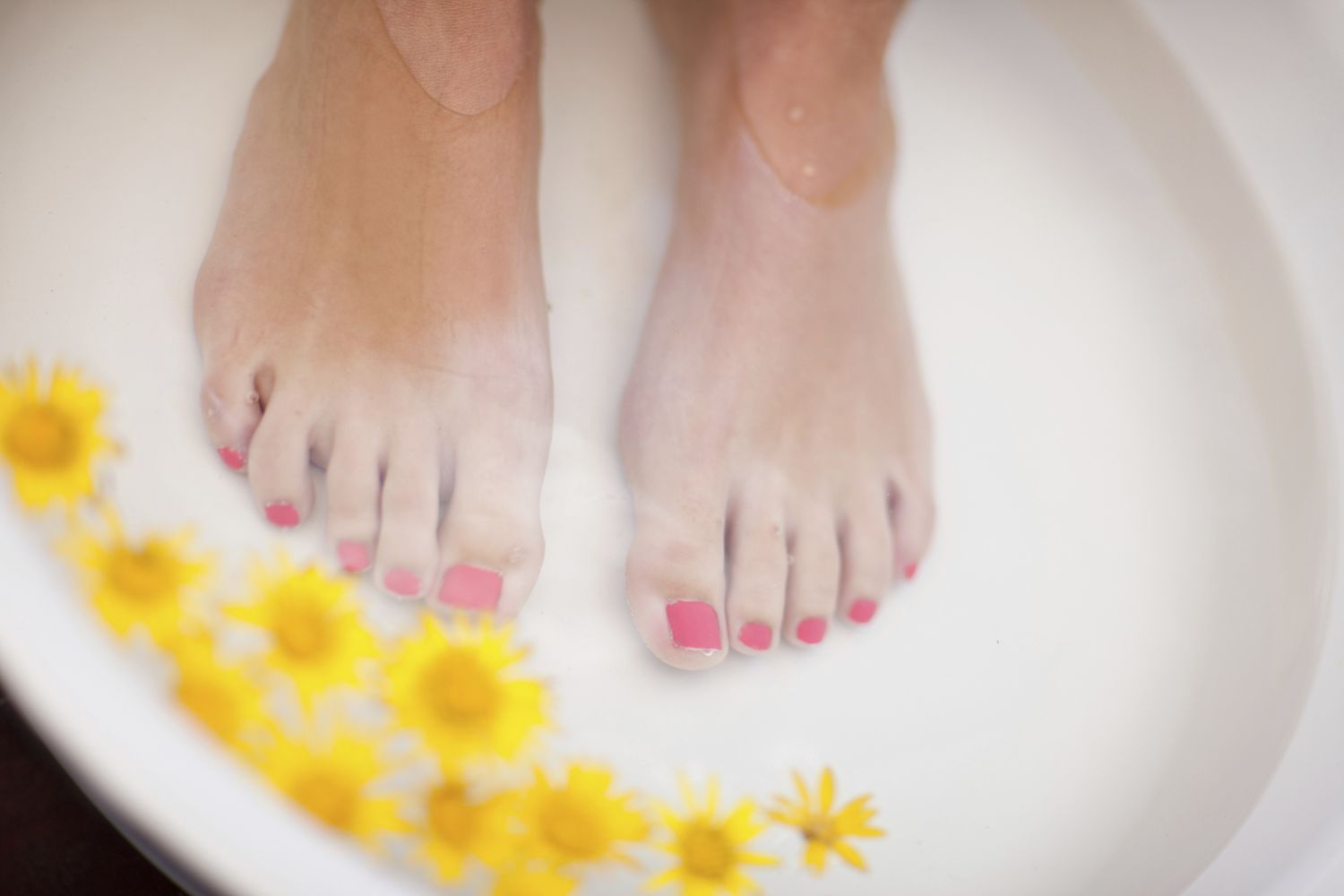
Soak your feet for 15 to 20 minutes to relax and soften them. Aromatherapy oils are optional. A foot soak loosens dry skin and softens thick areas on the heels, toes, and balls of your feet.
Avoid using excessively hot water, as it can dry the skin and cause cracking. After soaking, gently scrub your toenails with a toenail brush.
Step 3: Trim Your Calluses and Corns
After soaking, use a pumice stone, emery board, or callus file to gently reduce corns and calluses. You might need a few sessions to remove all the hardened skin. Be careful not to cut or file too deeply.
Removing calluses can help prevent cracks, but trimming too much can cause splits if pressure is applied to thin tissues. This can lead to pain, bleeding, and a higher risk of infection. Focus on removing dead skin cells, not healthy tissue.
Take It Slow
If it has been a long time between pedicures, don’t try to remove calluses and corns in one sitting. (You may not be able to do so anyway.) Instead, break up the task over the course of two or three treatments every four to six weeks.
Step 4: Trim Your Toenails
Use a stainless steel nail nipper to trim your toenails. To avoid over-trimming, cut the toenails straight across. Then, gently round the corners with an emery board.
Push your cuticles back if desired, but avoid cutting them. Most dermatologists advise against cutting cuticles (the eponychium) because it can increase the risk of splitting and bleeding. It also provides bacteria and fungi easier access to the nail bed.
Step 5: Give Yourself a Wax Treatment
A paraffin wax treatment will make your feet feel incredibly soft. The warmth of the wax helps increase blood flow and opens up the pores in the skin. When your pores are open, they are able to absorb more moisture.
You can purchase a portable paraffin wax bath online or at certain brick-and-mortar retailers. The devices can ensure the wax temperature never exceeds 125 degrees Fahrenheit. There are also pre-packaged paraffin wax kits that can save you the hassle of having to break down a large block of wax and melt it in a double boiler.
Once the wax bath has begun to cool, wrap your feet in a towel to retain the therapeutic heat for a while longer.
Use Food-Grade Paraffin
Use only food-grade paraffin for foot wax treatments. Additives like stearic acid, coloring, and perfumes can increase the wax’s melting point and cause skin irritation.
Step 6: Moisturize and Massage Your Feet
To finish your foot spa treatment, apply an emollient moisturizer to your feet. The softened tissues will better absorb the emollients in the lotion and ensure softer, well-hydrated feet.
Gently massage your feet as you apply the lotion, stretching tendons in the toe joints and the arch of your feet. This is especially useful if you have plantar fasciitis, a disorder of the tissue that supports the arch.
After applying lotion, put on a pair of socks or wrap your feet in plastic wrap for an hour or two. Known as occlusive therapy, this step ensures better absorption of the lotion—a big plus if you have dry, flaky feet.
Other Foot Care Tips
Pretty feet are healthy feet. To ensure that your feet feel as good as they look, make every effort to treat foot conditions appropriately or contact a podiatrist if you have structural foot problems or pain. Some common foot concerns include:
- Athlete’s foot: If you have itchy, red, peeling skin between your toes or the bottom of your feet, you may have tinea pedis (athlete’s foot). Try an over-the-counter antifungal ointment, cream, or powder. Or ask your healthcare provider for a prescription antifungal like Lamisil (terbinafine) or Ecoza (econazole).
- Nail fungus: If you start to see discoloration or ridging in your nails, this may be a sign of onychomycosis. You may wish to try a topical antifungal like Lamisil or a medicated nail polish that is less easily rubbed off. Tea tree oil is a natural therapy that many people swear by, although the results tend to be mixed.
- Foot perspiration: Excessive sweating can be a breeding ground for fungus and odor. Try using an antiperspirant spray on your feet (rather than a deodorant that covers only smells). If foot odor is a problem, buy a shoe insert with activated charcoal. Excessive sweating (known as hyperhidrosis) can sometimes be treated with botox injections.
- Inappropriate footwear: Sometimes, shoes that make your feet look pretty may end up causing blisters, corns, and calluses. Shoes that are too tight can aggravate bunions and hammertoes, a deformity.
Frequently Asked Questions
-
How often should you soak your feet?You can soak your feet as often as you’d like, as it has many benefits. If you enjoy it and your feet are sore, daily soaking is fine. To address calluses, consider soaking for 30 minutes, two or three times a week.
-
How do I get rid of calluses and corns on my feet?Removing calluses and corns at home takes time. Soak your feet in warm water for 10 minutes. Gently rub off dead skin with a wet pumice stone or emery board, scrubbing in one direction. Moisturize your feet after. Do this two or three times weekly, as removing them is a gradual process.
-
What is a parafin wax treatment?A paraffin wax treatment uses warm, softened wax to ease aches and soften skin. You dip your hand or foot in wax several times, wrap it in plastic, and leave it for 15-20 minutes. This process boosts blood flow and moisturizes the skin.