

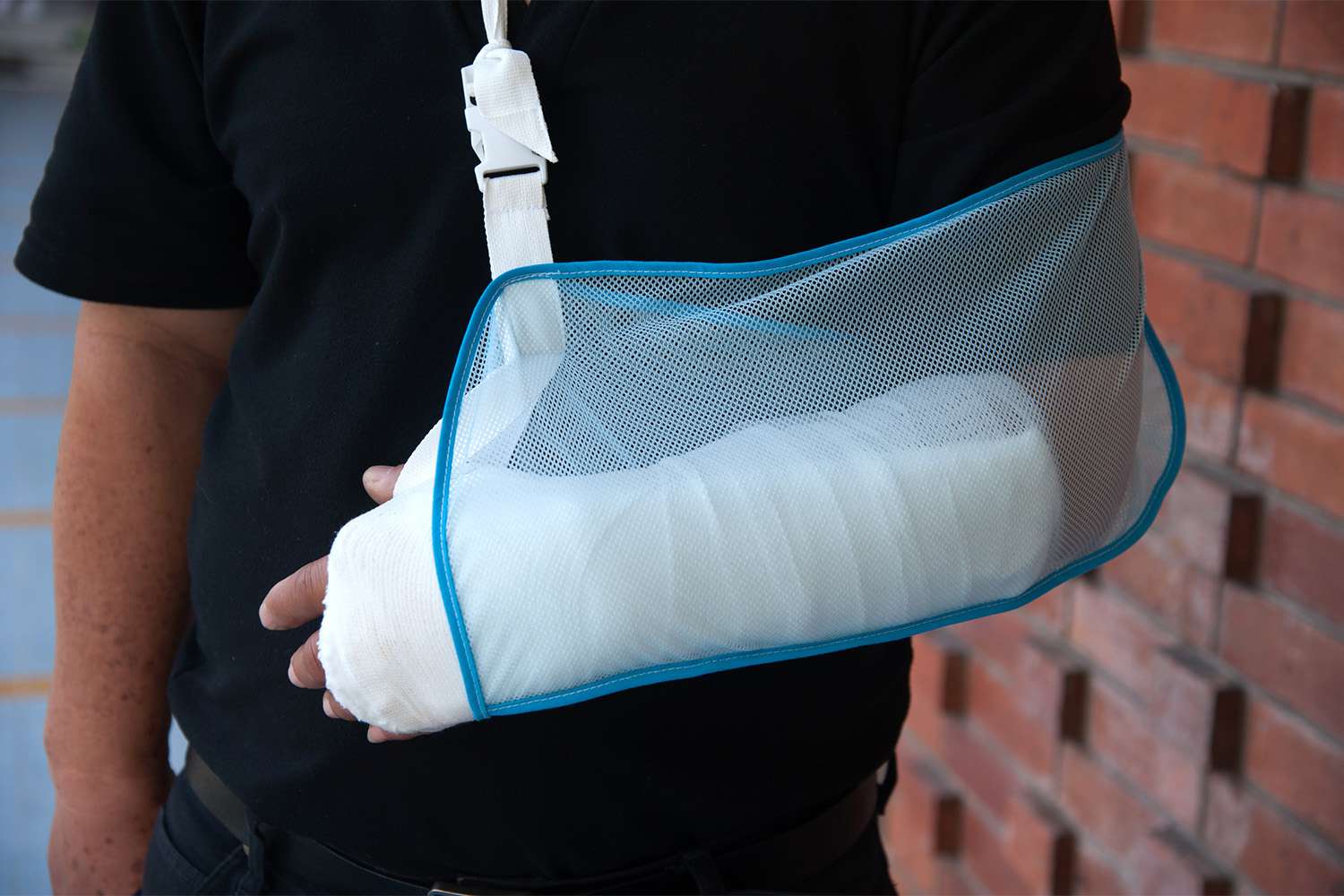
Key Takeaways
- A shoulder sling should keep your arm bent at a 90-degree angle for support.
- Make sure that your sling is neither too tight nor too loose to allow proper blood flow.
- You will not be able to drive or ride a bicycle while you’re wearing a sling.
Wearing a shoulder sling correctly is essential for protecting your arm and promoting recovery after an injury or surgery of the arm, shoulder, elbow, or wrist. Learn the right way to wear a sling to avoid common mistakes that could slow your healing process.
topten22photo / Getty Images
When Is a Shoulder Sling Necessary?
You might need to wear a sling for several reasons:
- Injuries: If you hurt your shoulder, elbow, arm, or wrist, a sling can support these areas while you recover. Slings are useful for sprains, dislocations, and tears like rotator cuff injuries.
- Fractures: For a broken shoulder, elbow, or wrist, limiting movement is key to proper bone healing.
- Shoulder surgery: After surgery, like a rotator cuff repair, wearing a sling helps reduce stress on the shoulder, allowing it to heal.
- Other upper-body surgeries or injuries: A sling may be used post-surgery to help your upper body heal better.
- After a stroke: If you’ve had a stroke and lost feeling or movement, a sling can keep your shoulder from hanging uncomfortably.
How Long Will I Be in a Sling?
A shoulder sling is generally used for between four and six weeks after a surgery or injury. Your provider will give you an idea of the expected the timeline for your recovery.
What Are the Different Types of Shoulder Slings?
There are a few different kinds of shoulder slings. The one you’ll have to wear will depend on why you need it.
Examples of shoulder sling types include:
- Broad arm sling or standard sling: This is the “classic” arm sling that keeps your arm bent and supported in front of your body, with your wrist a little higher than your elbow. It’s commonly used for broken bones and sprains.
- High arm or shoulder sling: This sling is like a standard arm sling, but keeps your arm up higher. This type of sling is more common for shoulder injuries because it’s designed to prevent your shoulder from moving and keep it protected while it’s healing.
- Collar and cuff: This sling goes around your neck and around your ribs, keeping it elevated. It’s sometimes recommended for shoulder or elbow injuries, but is most often used for injured or dislocated collarbones.
If your arm or shoulder can’t move at all, you might need an immobilizer. This device is like a sling but holds your arm snug to your body with bands around your chest, arm, and wrist.
Putting On a Shoulder Sling Correctly Step by Step
Click Play to Learn How to Wear a Sling
To put on a shoulder sling properly:
- Gently slide the sling over your arm and elbow. It should fit snugly around your elbow, with your hand cradled comfortably so that the material does not dig into your wrist or hand. If your hand sags, the sling may be too small.
- Reach around your neck to grab the strap behind your elbow.
- Pull the strap around your neck and thread it through the loop near your hand.
- Tighten the straps to elevate your hand and forearm above your elbow. This prevents blood and fluid from pooling.
- Secure the strap with the fasteners. To improve neck comfort, place a soft cloth under the strap.
- Secure additional straps. If your sling includes a strap around your back to hold the elbow close, reach behind, pull it around, and fasten it near your hand. Ensure it’s not too tight by allowing two or three fingers to fit between your body and the strap.
Your shoulder sling should fit comfortably so that your arm is bent at a 90-degree angle and does not feel tight. It should keep your shoulder, elbow, and wrist in a relaxed position so that you can go about your day-to-day life comfortably.
Navigating Daily Life While Wearing a Sling
Daily life with a sling can be challenging, and you may need to ask for help and support during recovery. Here are some tips for managing daily life with a sling:
Personal Care
Immediately after an injury or surgery, you might need help with washing and dressing, especially while adjusting to wearing a sling.
As you gain confidence, practice using your non-dominant arm for tasks like brushing your teeth if your dominant arm is healing. Using a sponge to bathe with your non-injured hand can be easier. Drying off with a fluffy robe instead of a towel might help, too.
Opt for shirts and pants without fasteners, like buttons or zippers, to make dressing easier. Slip-on shoes are also more convenient than laced ones.
Getting Around
You will not be able to drive or ride a bicycle while you’re wearing a sling, so you’ll need to rely on other people to get to your appointments or go to the store.
You might be able to walk to a nearby place once you’re feeling up to it—just make sure that you don’t accidentally get bumped on your injured side.
Be cautious on stairs, as wearing a sling might affect balance. Use the banister with your non-injured hand for stability.
Chores and Errands
For tasks like making beds or carrying groceries, you’ll need help with lifting and pulling. As you start healing, you might find that certain tasks, like vacuuming, can be done with one hand, using the uninjured arm. However, avoid doing anything too strenuous that could cause you to fall or injure your arm.
If possible, arrange for grocery delivery or someone to assist. Before planned surgery, complete as much shopping and cooking as you can.
Eating
You might find eating anything that requires utensils too challenging if your dominant arm is in the sling. It can also be tricky to lift a cup to your mouth for a drink.
Using straws and sticking to meals and snacks that don’t necessarily require too much handiwork can help until you’re able to start using your other hand again.
Sleeping
You should wear your sling to bed to prevent arm movement while sleeping. Check with your provider or physical therapist if you can loosen it while lying down. You may find it easier to sleep sitting up in a chair or propped up with pillows in your bed while you have to wear a sling.
If you have not been able to sleep in the sling despite trying different positions, ask your provider if you could take it off at night.
When Can I Take Off My Sling?
As your arm strengthens, you might not need the sling all the time. How long you wear it depends on your injury and recovery. Discuss the timeline with your provider or physical therapist.
As your healing progresses, your provider will let you know if there are times you can take your sling off, such as to bathe, dress, or do physical therapy exercises. You may also be advised to bend and straighten your elbow and move your fingers a few times a day.
Mistakes to Avoid When Using a Shoulder Sling
Common mistakes that people make when wearing a shoulder sling can cause discomfort and slow the healing process. Your provider or physical therapist can help you avoid making these errors.
The Sling Is Too Loose
Your sling should hold your elbow at a 90-degree angle. If it’s too loose, your arm may hang too low or straighten.
This position doesn’t give your shoulder, elbow, and wrist the support they need. Without it, the weight of your arm puts stress and strain on your arm and shoulder as they are healing. Your arm may also suddenly fall out of the sling if it’s hanging too low.
The sling should support your arm firmly against your body without lifting it. Your shoulder should be in a stable, neutral position (not higher or lower than normal).
If unsure whether the sling is too tight or loose, have your provider or physical therapist check it.
The Shoulder Sling Is Too Tight
A shoulder sling that’s too tight can limit blood flow to and from your elbow and hand. If blood isn’t getting to your arm, it’s not getting oxygen to your tissues, which can cause damage and impede healing.
Ask your provider or physical therapist to adjust your sling if your arm, hand, or fingers:
- Feel numb
- Tingle
- Swell
- Feel cold
- Turn blue
You’re Not Exercising Nearby Muscles
A shoulder sling protects your arm while it heals, but it’s important to use your arm and hand muscles during recovery.
The sling is designed to limit your shoulder mobility, so it can decrease your arm’s range of motion (ROM) and strength. However, there are steps you can take to avoid that.
During your recovery, your provider may tell you to take off the sling and do some no-impact pendulum circle exercises two to three times a day. These movements help keep your joints mobile.
Handgrip exercises with therapy putty provide resistance and can help your wrist and forearm get stronger.
:max_bytes(150000):strip_icc()/BrettSearsPT_1000-b66602ce9ab7482cb78acf5d2c3de153.jpg)