

:max_bytes(150000):strip_icc():format(jpeg)/insulin-injection-478185779-594b3cae3df78cae8111498f.jpg)
Key Takeaways
- The four best places for an intramuscular injection are the shoulder, hip, thigh, and buttock.
- Clean the site with an alcohol swab, insert the needle at a 90-degree angle, and avoid massaging the area afterward. Dispose of needles in a sharps container after each injection.
- Alternate injection sites to prevent scar tissue build-up.
For safe and effective intramuscular injections, focus on the shoulder, thigh, hip, or buttocks as these spots offer large muscles with minimal fatty tissue. Some sites may be preferred due to age or other reasons. Choosing the right site not only ensures proper medication delivery but also reduces discomfort and potential risks.
Your Body’s Top Four IM Injection Sites
There are four sites suitable for IM shots, featuring large, easily accessible muscles with minimal fatty tissue.
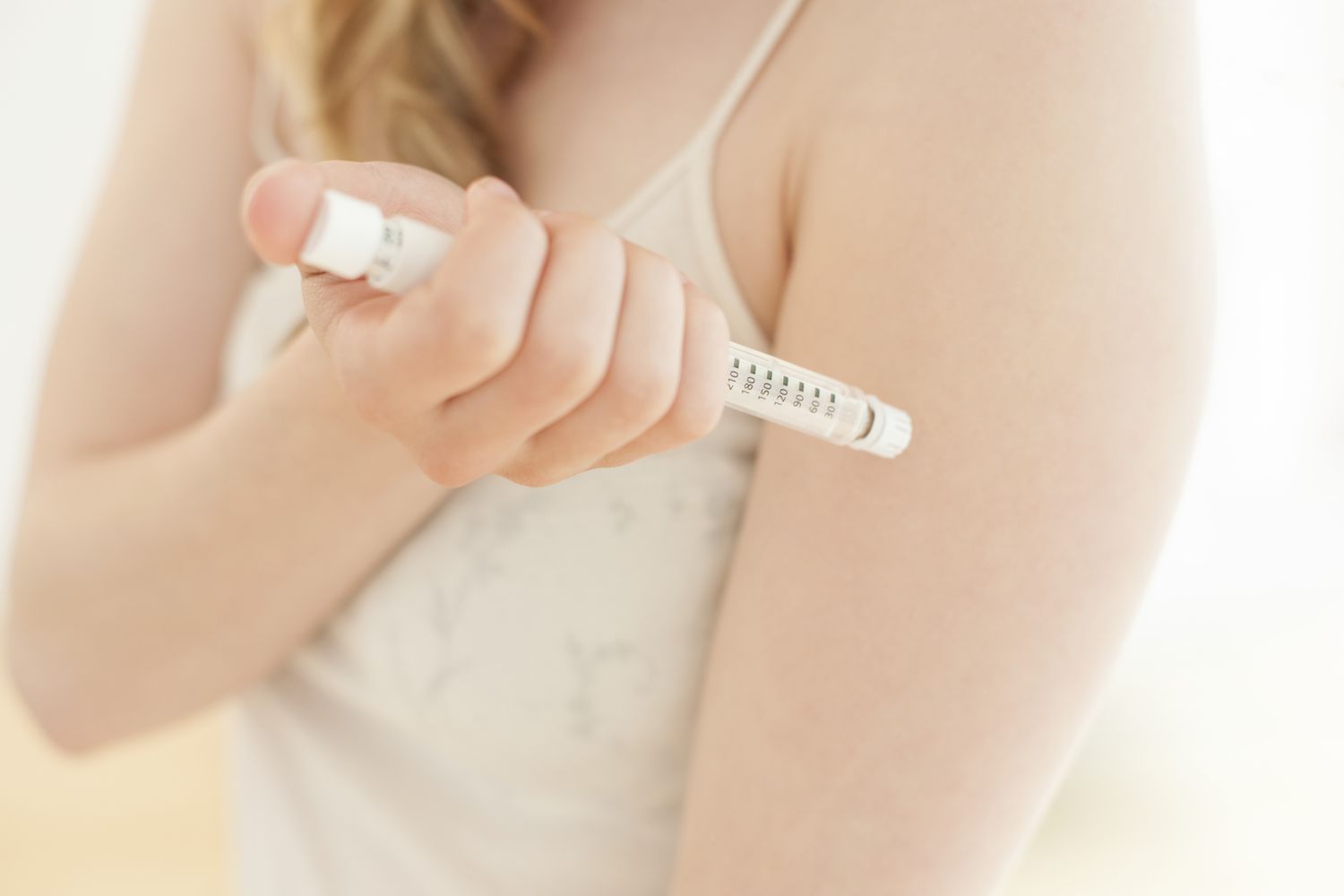
Upper Arm
Your deltoid muscle is located just below your shoulder in your upper arm.
To find the injection site, feel for the bone where your shoulder meets your arm. Insert the needle about 2 inches, or two to three finger widths, below this spot. Aim for the thickest part of the muscle.
Giving yourself a shot here can be difficult, so assistance from a partner might be necessary.
Thigh
Your vastus lateralis and rectus femoris muscles are located in your thigh. They make up what is known as the quadriceps (quad) muscle. This is the easiest site for an IM injection if you are self-administering.
To locate these muscles, divide the front of your thigh into thirds from top to bottom:
- To inject into the vastus lateralis, insert the needle into the middle third on the outer thigh.
- To inject into the rectus femoris muscle, the needle should go in the middle third at the front of your thigh.
The vastus lateralis is preferred for IM injections in infants and babies, especially those not yet walking.
Buttock
The dorsogluteal muscle is a large muscle in your buttocks. While it’s one of the largest muscles, it can be hard to access alone, so you’ll need a partner.
Divide the butt cheek into fourths both vertically and horizontally. Injections should be done in the outer upper quadrant near the hip, where there’s less fatty tissue.
The dorsogluteal muscle may seem the preferred choice because it is so large, but IM injections pose risks as there are major blood vessels and nerves located there, including the sciatic nerve.
Hip
The ventrogluteal muscle is near your hip. Self-injections are possible, but having a partner assist can be easier.
To locate the site, lie on your back while your partner stands facing your hips. They should place the heel of their hand so their wrist aligns with your thigh, thumb pointing toward your groin, and fingers toward your head.
They should feel the border of a bony area with their ring finger and pinkie. Then, they should spread their pointer and middle fingers into a “V” and administer the injection between those fingers.
The ventrogluteal muscle is the most common site for IM injections in adults and children of walking age. It is a large muscle situated well away from vulnerable nerves like the sciatic nerve.
Here’s the Proper Technique for IM Injections
Your healthcare provider will give you a prescription for your IM medication as well as for the appropriately sized syringes and needles. The gauge of the needle is especially important, as small needles can fail if the injectable medication is thick.
A nurse or other healthcare provider will teach you or your partner how to deliver the injections. It is important that you are comfortable with the technique before doing it yourself.
If you are concerned about pain, you can numb the injection site for five to 10 minutes with ice. There are also numbing creams, typically containing lidocaine, available at most drugstores.
To give yourself or someone else an IM injection:
- Gather your supplies: You will need a new needle and syringe, the medication vial, alcohol wipes, a sterile gauze pad, a cotton ball, and a bandage. You will also need a sharps container to dispose of the needle and syringe when you’re done.
- Wash your hands: Use soap and warm water, and be sure to scrub under the nails and between the fingers.
- Prepare the injection site: Spread the skin at the injection site between two fingers. Make sure the muscle is relaxed. Clean the injection site with an alcohol swab and let air dry.
- Prepare the vial: If you’re using a multi-dose vial, record the date when it was first used. Clean the rubber stopper with an alcohol swab.
- Prepare the syringe: Remove the cap from the needle and draw air into the syringe equal to the size of the dose you will be injecting.
- Draw up the medication: Push the needle through the rubber seal and inject the air into the vial. Turn the vial over so the rubber seal is on the bottom. Draw back the plunger to fill the syringe with the appropriate amount of medication. Withdraw the needle from the vial. Do not touch the needle.
- Remove air from the syringe: Remove any air bubbles by gently tapping the syringe and compressing the plunger.
- Give the injection: Hold the syringe firmly like a dart. The IM injection angle should be 90 degrees to the injection site. Insert the needle with a brisk, controlled motion (do not “stab” the needle). Compress the plunger slowly to inject the drug. Quickly remove the needle without changing the angle.
- Apply light pressure: Press on the injection site with some gauze.
- Discard the needle and syringe: Put them in a sharps container. Do not replace the cap on the needle. When the sharps container is full, dispose of it at an authorized collection center. Do not put syringes and needles or sharps containers into the trash.
Tips for Giving IM Shots With Confidence
Always ask your healthcare provider for clear instructions on how to give an IM injection. Don’t be afraid to ask questions or request a repeat demonstration. Some of the most common questions about giving IM injections include:
Do You Pinch the Skin for an IM Injection?
Pinching the skin is not necessary when giving an intramuscular injection. Pinching the skin may cause you to deliver the injection into the subcutaneous layer instead of the muscle. Instead, use your non-dominant hand to slightly stretch the skin at the injection site.
How Deep Do You Insert a Needle for Intramuscular Injection?
Make sure the needle goes into the muscle to a depth of at least 1 inch.
Do You Pull Back When Giving an IM Injection?
Pulling back on the plunger before administering the injection is not necessary for most injections. Be sure to discuss this with your healthcare provider when they are showing you how to administer the injection.
Do You Rub After an IM Injection?
Your first instinct may be to massage an intramuscular injection site to ease the pain or help “get the medicine in,” but doing so is not recommended. Massaging the injection site may force the medication from the muscle into the skin layers, reducing the absorption of the drug. It can also cause bruising.
Can You Hit the Bone With an Intramuscular Injection?
With the right size needle and proper injection site, the risk of hitting bone is unlikely. With that said, some muscles (like the deltoid muscle of the upper arm) are smaller in some people, and it is possible to hit bone if the shot is not given in the thickest part. Even so, it doesn’t usually cause pain or complications.
How Can You Practice Giving an IM shot?
While you’re getting the hang of it, you can practice by giving shots to an orange.
Alternating Injection Sites
If you need to give yourself IM injections regularly, be sure to alternate injection sites. This prevents the build-up of scar tissues that can make injections difficult. Your healthcare provider can show you which injection sites are appropriate.
What Are the Side Effects of IM Injections?
There may be temporary pain and discomfort during the IM injection itself, but these tend to ease quite quickly. There may also be minor bleeding, pain, swelling, or redness following the shot.
If you give yourself an injection in the dorsogluteal site, there is a risk of sciatic nerve injury. This can lead to a painful condition called sciatica that tends to resolve on its own but can make you uncomfortable for several days or weeks. Significant bleeding is also possible.
Although unlikely, it is possible to get an infection from an IM injection. This can occur if you do not Although infections from IM injections are rare, they can occur if hygienic practices aren’t followed, such as not washing hands, reusing needles or syringes, or using expired or tainted medications.
When to Seek Medical Attention
Seek immediate medical care if you have signs of severe infection at an injection site, including.
- High fever with chill
- Increasing redness, warmth, swelling, or pain at the injection site
- A pus-like discharge
- Red streaks spreading outward from the injection site
Common Reasons for Needing an IM Injection
Self-administered IM injections may be used for different reasons, including assisted fertility treatments, gender-affirming hormone therapy, vitamin B12 supplementation, and some disease-modifying treatments for autoimmune diseases like rheumatoid arthritis.
If you’re on blood thinners, have a bleeding disorder, or have a low platelet count, your healthcare provider might avoid IM injections due to bleeding risks. These injections may also be unsuitable for those with hypovolemic shock or muscle wasting, as these conditions affect drug absorption.