

Key Takeaways
- Soak your ingrown toenail in warm saltwater for 20 minutes, two to three times a day.
- Use antibiotic ointment and dental floss to alleviate pain and prevent infection.
- Maintain good foot hygiene to prevent an ingrown toenail from happening again.
Ingrown toenails are very common. In fact, an estimated 20 out of 100 people who visit their healthcare provider because of foot problems have an ingrown toenail.
Because of the irritation and pain it causes, most people notice an ingrown toenail right away. Treating it early on is key to helping manage inflammation and preventing infection.
When infection is present, it’s always important to speak with your healthcare provider or podiatrist to discuss treatment options. However, there are some well-known home remedies that can help relieve the pain.
This article will discuss what to do if your toenail is infected and ingrown and when to see a healthcare provider.
ThamKC / Getty Images
Symptoms
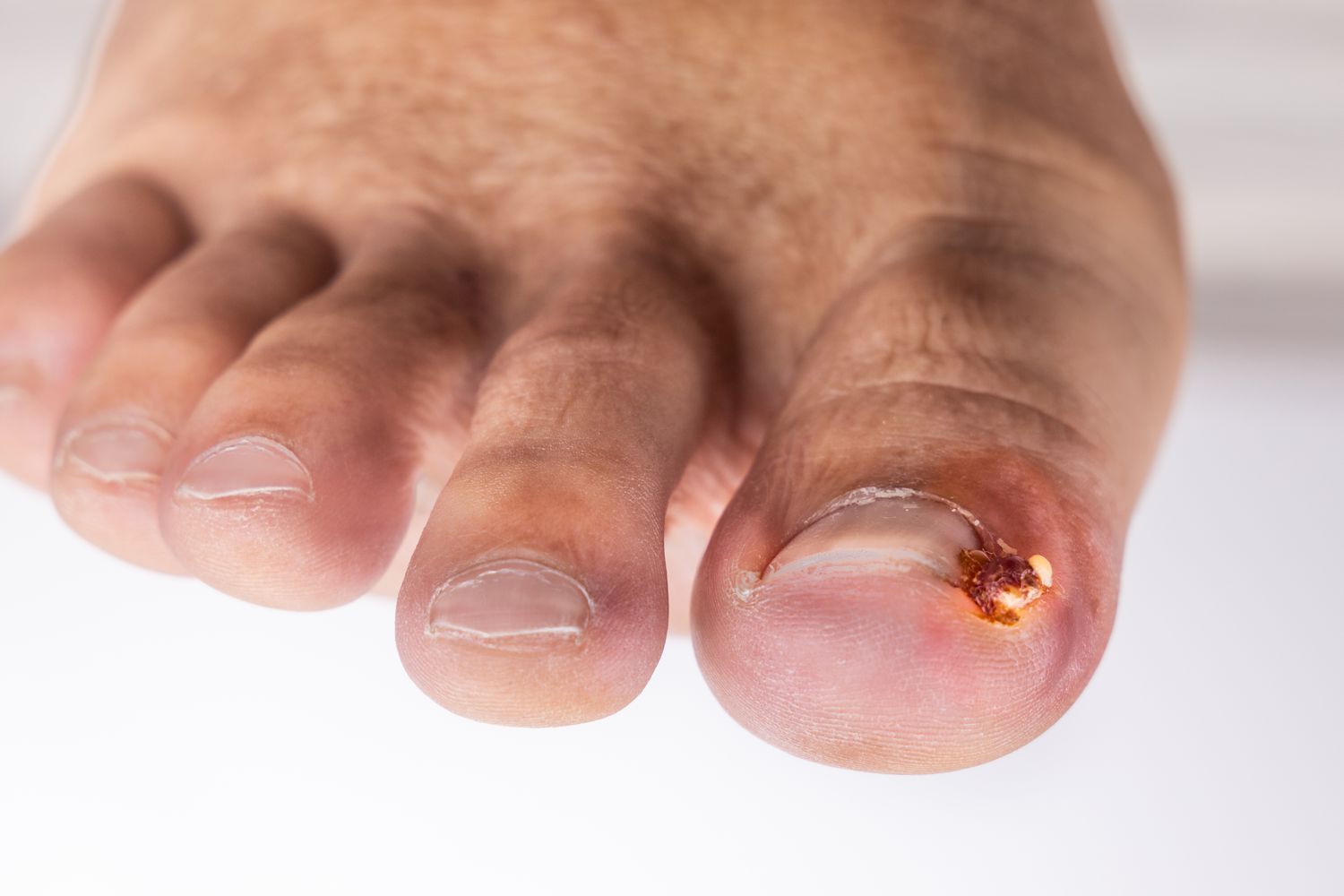
An ingrown toenail occurs when the nail grows into the soft skin of the toe. One of the first signs is pain around the affected area. Additional symptoms of an infected ingrown toenail include:
- Liquid or pus discharge
- Warmth to the touch
- Pink or red appearance
- Swelling
- Foul smell
Stages of Ingrown Toenail Severity
Stage 1: The nail has grown into the skin, causing pain and inflammation.
Stage 2: New, inflamed tissue grows around the edges of the ingrown toenail. This can lead to drainage or pus.
Stage 3: The skin surrounding the toenail is chronically inflamed and is oozing pus. The inflamed tissue begins to grow over the nail.
Causes
There are several causes of ingrown toenails. The most common is improper nail trimming. When toenails are cut too short, the surrounding skin can cover the nail’s corners, causing it to grow into the skin.
Additional causes include:
- Poor-fitting shoes (too tight or narrow)
- Toe injuries
- Toe or foot deformities
- Cutting nails in a rounded shape (instead, cut straight across)
- Frequent physical activity or sports
- Genetically large toenails relative to toe size
Risks
The primary risk of an ingrown toenail is infection. Paronychia is a common infection around nails caused by ingrown toenails. It can lead to swollen, painful skin and, possibly, a pus-filled blister.
Paronychia often occurs when the skin around a nail gets injured or irritated, allowing bacteria to enter and cause an infection.
If treated early, this condition can often be managed at home. In rare instances, the infection can spread to the bone, leading to osteomyelitis.
Individuals with diabetes, nerve damage, or poor circulation may be more susceptible to infection as their wounds heal more slowly.
A difficult-to-treat infection may lead to gangrene, where tissue dies due to lack of blood supply, potentially requiring surgery or amputation.
Treatment
You can try several home remedies to relieve the pain and discomfort caused by an ingrown toenail.
Soak in Epsom Salt
Soak your foot in warm water with Epsom salt for 20 minutes. Use enough water to cover your toe, in either a bath or clean bucket. Add 1–2 teaspoons of Epsom salt to the water. Do this two to three times a day to ease discomfort. If it is too painful, reduce the amount of Epsom salt or just soak in warm water.
Nail Edge Separation With Dental Floss
After soaking your foot, wedge a piece of cotton or dental floss under the corner of the nail that’s growing into the skin. Put antibiotic ointment on the affected area two times per day to help prevent infection.
You can also take over-the-counter pain medications such as acetaminophen (Tylenol) or ibuprofen (Advil) to reduce inflammation and discomfort.
Keep Your Feet Dry
Aside from daily soaks, your feet should remain dry. You should also wear loose-fitting shoes or sandals to prevent the area from becoming more irritated.
You should never attempt to cut out an ingrown toenail on your own. This can be very painful and lead to a serious infection.
When to See a Healthcare Provider
Call your healthcare provider if your condition doesn’t improve within a few days. When ingrown toenails are not treatable at home, your healthcare provider may refer you to a foot doctor, or podiatrist, who can determine the best treatment option for your nail.
Treatments your healthcare provider may recommend include:
- Surgery to remove part of the nail (partial nail avulsion)
- Prescribing antibiotics
- Trimming the ingrown section of the nail
If your healthcare provider believes the infection has spread, they may order a blood test. They may also order an MRI, X-ray, or bone scan.
:max_bytes(150000):strip_icc()/Untitleddesign-a323e5ba02c44d7b86cc842d63420c70.jpg)