

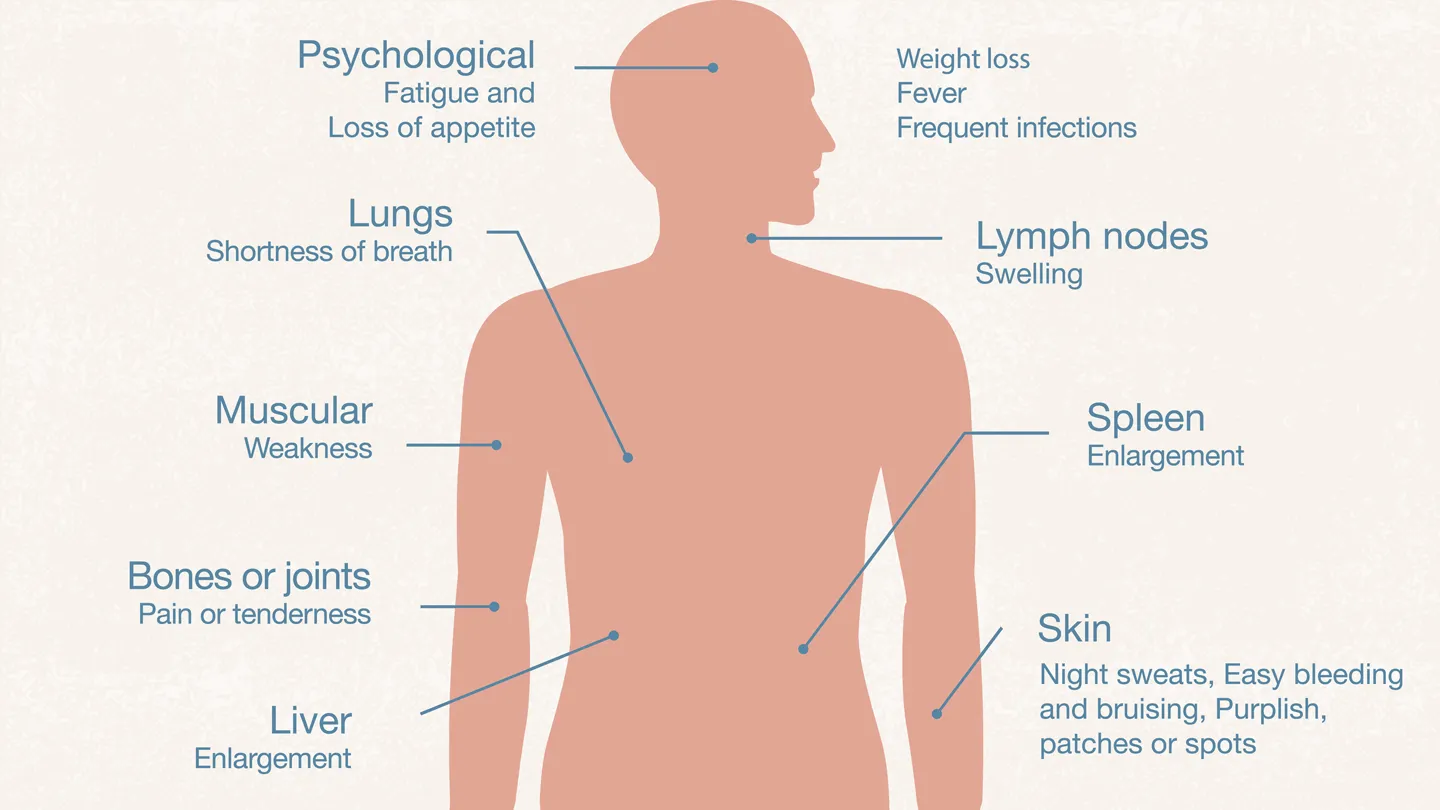
Acute Lymphocytic Leukemia (ALL)
- Fever
- Sweating at night
- Appetite loss
- Unwanted or unexpected weight loss
- Tiredness
- Weakness
- Dizziness or lightheadedness
- Breathlessness
- Fever
- Infections that repeatedly recur or don’t go away
- Easy bruising or bleeding, such as bleeding gums or a heavy menstrual flow in women
- Pale skin, although this can be more challenging to identify in people with darker skin tones
If leukemia cells build up in the liver and spleen, you may feel full after only eating a small meal or notice swelling in your belly.
Sometimes, leukemia can cause bone or joint pain from the cells growing in the bone marrow.
If ALL spreads to other places in your body, you may experience symptoms such as:
- Enlarged lymph nodes if the cancer spreads to the lymph nodes
- Headaches, weakness, seizures, vomiting, facial numbness, blurred vision, or balance issues if the cancer spreads to your brain or spinal cord
- Fluid buildup and breathing difficulties if the cancer spreads to your chest
- Swelling of the face, neck, arms, and chest
- Headaches
- Dizziness
- Altered consciousness
Acute Myeloid Leukemia (AML)
- Headache
- Slurred speech
- Weakness on one side of the body
- Confusion
- Sleepiness
- Shortness of breath
- Blurry vision or loss of vision
Some people with AML may have bone or joint pain if the leukemia builds up in the bone marrow in these areas.
When cancer cells build up in the liver or spleen, the organs may enlarge, causing abdominal swelling or a sense of fullness.
People with a certain type of AML, known as acute promyelocytic leukemia (APL), may experience bleeding and clotting problems.
- Weakness
- Headaches
- Vomiting
- Seizures
- Balance problems
- Blurred vision
- Numbness in the face
Chronic Lymphocytic Leukemia (CLL)
Anemia can affect someone with CLL, leading to weakness, tiredness, and shortness of breath. But people with CLL often have vague symptoms that other conditions can cause.
Bruising, bleeding, frequent nosebleeds, and bleeding gums may occur when you have a shortage of platelets in your blood.
If CLL affects your liver or spleen, you may feel fullness after only a small meal or experience belly pain or swelling. Swollen lymph nodes are another possible sign of CLL.
Chronic Myeloid Leukemia (CML)
The most common sign of CML is an abnormal white blood cell count on blood tests. Very high or low white blood cell counts can lead to frequent infections that are hard to fight off.