

:max_bytes(150000):strip_icc():format(jpeg)/VWHEVERGREEN-LevoscoliosisandDextroscoliosis-AnOverview-final-578a3cedf71c4b9d8588799921ee985a.png)
Key Takeaways
- Levoscoliosis is when your spine curves to the left, and dextroscoliosis is when it curves to the right.
- An X-ray is key to diagnosing scoliosis by showing where and how much the spine is misaligned.
Scoliosis is described in two ways, depending on the direction the spine curves: levoscoliosis (spinal curve to the left) or dextroscoliosis (spinal curve to the right). You can have one or more curves of the spine of varying curvature, and each curve can involve a small or large area of the spine.
Scoliosis can affect the cervical, thoracic, and/or lumbar portions of the spine.
Illustration by Julie Bang for Verywell Health
Dextroscoliosis vs. Levoscoliosis
To diagnose which way your spine curves, healthcare providers look at how your spinal column deviates from the body’s midline. In people with a straight spine, the column aligns with the midline
Scoliosis symptoms tied to posture changes help in diagnosis. Levoscoliosis is when the spine curves left from the midline. Dextroscoliosis involves a curve to the right.
Levoscoliosis
BSIP / UIG / Universal Images Group
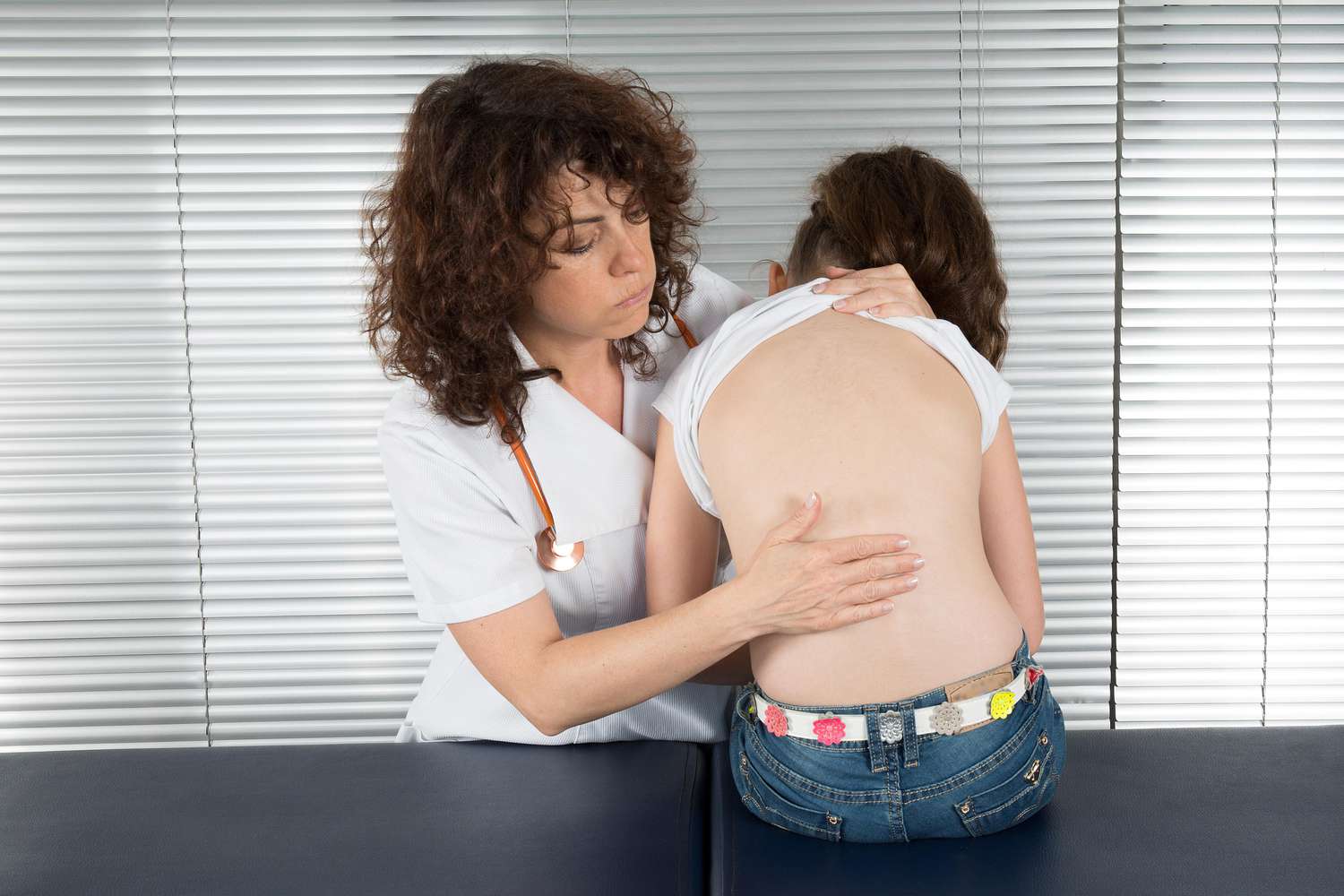
When you first look at the image above, the curve might appear as if it is going to the right side. This may be because the patient is side bending to the right as a result of the bones of the spine having moved away from the midline and towards the left.
With the spinal bones positioned left of center, the individual’s spinal balance is affected, causing them to lean or side bend to the right. This adjustment helps the person maintain upright posture despite the levoscoliosis
Over time, routine posture and movements can cause muscles on either side of the curve to weaken and tighten, reinforcing the side bend.
If the spine moves to the left, as shown in the diagram, it indicates the curve is going left.
Genna Naccache / The Image Bank / Getty Images
Levoscoliosis may seem like intentional bending, especially when the curvature is in the lower back.
Experts indicate that left thoracic spine curves may be more often associated with diseases, whereas right thoracic curves typically occur without underlying conditions.
Every scoliosis case requires a complete evaluation to identify the underlying cause. Factors like age at onset and other medical conditions guide further testing and treatment decisions, including the possibility of surgery.
Is Levoscoliosis Curable?
Levoscoliosis treatment depends on the severity of the curvature and associated symptoms, such as difficulty breathing. It also will depend on if and how the levoscoliosis worsens. Observation, orthopedic bracing, and surgery are among the treatment options, depending on the specific case.
Dextroscoliosis
SCIEPRO/Science Photo Library / Getty Images
Dextroscoliosis is a spinal column that bows out to the patient’s right. Dextroscoliosis symptoms include the body’s tendency to side bend to the left, and may vary in terms of how serious the condition is or may become.
Most of the time, dextroscoliosis occurs in the thoracic spine.
Diagnosis
NI QIN/E+ / Getty Images
An X-ray plays a crucial role in diagnosing scoliosis by showing where and how much the spine is misaligned. It also helps guide treatment for dextroscoliosis.
In the referenced X-ray, you can see both dextroscoliosis and levoscoliosis. The thoracic spine (upper part) demonstrates dextroscoliosis, while the lumbar spine (lower part) shows levoscoliosis.
Frequently Asked Questions
-
What are the symptoms of scoliosis?Scoliosis symptoms often include visible misalignment. You might notice one shoulder or hip is higher than the other. The head may not be centered, and there can be a lean to one side.
-
What causes levoscoliosis or dextroscoliosis?In most cases (about 85%) the cause is unknown. These are diagnosed as idiopathic scoliosis. Sometimes, rare genetic causes play a role. Levoscoliosis can also be linked to other health conditions.
-
Can you have both dextroscoliosis or levoscoliosis?Yes, it is possible to have more than one spinal curve with scoliosis. Dextrocoliosis is more common in the midback and levoscoliosis is more likely in the upper spine. This is known as combined scoliosis, which may be a risk factor for fractures in the spine’s vertebral bones.
-
Do levoscoliosis and dextroscoliosis lead to complications?Levoscoliosis and dextroscoliosis may lead to complications if they worsen. The spine might press on nerves, causing leg weakness, numbness, and balance issues. Rarely, severe changes can lead to breathing difficulties.