

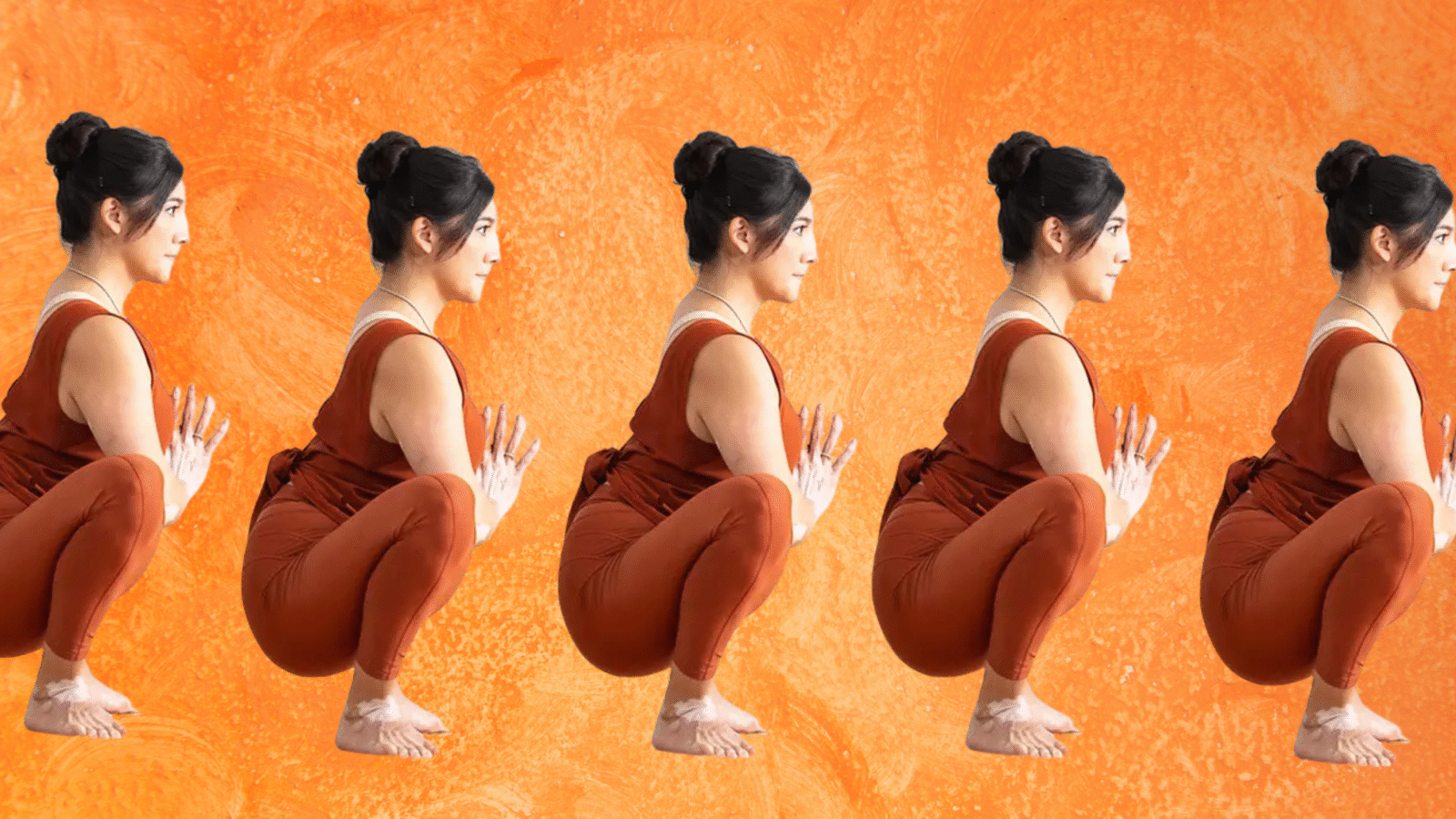
A pose that offers grounding and more access to movement? Yes, please.
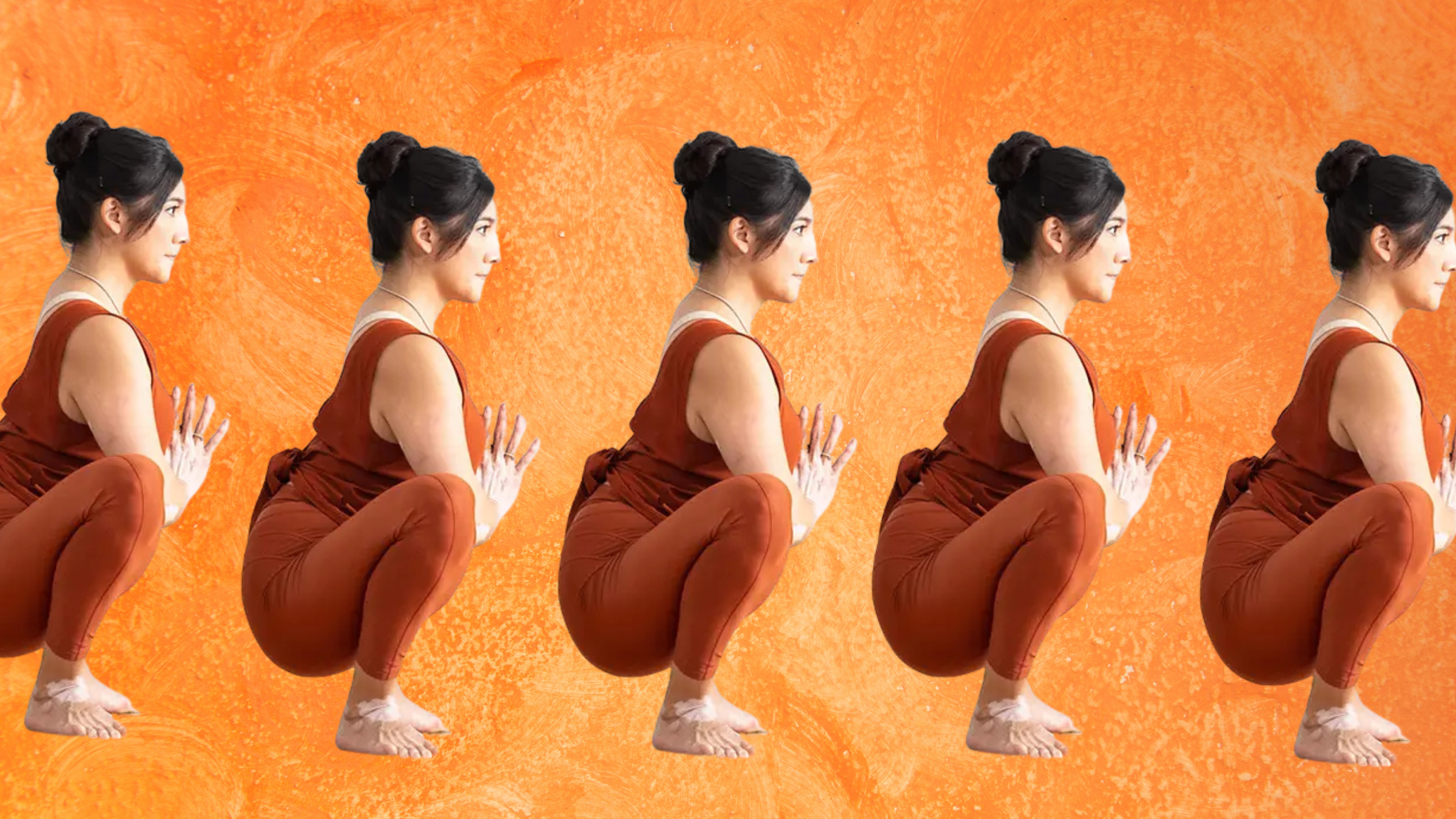
(Photo: Andrew Clark; Design in Canva)
Published April 5, 2026 05:55AM
There are certain yoga poses that just feel right. Malasana (also known as yoga squat, yogi squat, and Garland Pose) is one such pose, which is probably why humans throughout history have spent so much time in it.
Malasana is a wide-legged squat in which your bent knees and thighs are separated wide, your sit bones hover above the mat, your chest leans slightly forward between your knees, and your toes points outward. Your hands can be in prayer position at heart center, with your elbows pushing against your inner thighs to further separate the knees.
In terms of the pose’s functional benefits, yoga teacher Rachel Land explains that throughout history, humans tended to spend much of their lives in Malasana. That’s changed in recent years. “This deep squat becomes less common as we spend more of our lives sitting in chairs,” she says. Ironically, this chair-bound lifestyle that once seemed to be beneficial can end up doing more harm than good, leading to tightness throughout the back and shoulders and a general lack of mobility through the body.
Even more ironically, yogi squat can help counter many of the unwelcome effects of our sedentary lifestyle. A simple, ancient posture as the solution to many of our contemporary physical woes? What else is new.
The Benefits of Malasana
Malasana is a shape that offers a little of everything. Especially when it comes to the hips. According to yoga teacher Taylor Lorenz, yogi squat’s combination of external rotation, abduction, and flexion opens the hips in a variety of ways.
The pose also strengthens and builds mobility in the ankles, back, and lower body, all while creating space in the pelvic floor. “Functionality-wise Malasana is an excellent go-to pose,” says Lorenz. “It assists in restoring natural mobility through the lower body and supports everyday movements like squatting down, sitting, or lifting things with more ease and support.” Additionally, Malasana lengthens the spine, which can help ease tension in the lower back and support a posture that’s upright rather than hunched. Basically the antidote to your tech-driven hunch.
If longevity of movement is a personal goal, squat is an excellent pose to incorporate to your life. “The main challenges in the population I teach (older adults) stem from reduced range of motion in knee and ankle joints, and to a lesser extent hip joints,” says Land. She attributes these issues to factors including increased tissue stiffness, osteoarthritic bony changes around the joints, joint replacements, and more. “The main benefit of including Malasana in my classes is that it helps students retain their ability to squat close to the floor.”
How to Practice Malasana
Consistency is key to accessing Malasana and improving your body’s overall functionality. Lorenz says that she incorporates the pose into sequences often, even including it multiple times so students can get used to it over the course of a class. “The repetition of getting in and out of the shape helps the body build familiarity, strength, and ease over time,” she says.
Just because yogi squat is foundational and incredibly beneficial doesn’t mean that it’s easy for everyone to practice. Our teachers note that those with limited mobility in the hips and ankles, and anyone with a lack of strength in the lower body, might initially find it challenging to drop down into a deep squat.
For those who have a challenging time getting low, variations abound. Lorenz reminds students that they don’t need to drop all the way down. A higher squat, with the knees bent less intensely, can help build necessary strength.
Land adds that simple switch-ups, including offering a choice of how far the feet are turned out, can make the pose more accessible. And, as always, props are here to support your practice. A rolled blanket beneath the heels or blocks positioned beneath the hands can help, too.
Finally, if need be, you can start practicing the pose while reclined. “Lying on the back and hugging the knees wide to frame the torso, can still offer a similar opening through the hips,” says Lorenz.
Malasana is more than a yoga pose—its a natural human posture that many of us have lost touch with. So whether you’re on your mat, pausing between to-dos, or playing with kids or pets, take a moment and drop into a deep, grounding yoga squat. Your body will thank you.