

Medication Changes
“Switch from multiple daily medications to once-daily or once-weekly medications when possible,” says Jaffe, who also recommends long-acting insulin instead of several short-acting doses if you still need insulin.
Medication Management
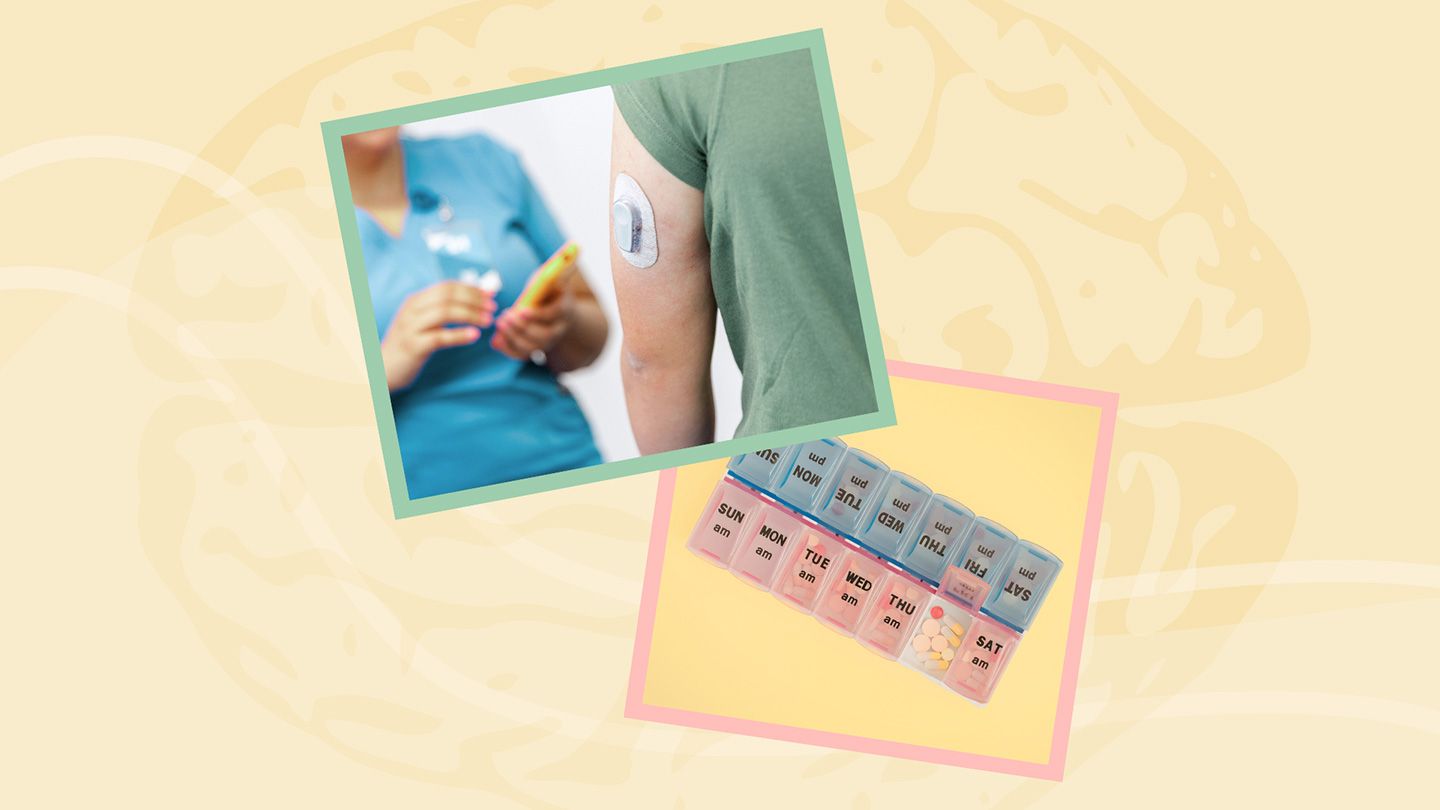
Even after your provider has adjusted your medications, your dosing schedule may still feel complicated. Dr. Majety recommends these tips to manage your meds:
- Use blister packs or weekly pill organizers.
- Try timed dispensing devices.
- Keep all medications in one consistent storage spot.
- Avoid keeping medication bottles in many locations.
Simplified Blood Glucose Monitoring
“A continuous glucose monitor (CGM) is often much easier than finger sticks, because it provides automatic readings, alerts signal lows or highs, and caregivers can receive remote data,” says Jaffe. But if CGM isn’t an option, you can still decrease your blood sugar checks to once a day and as needed if your provider says it’s okay.
Blood Glucose and A1C Goals
When you have both diabetes and Alzheimer’s, the goal shifts from “tight control” to “safe control,” says Jaffe. For many people with type 2 diabetes and early Alzheimer’s, a good A1C, or HbA1C, goal is between 7.5 and 8.5 percent, says Jaffe, who adds that this range:
- Reduces the risk of dangerously low blood sugar
- Lessens treatment burden
- Helps prevent emergency department visits and hospitalizations
- Protects long-term health
- Lowers the risk of many infections