

Before embarking on any dietary change, it’s crucial to understand that each person with Crohn’s has their own unique triggers, says Dr. Ford.
“The Mediterranean diet should be viewed as a modifiable framework, personalized to the individual, allowing them to make choices that best suit their body and lifestyle,” he says. “To improve adherence, I advise gradual change with simple food substitutions. Also keep in mind that small changes go a long way toward improving health over time.”
Compared with cleaning out your fridge and pantry and trying to stock it with entirely new-to-you food items, swapping Mediterranean-style choices for what you may be already eating makes the shift easier. Ford says that these substitutions can include:
- Reaching for olive oil or avocado oil instead of refined vegetable oils like soybean, corn, canola, or sunflower oil
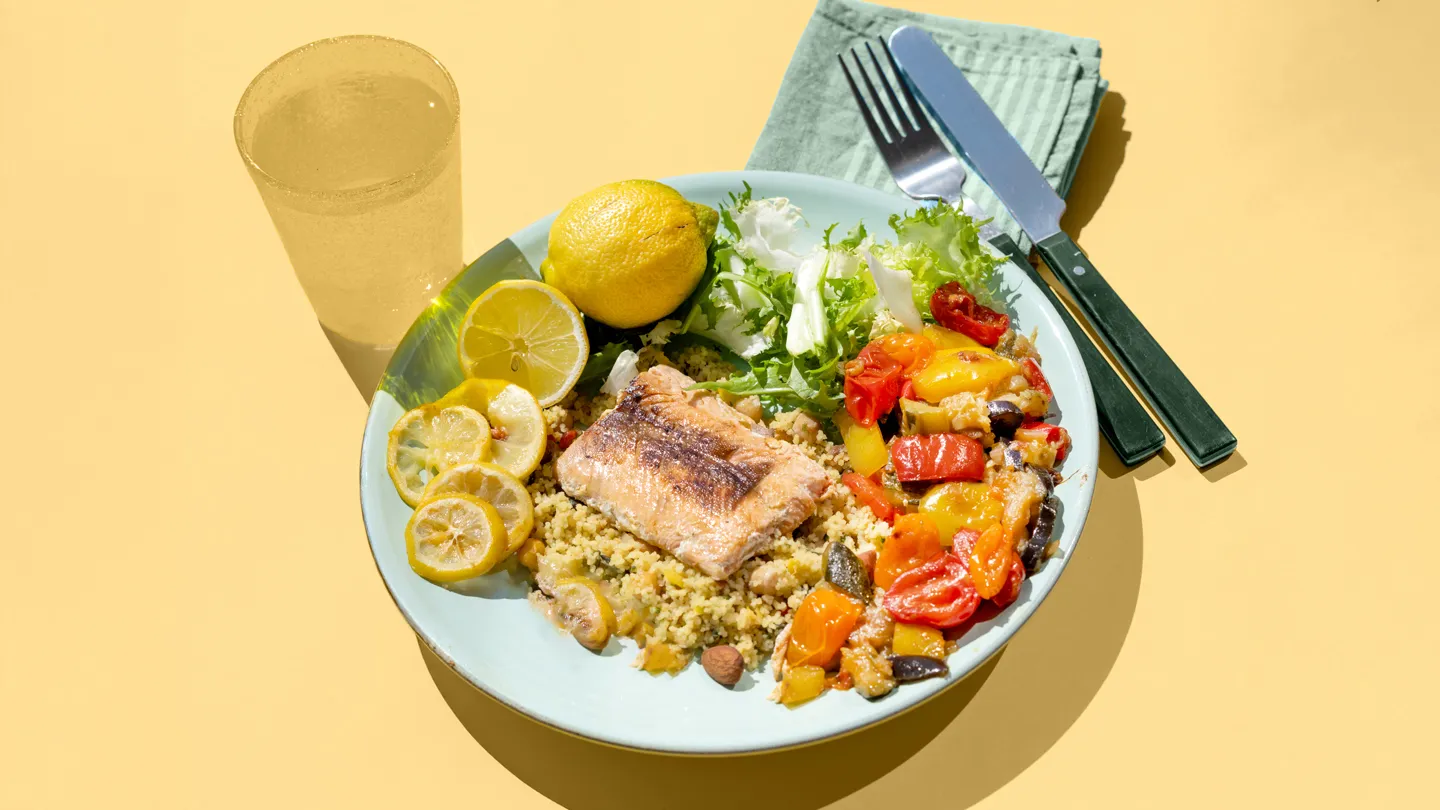
- Swapping red meat with poultry or a fatty fish like salmon or mackerel
- Serving fruit for dessert rather than baked goods or other foods with added sugars
- Consuming low-fat or nonfat dairy products like milk and yogurt instead of full-fat versions
- Trading white bread for whole-grain bread
- Opting for whole-grain pasta
- Topping a salad with olive oil and vinegar instead of a store-bought dressing
- Snacking on nuts and dried fruit instead of chips
- Choosing herbs and spices as seasoning rather than salt
“Once you have these types of changes in place, you can then start to focus on adding more plant-based options into your snacks and meals,” Ford says. For example, that might look like:
- Adding beans and sliced vegetables into soups and stews
- Putting dark leafy greens on sandwiches or into an egg bake
- Trying new fish recipes, with options like trout, sardines, or halibut
- Cooking different types of whole grains, such as quinoa or farro
While this style of eating can be helpful not just for Crohn’s but for your overall health, it’s important to pay attention to your body when a flare begins because you may need to make a pivot, says Ford.
“During a Crohn’s flare, individuals may have to temporarily limit fiber intake to help with symptom relief,” he says. “That means you may not be able to have the high fiber [intake] seen with the Mediterranean diet. However, you can often resume that way of eating once symptoms are in remission.” In fact, the AGA also recommends this plan of action in IBD when dealing with flares and increasing gastrointestinal symptoms.
A registered dietitian can help you find ways to optimize your diet while practicing self-compassion. If you aren’t already working with someone, ask your healthcare team or support group for a referral, and check whether you have insurance coverage.