

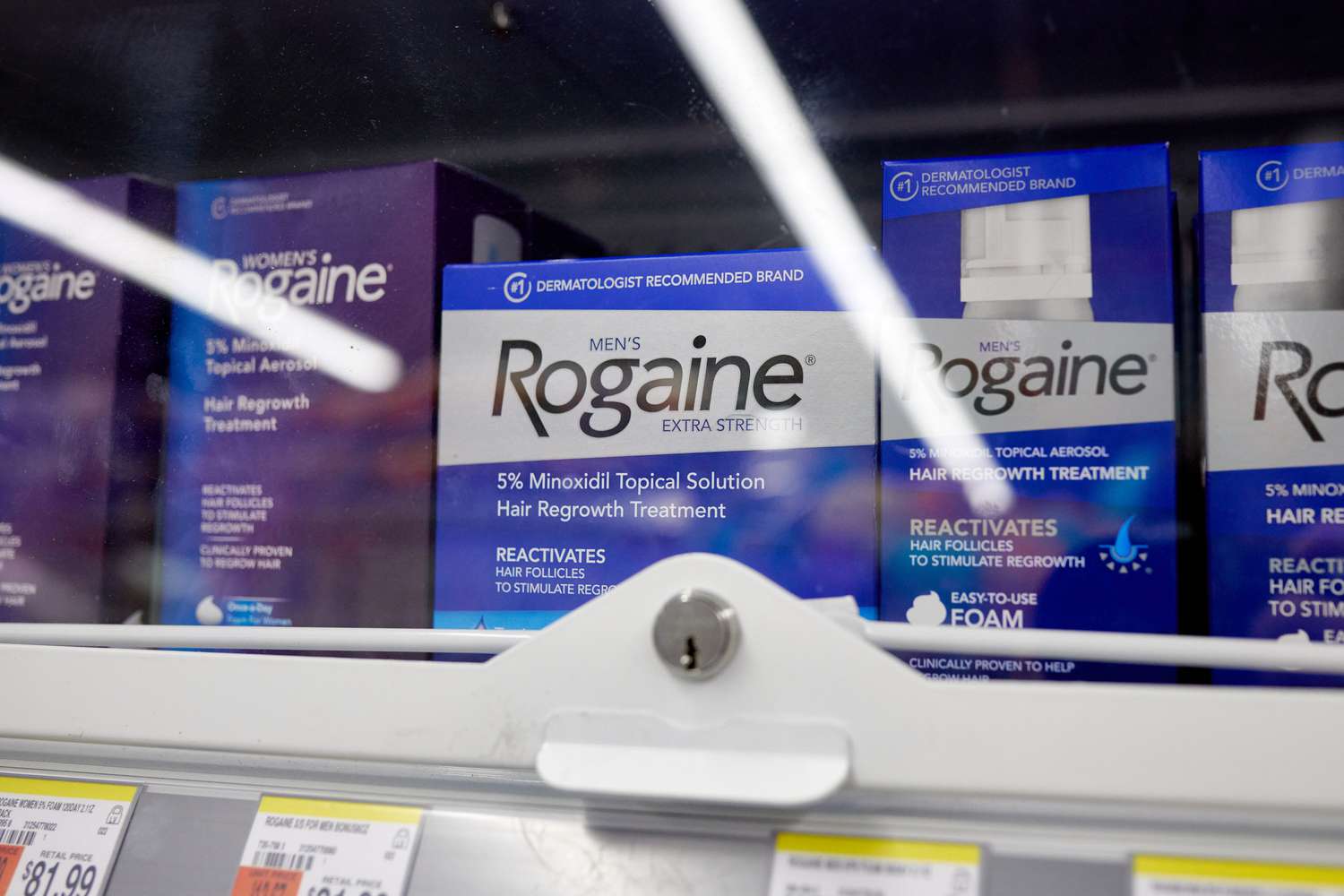
| Minoxidil vs Finasteride | ||
|---|---|---|
| Minoxidil | Finasteride | |
| Drug Class | Vasodilator | 5α-reductase inhibitor |
| Use | High blood pressure
Hair loss |
Large prostate
Hair loss |
| How it Works for Hair Loss | It’s not fully understood how minoxidil works, but it may promote hair growth and prevent additional hair loss. | Finasteride blocks a hormone in the scalp that stops hair growth. This may help promote new hair growth and slow down hair loss. |
| Dosage Form | Tablet
Solution (liquid) Foam |
Tablet |
| Typical Dosage for Hair Loss | Oral: Take 0.25-5 milligrams (mg) by mouth daily. Strength varies based on sex.
Topical: Apply liquid or foam to the scalp once to twice daily. |
Take 1 mg tablet by mouth once daily with or without food. |
| Availability | Prescription tablet
OTC liquid and foam |
Prescription |
| Use for Hair Loss in Certain Populations | Pregnancy: Might be harmful
Breastfeeding: Might be harmful People <18 years old: Do not use Heart condition: Talk with the prescriber |
Pregnancy: Do not use
Breastfeeding: Unknown presence in breast milk People <18 years old: Unknown safety and effects Liver problems: Caution |
How Do They Work?
Minoxidil is a vasodilator. This means it relaxes and widens blood vessels, which helps lower blood pressure.
For hair loss, it’s not exactly clear how minoxidil works. It’s thought to relax scalp blood vessels, which may improve the delivery of nutrients to hair follicles. When used as directed, it may promote hair growth and prevent additional hair loss.
Finasteride is a 5α-reductase inhibitor. It also promotes new hair growth and slows hair loss.
Finasteride likely works by lowering the amount of dihydrotestosterone (DHT)—a hormone that stops hair growth. It does this by preventing a specific type II 5α-reductase protein from turning testosterone into DHT. Men with hair loss have higher levels of DHT on the scalp than men without hair loss.
Potential Side Effects
Minoxidil and finasteride have different side effects. Side effects may vary depending on the administration (oral or topical). When using minoxidil, you might experience the following:
- Itchy scalp
- Swelling from the body holding onto salt and water
- Heart problems, such as an increased heart rate (tachycardia), with possible abnormal electrocardiogram (ECG)
- Hair growth of fine body hair
- Skin rashes, which might rarely become severe
- Nausea and vomiting
- Temporary abnormal blood-related and kidney-related labs
- Variable changes in liver-related labs
With finasteride, side effects may include:
A severe side effect of both minoxidil and finasteride is the potential for a serious allergic reaction. Symptoms may include breathing problems, itchiness, and rash. Get medical help immediately if you develop a severe allergic reaction or serious side effects.
Precautions
Minoxidil should not be used in people with pheochromocytoma, which is a hormonal tumor of the adrenal glands that sits on top of the kidneys. Finasteride should not be used during pregnancy.
Which One Works Better for Hair Loss?
Topical minoxidil is the go-to treatment for hair loss—with the 5% being more effective than the 2% strength. Topical minoxidil is usually available as a solution (liquid) or foam that you can apply to your scalp.
You will use these products twice daily—but once daily if you are a female using the 5% foam. Since hair regrowth can take time, it may take two to four months of regular use to see results.
Low doses of minoxidil tablets may also be effective for hair loss. Low doses are 2.5 to 5 milligrams (mg) daily in males and 0.25 to 1.25 mg daily for females. As of 2024, however, the FDA has only approved minoxidil tablets for high blood pressure. Moreover, cautious use is necessary for people at risk for heart-related conditions.
Other than topical minoxidil, the FDA approved finasteride tablets for hair loss—but only in males. You may see improvement as early as three months. In studies with female participants, finasteride did not show effectiveness within 12 months of use.
Continuous use of minoxidil and finasteride is necessary to maintain results. If you stop the medication, you may notice some hair loss again.
Can You Take Them Together?
Minoxidil and finasteride can be taken together. In fact, a systematic review (a methodical review of a collection of studies) recommended the combination of topical minoxidil 2% with finasteride 1 mg tablets. Studies suggest that combined use is more effective than using either medication as monotherapy (on its own).
Which One Is Right for You?
The better choice between minoxidil and finasteride will likely depend on various factors:
- Sex: Finasteride is only for males. Minoxidil is available for both males and females.
- Side effects: People with a risk for heart problems may prefer to avoid minoxidil, and people with concerns about sexual-related effects may prefer to avoid finasteride.
- Benign prostatic hyperplasia (BPH): If you have large prostate symptoms, you might prefer finasteride as a treatment option for your BPH and hair loss concerns.
- High blood pressure: If you have high blood pressure, you might be open to trying minoxidil tablets to lower your blood pressure and prevent additional hair loss.
- Pheochromocytoma: Pheochromocytoma is a hormonal tumor of the adrenal glands that sits on your kidneys. If you have this type of tumor, you should not use minoxidil.
- Availability: If you do not want a prescription from a healthcare provider, you may prefer an OTC topical minoxidil.
- Insurance coverage: If you want insurance coverage for your medication, you might prefer finasteride. Minoxidil tablets might also be an option, but it will be an off-label use for hair loss.
- Time: Results with topical minoxidil can take two to four months. With finasteride, you may see results as soon as three months.
- Dosage form preference: Some people may prefer a topical product over a tablet or vice versa.
There might be other factors that will affect your decision. Reach out to a healthcare provider to discuss the best option for you.
:max_bytes(150000):strip_icc()/1-5303791d52004252a18eaf1d8ac02359.jpg)