

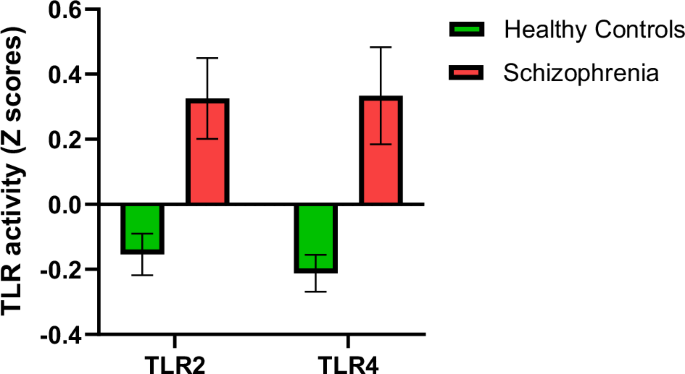
Norman RMG, Malla AK. Stressful Life Events and Schizophrenia: I: A Review of the Research. Br J Psychiatry. 1993;162:161–6.
Sullivan PF, Kendler KS, Neale MC. Schizophrenia as a Complex Trait: Evidence From a Meta-analysis of Twin Studies. Arch Gen Psychiatry. 2003;60:1187–92.
Hilker R, Helenius D, Fagerlund B, Skytthe A, Christensen K, Werge TM, et al. Heritability of Schizophrenia and Schizophrenia Spectrum Based on the Nationwide Danish Twin Register. Biol Psychiatry. 2018;83:492–8.
Ripke S, Neale BM, Corvin A, Walters JTR, Farh K-H, Holmans PA, et al. Biological insights from 108 schizophrenia-associated genetic loci. Nature. 2014;511:421–7.
Shi J, Levinson DF, Duan J, Sanders AR, Zheng Y, Pe’er I, et al. Common variants on chromosome 6p22.1 are associated with schizophrenia. Nature. 2009;460:753–7.
Corvin A, Morris DW. Genome-wide Association Studies: Findings at the Major Histocompatibility Complex Locus in Psychosis. Biol Psychiatry. 2014;75:276–83.
Sekar A, Bialas AR, de Rivera H, Davis A, Hammond TR, Kamitaki N, et al. Schizophrenia risk from complex variation of complement component 4. Nature. 2016;530:177–83.
Yockey LJ, Iwasaki A. Interferons and Proinflammatory Cytokines in Pregnancy and Fetal Development. Immunity. 2018;49:397–412.
Liu X-R, Wei X-W, Lin Y, Wang Y-H. Toll-Like Receptor-Dependent Antiviral Responses at the Maternal-Fetal Interface. Reprod Devel Med. 2020;04:251–6.
Jurewicz J, Polanska K, Hanke W. Chemical exposure early in life and the neurodevelopment of children-an overview of current epidemiological evidence. Ann Agricul Environ Med. 2013;20:465–86.
King S, Holleran L, Mothersill D, Patlola S, Rokita K, McManus R, et al. Early life Adversity, functional connectivity and cognitive performance in Schizophrenia: The mediating role of IL-6. Brain, Behav, Immun. 2021;98:388–96.
Potvin S, Stip E, Sepehry AA, Gendron A, Bah R, Kouassi E. Inflammatory cytokine alterations in schizophrenia: a systematic quantitative review. Biol Psychiatry. 2008;63:801–8.
Upthegrove R, Khandaker GM. Cytokines, oxidative stress, cellular markers of inflammation in schizophrenia. Neuroinf Schizophr. 2019;44:49–66.
Karahan A, Manzak Saka I, Sağlam Aykut D, Civil Arslan F, Selçuk Özmen E, Özkorumak Karagüzel E. The relationship between peripheral immune cell markers and cognitive functions in patients with schizophrenia. Int J Psychiatry Med 2024: 912174241266059.
Liang J, Guan X, Sun Q, Hao Y, Xiu M. Neutrophil/lymphocyte ratio and cognitive performances in first-episode patients with schizophrenia and healthy controls. Prog Neuropsychopharmacol Biol Psychiatry. 2024;135:111092.
van Berckel BN, Bossong MG, Boellaard R, Kloet R, Schuitemaker A, Caspers E, et al. Microglia activation in recent-onset schizophrenia: a quantitative (R)-[11C]PK11195 positron emission tomography study. Biol Psychiatry. 2008;64:820–2.
Doorduin J, de Vries EF, Willemsen AT, de Groot JC, Dierckx RA, Klein HC. Neuroinflammation in schizophrenia-related psychosis: a PET study. J Nucl Med. 2009;50:1801–7.
Perry BI, Upthegrove R, Kappelmann N, Jones PB, Burgess S, Khandaker GM. Associations of immunological proteins/traits with schizophrenia, major depression and bipolar disorder: A bi-directional two-sample mendelian randomization study. Brain, Behav, Immun. 2021;97:176–85.
Williams JA, Burgess S, Suckling J, Lalousis PA, Batool F, Griffiths SL, et al. Inflammation and Brain Structure in Schizophrenia and Other Neuropsychiatric Disorders: A Mendelian Randomization Study. JAMA Psychiatry. 2022;79:498–507.
Aflouk Y, Inoubli O, Saoud H, Zaafrane F, Gaha L, Bel Hadj Jrad B. Association between TLR2 polymorphisms (− 196–174 Ins/Del, R677W, R753Q, and P631H) and schizophrenia in a Tunisian population. Immunol Res. 2021;69:541–52.
Mostafa M, Elwasify M, Fathy AA, Abdelsalam M. Toll-Like Receptor 4 Gene Polymorphisms and Susceptibility to Schizophrenia: A Case-Control Study. Immunol Investig. 2022;51:2009–24.
Gurung J, Bera NK, Lama M, Singh B. Association of TLR-4 896A/G, TLR-4 1196C/T, and TLR-9 C/T polymorphism with schizophrenia in Indian Bengalee patient. Indian J Psychiatry. 2022;64:579–87.
Sotelo-Ramírez CE, Camarena B, Sanabrais-Jiménez MA, Zaragoza-Hoyos JU, Ordoñez-Martínez B, Escamilla-Orozco RI, et al. Toll-Like Receptor (TLR) 1, 2, and 6 Gene Polymorphisms Support Evidence of Innate Immune Factors in Schizophrenia. Neuropsychiatr Dis Treat. 2023;19:2353–61.
Aflouk Y, Saoud H, Inoubli O, Yacoub S, Zaafrane F, Gaha L, et al. TLR4 Polymorphisms (T399I/D299G) Association with Schizophrenia and Bipolar Disorder in a Tunisian Population. Biochem Genet. 2024;62:2418–36.
Aderem A, Ulevitch RJ. Toll-like receptors in the induction of the innate immune response. Nature. 2000;406:782–7.
Roh JS, Sohn DH. Damage-Associated Molecular Patterns in Inflammatory Diseases. Immune Netw. 2018;18:e27.
Patlola SR, Donohoe G, McKernan DP. Counting the Toll of Inflammation on Schizophrenia—A Potential Role for Toll-like Receptors. Biomolecules. 2023;13:1188.
García-Bueno B, Gassó P, MacDowell KS, Callado LF, Mas S, Bernardo M, et al. Evidence of activation of the Toll-like receptor-4 proinflammatory pathway in patients with schizophrenia. J Psychiatry Neurosci. 2016;41:E46.
Mak M, Misiak B, Frydecka D, Pełka-Wysiecka J, Kucharska-Mazur J, Samochowiec A, et al. Polymorphisms in immune-inflammatory response genes and the risk of deficit schizophrenia. Schizophr Res. 2018;193:359–63.
Ben Afia A, Aflouk Y, Saoud H, Zaafrane F, Gaha L, Bel Hadj Jrad B. Inteurleukin-8 gene variations and the susceptibility to schizophrenia. Psychiatry Res. 2020;293:113421.
Woo JJ, Pouget JG, Zai CC, Kennedy JL. The complement system in schizophrenia: where are we now and what’s next? Mol Psychiatry. 2020;25:114–30.
Luo C, Pi X, Zhang Q, Hu N, Xiao Y, Sweeney JA, et al. A subtype of schizophrenia patients with altered methylation level of genes related to immune cell activity. Psychol Med. 2024;54:2538–46.
Luo C, Pi X, Hu N, Wang X, Xiao Y, Li S, et al. Subtypes of schizophrenia identified by multi-omic measures associated with dysregulated immune function. Mol Psychiatry. 2021;26:6926–36.
Zhang S, Shi K, Lyu N, Zhang Y, Liang G, Zhang W, et al. Genome-wide DNA methylation analysis in families with multiple individuals diagnosed with schizophrenia and intellectual disability. World J Biol Psychiatry. 2023;24:741–53.
Patlola SR, Holleran L, Dauvermann MR, Rokita K, Laighneach A, Hallahan B, et al. Investigating the relationship between toll-like receptor activity, low-grade inflammation and cognitive deficits in schizophrenia patients – A mediation analysis. Brain, Behav, Immun. 2025;128:529–39.
Kang WS, Park JK, Lee SM, Kim SK, Park HJ, Kim JW. Association between genetic polymorphisms of Toll-like receptor 2 (TLR2) and schizophrenia in the Korean population. Gene. 2013;526:182–6.
Auton A, Brooks LD, Durbin RM, Garrison EP, Kang HM, Korbel JO, et al. A global reference for human genetic variation. Nature. 2015;526:68–74.
Wechsler D. Wechsler Adult Intelligence Scale–Third Edition. APA Psyc Tests 1997.
Purcell S, Neale B, Todd-Brown K, Thomas L, Ferreira MA, Bender D, et al. PLINK: a tool set for whole-genome association and population-based linkage analyses. Am J Hum Genet. 2007;81:559–75.
Goldsmith DR, Rapaport MH, Miller BJ. A meta-analysis of blood cytokine network alterations in psychiatric patients: comparisons between schizophrenia, bipolar disorder and depression. Mol Psychiatry. 2016;21:1696–709.
Duan T, Du Y, Xing C, Wang HY, Wang R-F. Toll-Like Receptor Signaling and Its Role in Cell-Mediated Immunity. Front Immunol. 2022;13:812774.
Sharma I, Priya I, Sharma S, Gupta S, Arora M, Mahajan R, et al. Association of toll-like receptor 2 gene polymorphism (rs3804099) with susceptibility to Schizophrenia risk in the Dogra population of Jammu region, North India. Eur J Psychiatry. 2022;36:106–13.
Ward LD, Kellis M. HaploReg: a resource for exploring chromatin states, conservation, and regulatory motif alterations within sets of genetically linked variants. Nucleic Acids Res. 2012;40:D930–4.
Boyle AP, Hong EL, Hariharan M, Cheng Y, Schaub MA, Kasowski M, et al. Annotation of functional variation in personal genomes using RegulomeDB. Genome Res. 2012;22:1790–7.
Ahuja A, Kim E, Sung GH, Cho JY. STAT3 Differentially Regulates TLR4-Mediated Inflammatory Responses in Early or Late Phases. Int J Mol Sci. 2020;21:7675.
Maroulakou IG, Bowe DB. Expression and function of Ets transcription factors in mammalian development: a regulatory network. Oncogene. 2000;19:6432–42.
Tamassia N, Bianchetto-Aguilera F, Gasperini S, Polletti S, Gardiman E, Ostuni R. et al. Induction of OCT2 contributes to regulate the gene expression program in human neutrophils activated via TLR8. Cell Reports. 2021;35:109143.
Yao H, Rahman I. Role of histone deacetylase 2 in epigenetics and cellular senescence: implications in lung inflammaging and COPD. Am J Physiol Lung Cell Mol Physiol. 2012;303:L557–66.
Hong EP, Park JW. Sample Size and Statistical Power Calculation in Genetic Association Studies. Genomics Inf. 2012;10:117–22.
Legge SE, Pardiñas AF, Woolway G, Rees E, Cardno AG, Escott-Price V, et al. Genetic and Phenotypic Features of Schizophrenia in the UK Biobank. JAMA Psychiatry. 2024;81:681–90.