
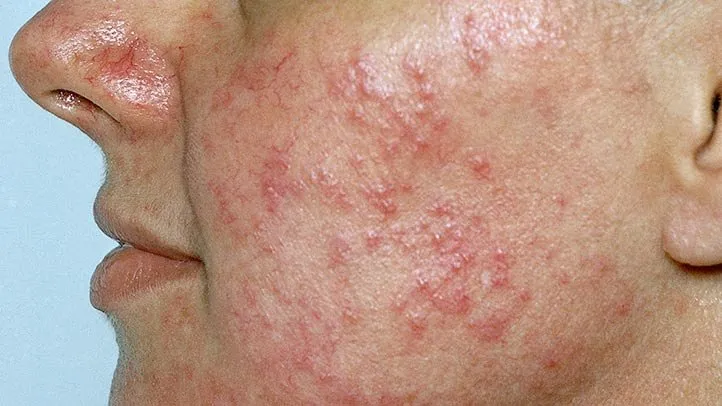
Rosacea? Commonly Misdiagnosed Skin Conditions

Is It Rosacea or Something Else?

Several other conditions can produce the skin redness and acne-like bumps of rosacea. Here’s how to spot them.

Acne

Acne develops when small pores in your skin become clogged with oil and dead skin cells and may become inflamed. Symptoms can vary from person to person, but may include red lumps or spots, tiny white bumps, and dark spots with open pores.

These types of bumps (which may or may not have pus) can also be a sign of rosacea.

 But one sign that distinguishes acne from rosacea is the distribution.

Rosacea tends to be concentrated in the central face area, while acne can be widely distributed across the face.

Cutaneous Lupus

Lupus is another skin condition that can be mistaken for rosacea. This chronic autoimmune disease causes inflammation in different parts of the body, including the skin.

Inflammation results when the immune system attacks healthy cells and tissues. For lighter-skinned people, one distinct symptom of lupus is a red facial rash. This rash can cover both cheeks and usually has a butterfly shape.

Along with the potential of rosy cheeks, the rash can cover the bridge of the nose. But while a rosacea rash may look like lupus, the difference is a lupus rash doesn’t have red bumps that are typical of rosacea, although the rash can be raised.

Other symptoms that may accompany a lupus rash include fever, fatigue, joint pain and stiffness, headache, dry eyes, and shortness of breath. If you’re experiencing any of these alongside a developing facial rash, consult your doctor. A blood test can help rule out this condition.

Eczema

Because eczema can lead to reddened skin, it can sometimes be confused with rosacea. A major difference is the itching and scaly feel that eczema causes.

Often beginning in early life, eczema refers to a number of skin conditions that cause inflammation, including atopic dermatitis, stasis dermatitis and contact dermatitis. Some typical symptoms include:

  • Rash
  • Itchiness
  • Dryness
  • Blisters

“Usually associated with a scaly rash and intense itching. Many patients have a history of eczema since childhood and often experience it on other body sites. Sensitive skin is also common,” says Dr. Kazlouskaya.

While some people’s symptoms may lessen over time, eczema is a chronic condition with no known cure.

Seborrheic Dermatitis

This skin condition is often found on the scalp, causing red patches and scaly dandruff. It can also develop on other parts of the body, including the face and the nose, so it’s sometimes mistaken for rosacea.

It’s possible to have seborrheic dermatitis and rosacea at the same time, but there is a way to tell these conditions apart. In addition to redness, seborrheic dermatitis tends cause flaking in the:

  • Eyebrows
  • Forehead
  • Creases around the nose
  • External ear canal
And, if you have seborrheic dermatitis alone, you won’t have red, swollen bumps or pus-filled pimples that are typical with rosacea.

Psoriasis

Another skin condition that can lead to skin sensitivity and redness is psoriasis. The most common type of psoriasis is called plaque psoriasis.

Plaque — or thick, scaly patches of skin — can appear anywhere, but most often show up on the:

  • Elbows
  • Knees
  • Lower back
  • Scalp
In addition to severe itching, those with psoriasis often have skin that burns, or feels painful and tight.

“Psoriasis can affect the face but more typically appears on the scalp, trunk, and extremities, especially the knees and elbows. It is characterized by well-demarcated areas covered with silvery scales,” says Kazlouskaya.

Perioral Dermatitis

This may resemble rosacea, and some believe it’s related. But perioral dermatitis mainly affects the area around the mouth, while rosacea more often affects the cheeks, says Kazlouskaya. It’s strongly associated with topical steroid use.

Perioral dermatitis symptoms include:

  • Red or inflamed rash
  • Skin scaling
  • Pustules
  • Sensitivity to skin care
While perioral dermatitis can return after treatment, and repeat cases can turn into rosacea, they are two different conditions.

Demodex Folliculitis

“Demodex is a normal skin mite that sometimes increases in density and triggers inflammation,” says Kazlouskaya. “Demodex folliculitis presents as itchy inflammatory bumps and pustules.”

According to Kazlouskaya, on average, these patients have more demodex mites per pore. These mites can be identified under the microscope if pustular contents are examined.

 Demodex folliculitis may contribute to the red bumps of rosacea.

While these are two separate conditions, microscopic organisms that normally inhabit hair follicles in low numbers appear to be more numerous in those with rosacea, says Anna Guanche, MD, a board-certified dermatologist based in Calabasas, California.