

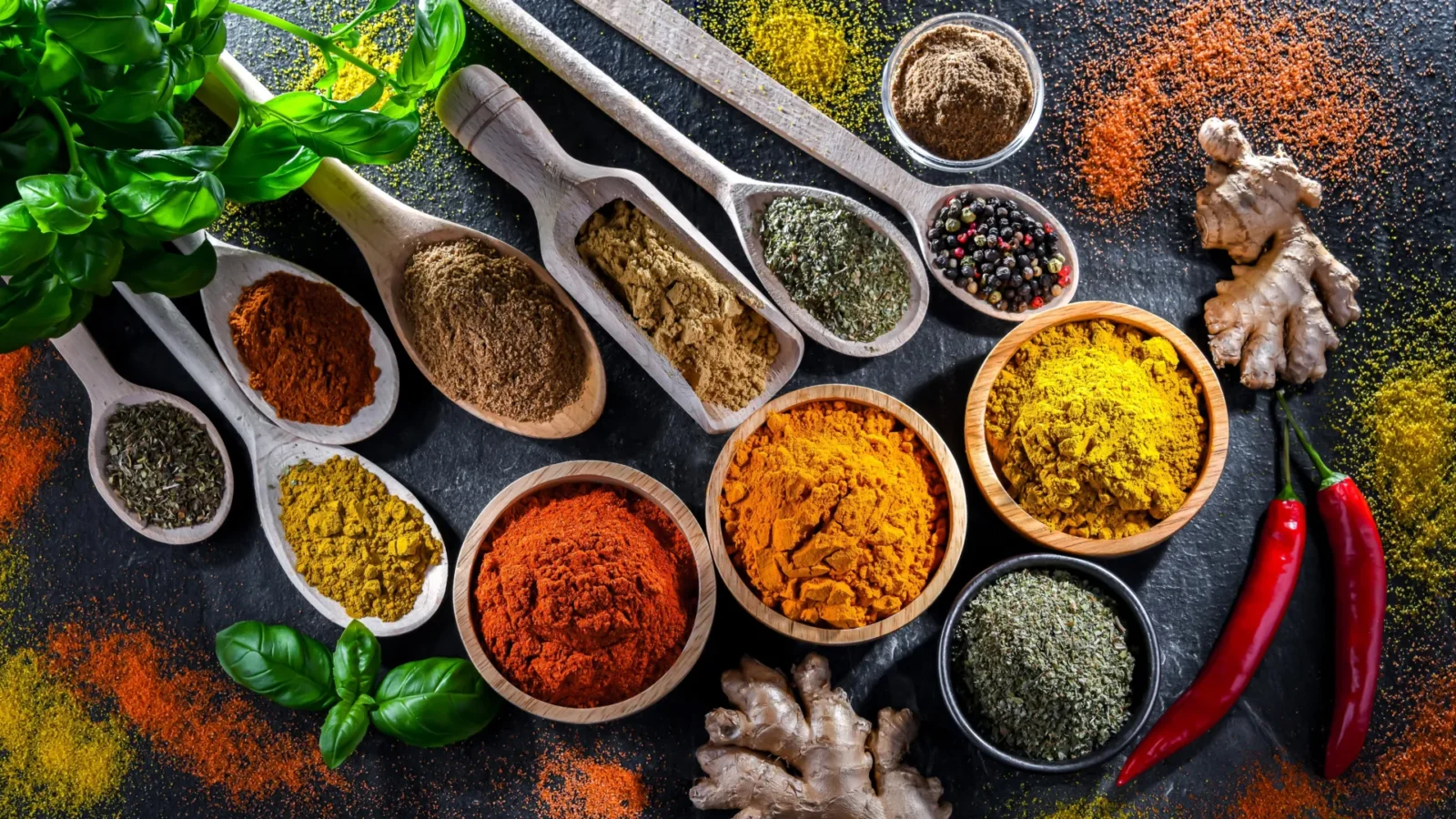
Chronic inflammation often develops quietly, without obvious pain or noticeable symptoms. Over time, however, it can contribute to serious health problems such as type 2 diabetes, heart disease, obesity, arthritis, and even cancer. Inside the body, this process is driven by immune cells that release chemical signals to respond to injury or infection. What people eat can influence this activity. Many common foods and seasonings, including herbs, spices, and aromatic plants, contain natural compounds known as phytochemicals that can affect inflammatory pathways. These ingredients have been combined in traditional diets and herbal remedies for centuries, long before their biological roles were understood.
Even with this long history, researchers have struggled to explain exactly how plant-based foods reduce inflammation. In laboratory settings, individual plant compounds often show anti-inflammatory effects, but usually only at levels far higher than what a normal diet can provide. This has led to doubts about whether so-called ‘anti-inflammatory foods’ can truly influence the immune system in real life. Another unresolved question is whether different compounds might work together inside cells, producing stronger effects in combination than on their own. Until recently, this type of synergy had rarely been tested or explained at the molecular level.
Study Explores How Plant Compounds Work Together
To better understand this, a team led by Professor Gen-ichiro Arimura from the Department of Biological Science and Technology at Tokyo University of Science, Japan, examined how combinations of plant-derived compounds affect inflammation in immune cells. Their findings, published in Volume 18, Issue 3 of the journal Nutrients, focused on compounds commonly found in mint, eucalyptus, and chili peppers. The researchers wanted to see whether pairing these compounds could reduce inflammatory signals more effectively than using them individually.
Testing Anti-Inflammatory Effects in Immune Cells
The team studied macrophages, immune cells that play a key role in inflammation by releasing signaling proteins called cytokines. These proteins help drive inflammatory responses. To simulate inflammation, the researchers exposed murine macrophages to lipopolysaccharide, a bacterial component often used in laboratory experiments. They then treated the cells with menthol (from mint), 1,8-cineole (from eucalyptus), capsaicin (from chili peppers), and β-eudesmol (from hops and gingers), testing each compound alone as well as in specific combinations.
Using gene expression analysis, protein measurements, and calcium imaging, the scientists tracked how these treatments affected important inflammatory markers. They also investigated whether the compounds acted through transient receptor potential (TRP) channels, which are proteins in the cell membrane that detect chemical and physical signals and regulate calcium activity linked to immune responses.
Powerful Synergy Between Common Food Compounds
When tested individually, capsaicin showed the strongest anti-inflammatory effect. However, the most striking results appeared when compounds were combined. “When capsaicin and menthol or 1,8-cineole were used together, their anti-inflammatory effect increased several hundred-fold compared to when each compound was used alone,” highlights Prof. Arimura.
Further experiments helped clarify how this synergy works. Menthol and 1,8-cineole influenced inflammation through TRP channels and calcium signaling. Capsaicin, on the other hand, appears to act through a different pathway that does not rely on TRP channels. “We demonstrated that this synergistic effect is not a coincidence, but is based on a novel mode of action resulting from the simultaneous activation of different intracellular signaling pathways,” says Prof. Arimura. “This provides clear molecular-level evidence for the empirically known effects of combining food ingredients.”
What This Means for Diet and Future Health Products
These results suggest that mixtures of plant compounds can produce meaningful biological effects even at the lower levels typically consumed in a normal diet. The findings also point to new opportunities for developing functional foods, dietary supplements, seasonings, or even fragrances that deliver stronger benefits using smaller amounts of active ingredients.
More broadly, the research supports the idea that the health benefits of plant-rich diets may come not from individual ‘super compounds,’ but from the way many compounds interact and reinforce each other.
A Step Toward Understanding Food and Inflammation
Although additional studies in animals and humans are needed to confirm these effects, this work provides a clearer explanation of how everyday foods and natural compounds may help regulate chronic inflammation. Over time, this could play an important role in supporting long-term health.
About Professor Gen-ichiro Arimura from Tokyo University of Science
Dr. Gen-ichiro Arimura is a Professor in the Department of Biological Science and Technology at Tokyo University of Science, Japan. Prof. Arimura earned his Ph.D. degree in 1998 from Hiroshima University Graduate School. His research focuses on biological communications, plant biotechnology, and plant ecology. Since 1996, he has published 130 peer-reviewed papers with more than 6,600 citations. He also holds four patents and received an award from the International Society of Chemical Ecology in 2023.
Funding information
This work was partially supported by Japan Society for the Promotion of Science (JSPS) KAKENHI (24K01723) and Tokyo University of Science Research Grants.