

Key Takeaways
- A chinstrap can help with mouth breathing and make CPAP therapy more effective.
- A chinstrap is affordable and usually costs around $15 to $20.
- Chinstraps should not be used alone without CPAP therapy as they are ineffective in resolving snoring and sleep apnea.
If you are having problems with your mouth coming open when you try to use your continuous positive airway pressure (CPAP) therapy, you may wonder, “Should I use a chinstrap with my CPAP?” Learn how chinstraps help improve mouth breathing, dry mouth, and leak from CPAP masks. Consider alternatives as well, including lowered pressures, treating nasal congestion, and the use of a full-face mask.
Verywell / Brandon Peters
Mouth Breathing Can Improve by Using a Chinstrap
If you use a CPAP machine to treat your sleep apnea, you may have problems with mouth breathing that may need to be corrected with the use of a chinstrap. An extremely dry mouth and throat may be uncomfortable or painful, and chronic dryness may affect the health of your gums and teeth. When air escapes through the mouth, it may also compromise the effectiveness of the therapy, causing sleep apnea to persist.
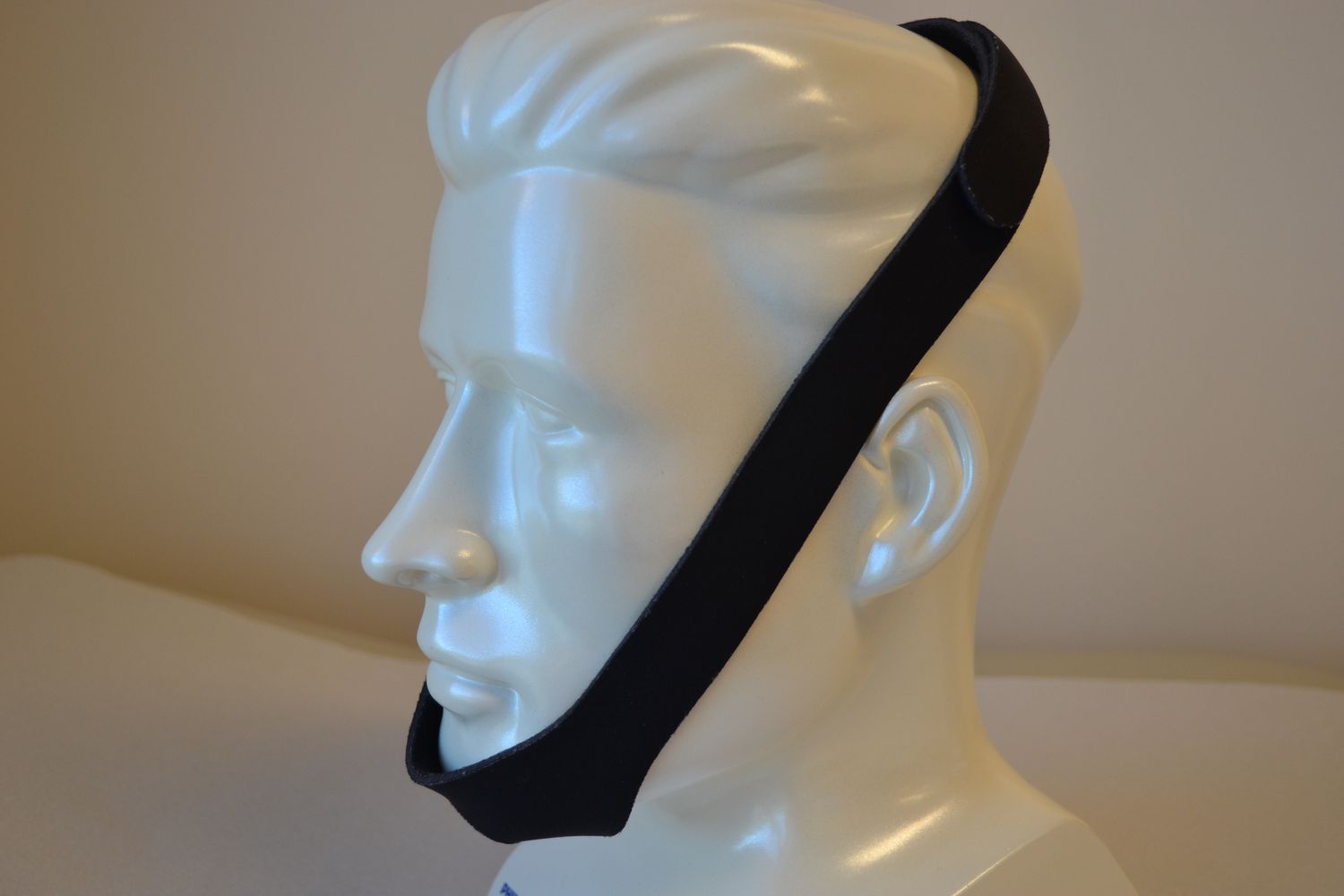
A chinstrap may be helpful to reduce mouth leak. It is usually a piece of fabric, often fitted with velcro, that can be secured around your lower jaw and the top of your head. It may have a cup at the chin, much like a rugby headgear. Chinstraps are usually fairly inexpensive, often costing around $15 to $20. It keeps your mouth closed and allows you to get the full benefit of your CPAP.
You will likely know if you need a chinstrap based on the feedback of others. If mouth breathing is noticed during your sleep study, it may be applied at that time. Or, if your significant other notices air escaping from your mouth at night, or even snoring, this may suggest a need for a chinstrap. Also, if you wake up with a very dry mouth or painful throat, it may be due to mouth breathing on your CPAP machine.
Some people will use a chinstrap to help keep their CPAP mask on at night if they are removing it while they are partially asleep. This added layer may make it hard to take the mask off while remaining asleep. It is also possible that a chinstrap may stabilize a mask and help it to seal better.
Chinstraps or “snore guards” should never be used alone without CPAP therapy. They are ineffective in resolving snoring and sleep apnea. Moreover, it may be dangerous to prevent mouth breathing without CPAP use if you need it to get adequate airflow.
When You Shouldn’t Use a Chinstrap
There are some cases in which you may not want to use a chinstrap. If you have a congested nose, a deviated septum, or if your CPAP pressure is not set properly, you may not be getting enough air delivered through a nasal mask. It is also possible for a high CPAP pressure to blow the mouth open and it may need to be decreased.
Another option beyond using a chinstrap would be the use of a full-face mask that allows breathing to occur through both the nose and mouth. These masks may cause more leak and marks on the face, and you will want to ensure that it is fitted properly to get the optimal benefit.
:max_bytes(150000):strip_icc()/BrandonPetersMD_1000-5143e542c3084368b1220c4b86ede01c.png)