

:max_bytes(150000):strip_icc():format(jpeg)/how-do-i-know-which-kind-of-insect-i-was-stung-by-82828-5c4e3f1cc9e77c0001d7bae4.png)
Key Takeaways
-
Call 911 at the first sign of anaphylaxis, use an EpiPen immediately, and then go to the hospital.
-
Bees and other flying insects can cause severe allergic reactions, such as anaphylaxis, in some people.
-
Avoid being stung by wearing protective clothing and not using floral perfumes or scents.
If you have never been stung by a honeybee, hornet, wasp, or other flying insect, it’s hard to tell how your body might react.
While some people have mild reactions to insect bites or stings, others are highly allergic and develop anaphylaxis, which can be fatal. Around 5% of all people will have a severe allergic reaction to a sting, so it’s good to be prepared just in case.
Verywell / Cindy Chung
Overview
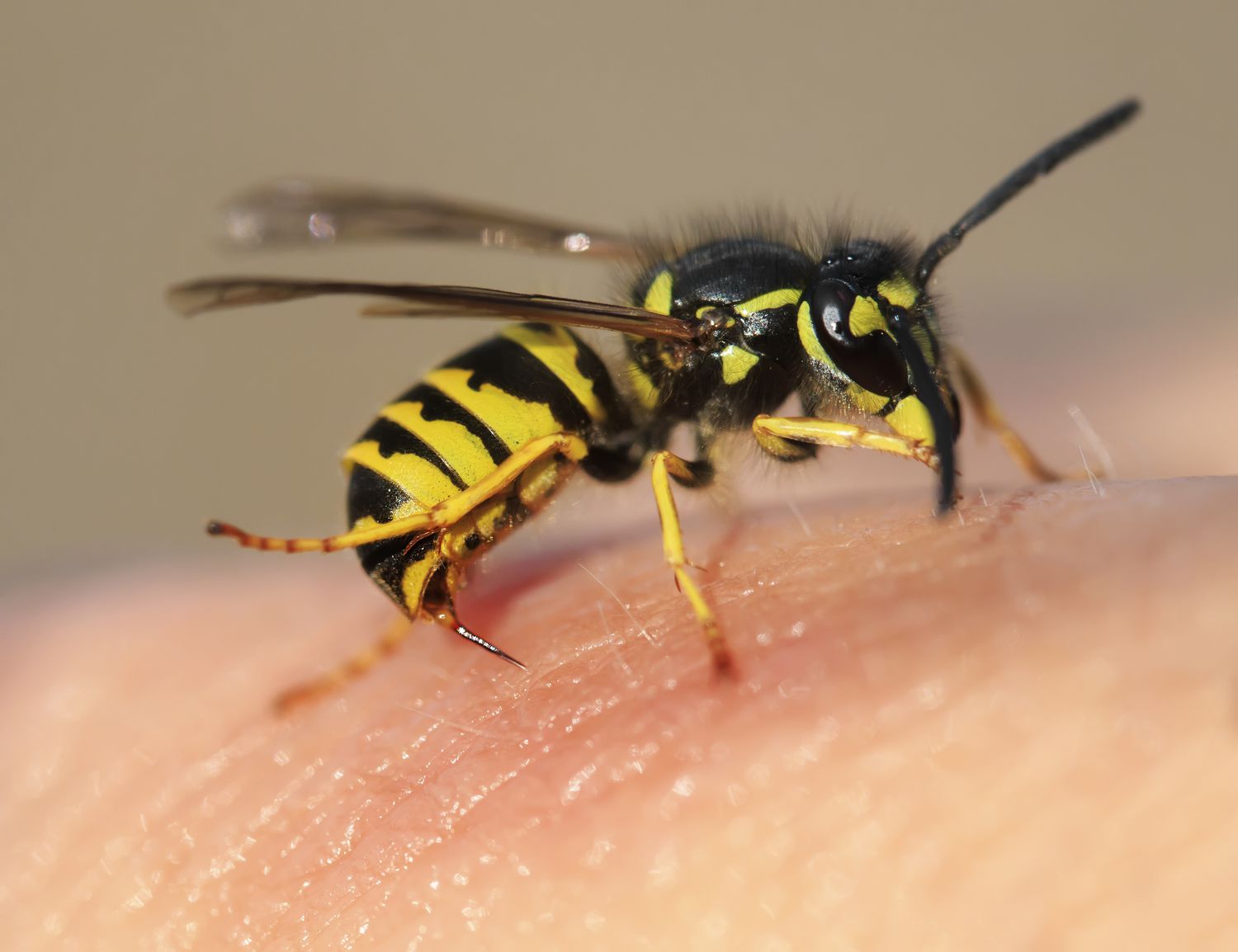
When an insect stings, it injects venom into your skin with its stinger. This venom contains proteins that can cause pain, swelling, redness, and itching around the sting area.
For most people, these mild symptoms stay contained to the sting area. But for people who are allergic to the venom, their immune system reaction can become systemic. In other words, it can affect other systems in the body, such as the respiratory system, making it hard to breathe.
According to the American College of Allergy, Asthma & Immunology (ACAAI), the number of people who have allergies to insect stings is on the rise.
Each year, thousands of people seek medical care for severe reactions to flying insect stings. What’s more, the ACAAI reports that about between 90 and 100 people die from insect sting anaphylaxis each year.
Anyone can have a severe allergic reaction to an insect sting. Those who have already had a severe reaction to a sting are at higher risk of a life-threatening reaction if they are stung again.
Signs and Symptoms
If you are allergic to insect venom, anaphylaxis can occur within minutes to hours after a sting. Symptoms may include:
- Itching all over the body
- Hives or swelling spreading from the sting site
- Reddening of the skin (flushing)
- Runny nose, sneezing, or mucus in the throat (postnasal drip)
- Itchy, watery eyes
- Swelling of the lips, tongue, and/or throat
- Shortness of breath, wheezing, or coughing
- Stomach cramping, nausea, vomiting, or diarrhea
- Lightheadedness, increased heart rate, low blood pressure, or fainting
- Feeling of panic or impending doom
- Metallic taste in the mouth
When to Seek Medical Attention
Call 911 immediately at the first sign of anaphylaxis. Do not wait for symptoms to worsen. Use an EpiPen or AUVI-Q immediately if available, and then go to the hospital. Anaphylaxis can recur, so monitoring is necessary.
Insects That Cause Venom Allergies
While bees are well-known stinging insects, they are not the only ones. Yellow jackets, hornets, wasps, and fire ants can also cause allergic reactions. These insects, along with bees, belong to the insect order Hymenoptera.
Knowing which bugs can cause anaphylaxis and what those bugs’ habits are can help you avoid them.
If you are having an allergic reaction to an insect sting, the first thing you need to do is get it treated. Don’t delay medical care by trying to figure out which insect stung you.
Honeybees
Honeybees prefer to nest in tree hollows, logs, or buildings. They don’t tend to be aggressive when they are away from their hive. They are much more likely to attack when they feel their hive is under threat.
Honeybees collect nectar from all kinds of plants. One of their favorites seems to be clover. This explains why people often get stung while walking barefoot through a lawn filled with clover.
One thing to note is that honeybees are the only stinging insect that routinely leaves a stinger in their victim’s skin. Other insects can too, but it’s far less common.
There are many different ways to remove a stinger. But the best way to remove it is the one you can do the fastest, within 30 seconds. The longer the stinger is in the skin, the more venom it can inject.
Aside from staying away from honeybee hives, one of the best ways to avoid their stings is to wear full-length pants and shoes that cover your whole foot when you walk outside.
Africanized (Killer) Honeybees
Killer honeybees live in small colonies, which means they can (and will) nest just about anywhere. They have been known to build hives in tires, flower pots, barbecue grills, mailboxes, and any other cavity they can find.
Killer honeybees are far more aggressive than normal honeybees, but their venom is not so different. So if you are allergic to honeybees, you will also be allergic to killer honeybees.
Killer honeybees come with a distinct risk, though. They tend to sting in groups of hundreds or more, making the chances of a lethal attack that much greater.
According to the U.S. National Park Service, if a colony of killer bees thinks you are a threat, they will send a few bees to “head butt” you as a warning before the full hive attacks.
If you notice a few bees hovering, don’t flail your arms and don’t try to fight them off. Killing a bee causes them to release a scent that warns their hive and attracts other bees.
Killer honeybees target your eyes, nose, and mouth when attacking. The best thing you can do in an attack is cover your head with your shirt or jacket and run.
Bumblebees
Bumblebees rarely sting people. They are not aggressive and typically mild-mannered. They will sting if provoked or if their nest is disturbed. But they are so loud and slow that a person usually has plenty of time to escape.
Bumblebees feed on insects and flower nectar. They nest on the ground, or in piles of grass clippings or wood. Once again, if you are walking around outdoors, make sure to wear shoes.
Yellow Jackets
Yellow jackets live in mounds built into the ground and tend to be aggressive. They are a common bother at picnics where there are lots of sugary drinks and food. You might also find them near trash cans.
Stings on the lip or inside the mouth or throat can occur after taking a drink from an open can of soda that a yellow jacket has crawled into. If you are eating outside and see a yellow jacket nearby, be sure to keep your food and drinks covered.
Yellow jackets can carry bacteria. That means if you are stung by one, you’ll need to be on the lookout for signs of a skin infection.
Hornets
Hornets, including yellow and white-faced hornets, build paper-mâché type nests in trees and shrubs. These insects may be very aggressive. They will sting people because of a mild disruption, such as someone nearby mowing a lawn or trimming a tree.
Unlike honeybees, hornets will not leave their stinger in you. That means they can sting you multiple times. Hornets also aim for the eyes, so your best defense is to cover your face and run.
Wasps
Wasps build honeycomb nests under the eaves of a house, or in a tree, shrub or under patio furniture. They tend to be less aggressive than yellow jackets and hornets, and mostly feed on insects and flower nectar.
Prevention
Put simply, the best way to prevent an allergic reaction is to avoid being stung. Here are a few tips:
- Hire a trained exterminator to treat any known nests in the area. Have them return periodically to survey for further infestation.
- Bees navigate the world through odor. Avoid looking or smelling like a flower. Do not wear perfumes or other scents that will attract them.
- Always wear shoes when walking outside, particularly on grass.
- Wear pants, long-sleeved shirts, gloves, close-toed shoes, and socks when working outdoors.
- Use caution when working around bushes, shrubs, trees, and trash cans.
- Always check open food and drinks before consuming. Be extra careful at pools and picnics, where yellow jackets are known to be present.
Allergy Testing
There are two ways to test for insect allergy: skin testing and blood testing (serum allergen specific IgE testing).
Skin testing is typically the go-to method. It’s the most reliable way to test for allergens and similar to testing for pollen or pet allergies. However, you might be given a blood test if you have a skin condition or take a medication that would interfere with the skin test.
For the skin test, a healthcare provider will place a small drop of insect venom just under the surface of your skin. You will feel a little prick when this happens. Then, after about 15 minutes, the provider will check for redness, hives, or other signs of a reaction.
A blood test works a little differently. Whereas a skin test looks for your skin’s reaction to the venom, a blood test measures the antibodies your body makes in response to the venom.
For the blood test, a lab technician draws a sample of your blood. Then, at a testing lab, the allergen in question is added to your blood sample and the amount of antibodies your blood produces to attack the allergen is measured.
Studies show that most people can’t identify which type of insect stung them. So, allergists usually test for all stinging insects, from bees to wasps and more.
Who Should Be Tested
In general, you don’t need to be tested for insect allergies if you have never been stung by an insect, or you have never had any severe symptoms due to a sting.
Someone who has a large local reaction (such as swelling at the sting site), without signs of anaphylaxis, usually doesn’t need venom testing.
There are two min scenarios in which you should be tested for insect allergy: you have previously had symptoms of anaphylaxis after a sting. Or, you have a high risk of getting stung, for example, if you are a beekeeper.
If you have had anaphylaxis symptoms after being stung, there is a 30% to 60% chance that you will have a similar (or worse) reaction to an insect sting in the future.
Sting Treatment
Treatment for venom allergy involves managing allergic reactions when they occur, and preventing them in the future.
Immediate Treatment of Acute Reactions
When it comes treating anaphylaxis in the moments after a sting, epinephrine is the treatment of choice.
Epinephrine is the drug form of the hormone adrenaline. Your body produces this hormone on its own. Injecting epinephrine in an allergic emergency reverses the symptoms of anaphylaxis. It increases blood flow, opens your airways, and more.
People with a known venom allergy are encouraged to carry a self-injectable form of epinephrine, such as an Epi-Pen or AUVI-Q, or an epinephrine nasal spray, such as Neffy. Since anaphylaxis can return after usage, you will still need to call 911 or go to an emergency room right away.
When itching or hives are your only symptoms, an oral antihistamine may be all you need. Since a mild allergic reaction can rapidly progress to anaphylaxis, you should still get to the hospital if you suspect you are having an allergic reaction.
Any time a stinger is left in your skin, it should be quickly removed. Do not squeeze the stinger or skin around it. Instead, scrape the stinger out with the edge of a credit card. Put ice or a cold compress at the sting site to reduce local swelling.
Treatment of Future Reactions
The only way to fully prevent reactions to insect stings is to avoid being around stinging insects. Granted, this is easier said than done, especially for people who work or live near them.
The first-line treatment for insect allergy is venom immunotherapy (VIT). These allergy shots contain purified venom from the type of insect to which a person is allergic. They are given in much the same way as pollen allergy shots, generally over the course of four to six months.
Once a person starts venom allergy shots, their chance of a reaction from future stings is reduced to less than 5%. After taking allergy shots for at least three to five years, most people can stop taking shots without any major increase in their chances of having an allergic reaction.
There are some cases in which a person will need to take venom allergy shots for the rest of their life. This includes people who have severe, life-threatening reactions from insect stings, and those who have had anaphylaxis from the venom allergy shots themselves.
VIT is widely considered safe and effective. Still, there is a small chance that a person could have an allergic reaction to the shots themselves. Reactions to VIT are usually mild and contained to the injection site. As of 2017, no deaths due to VIT-induced anaphylaxis have been reported.
For those with severe allergies who have a higher risk of getting stung, rush immunotherapy (RIT) should be considered. RIT works similarly to VIT. But whereas VIT shots are spread out over the course of several months, RIT shots are condensed into a program that lasts four to six weeks.
RIT does come with an increased risk of allergic reactions. But it can also get a venom allergy under control much faster than VIT. These are factors you will need to discuss with your allergist.
After Allergy Shots for Bee Allergy
Studies suggest that many children who begin allergy shots for bee stings do not complete their therapy.
For this reason, some allergists order venom allergy tests after venom immunotherapy has been given for a period of time. This is to ensure that the full course of therapy has been done and the allergy is under control.
Allergy shots can reduce the chances of a life-threatening allergic reaction in the future. But in order for this to happen, the full course of treatment needs to be completed.
Most fatalities due to bee sting allergy occur in those who do not have a known allergy. Everyone should be familiar with the signs and symptoms of anaphylaxis and how to contact emergency help if needed.
Frequently Asked Questions
-
When should I be concerned about a bee sting?Minor swelling, redness, burning, and pain at the sting site is normal and can last up to a week. Call 911 if you develop any signs of anaphylaxis, even if it’s just one or two symptoms. You should also call 911 if there are multiple stings.
-
How do you know if you are allergic to bee stings?Allergic reactions can start within minutes to hours after a sting. You will know you are allergic if you develop itching, hives, or swelling that goes beyond the sting site. Systemic symptoms, like trouble breathing, are a sign of anaphylaxis that require immediate medical attention.
-
Can you outgrow a bee sting allergy?It is possible to outgrow a bee sting allergy, but it doesn’t happen for everyone. Allergy shots, known as venom immunotherapy, are a safe and effective treatment for insect allergy that may even cure it.