

:max_bytes(150000):strip_icc():format(jpeg)/Simple-7-Day-Mediterranean-Diet-Meal-Plan-Created-by-a-Dietitian-65edad55a3bd4f67af28360df67ae63e.jpg)
| Meal Plan At a Glance | |||||||
|---|---|---|---|---|---|---|---|
| DAYS | 1 | 2 | 3 | 4 | 5 | 6 | 7 |
| MEALS | Breakfast: Protein Oatmeal –––– Lunch: Cucumber-Hummus Wrap Cottage Cheese Veggie Jar –––– Dinner: Lemony Garlic Salmon Chickpea Caesar Salad |
Breakfast: Best Gut Healthy Breakfast –––– Lunch: Chopped Broccoli Chickpea Salad –––– Dinner: Black Bean Fajita Casserole |
Breakfast: Protein Oatmeal –––– Lunch: Chopped Broccoli Chickpea Salad –––– Dinner: Shrimp Pesto Quinoa Bowl |
Breakfast: Best Gut Healthy Breakfast –––– Lunch: Chopped Broccoli Chickpea Salad –––– Dinner: Lemon-Pepper Chicken & Veggies |
Breakfast: Protein Oatmeal –––– Lunch: Chopped Broccoli Chickpea Salad –––– Dinner: White Bean Spinach Orzo |
Breakfast: Best Gut Healthy Breakfast –––– Lunch: White Bean Spinach Orzo –––– Dinner: Kale Sweet Potato Chicken Salad |
Breakfast: Protein Oatmeal –––– Lunch: White Bean Spinach Orzo –––– Dinner: High-Protein Black Bean Salad |
| DAILY TOTALS | Calories: 1,807 Fat: 87g Protein: 98g Carb: 175g Fiber: 35g Sodium: 2,136mg | Calories: 1,798 Fat: 87g Protein: 73g Carb: 202g Fiber: 47g Sodium: 1,228mg | Calories: 1,793 Fat: 82g Protein: 94g Carb: 185g Fiber: 31g Sodium: 1,630mg | Calories: 1,800 Fat: 89g Protein: 93g Carb: 179g Fiber: 39g Sodium: 1,305mg | Calories: 1,805 Fat: 73g Protein: 87g Carb: 215g Fiber: 37g Sodium: 1,536mg | Calories: 1,824 Fat: 85g Protein: 83g Carb: 204g Fiber: 46g Sodium: 1,296mg | Calories: 1,825 Fat: 67g Protein: 85g Carb: 239g Fiber: 53g Sodium: 1,594mg |
Day 1
Daily Totals: 1,807 calories, 87g fat, 98g protein, 175g carbohydrate, 35g fiber, 2,136mg sodium
Breakfast (452 calories)
Lunch (410 calories)
Cottage Cheese Snack Jar with Tomatoes, Cucumbers & Bell Peppers
Dinner (511 calories)
Lemony-Garlic Pan-Seared Salmon
Snacks
Apple with Cinnamon Almond Butter
- ¼ cup dry-roasted unsalted almonds + 1 clementine (241 calories)
Make it 1,500 calories: Omit Cottage Cheese Snack Jar with Tomatoes, Cucumbers & Bell Peppers at lunch and omit the Apple with Cinnamon Almond Butter as a snack.
Make it 2,000 calories: Add 1 serving White Bean & Avocado Toast to dinner and omit clementine at the almonds + clementine snack.
Day 2
Daily Totals: 1,798 calories, 87g fat, 73g protein, 202g carbohydrate, 47g fiber, 1,228mg sodium
Breakfast (409 calories)
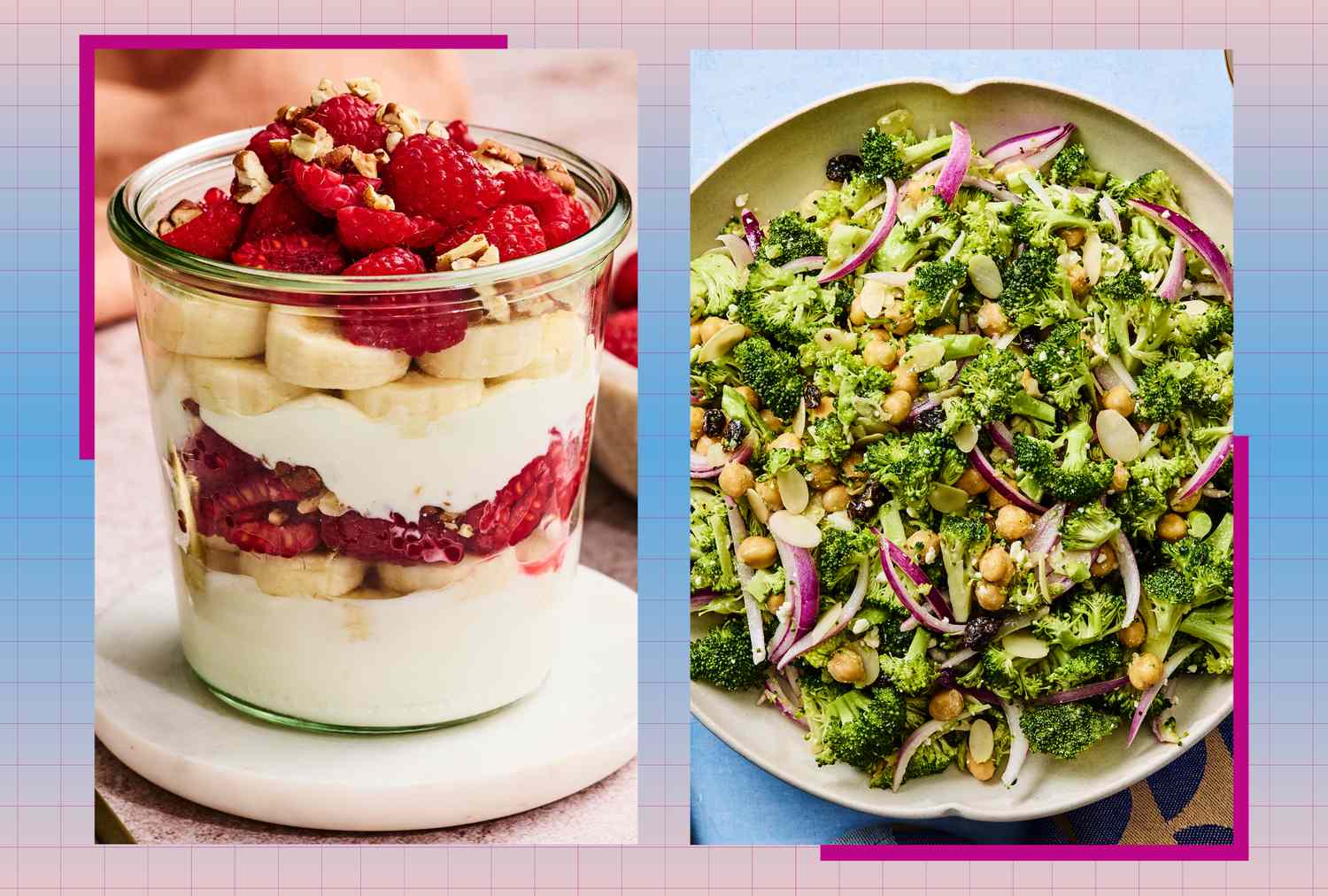
Raspberry-Banana Yogurt Parfait
Lunch (483 calories)
Chopped Broccoli & Chickpea Salad
Dinner (471 calories)
Black Bean Fajita Casserole
Snacks
Cottage Cheese Snack Jar with Fruit
- ½ cup sliced strawberries (27 calories)
Make it 1,500 calories: Substitute 1 cup cherries for the Apple with Cinnamon Almond Butter snack and omit Cottage Cheese Snack Jar with Fruit as a snack.
Make it 2,000 calories: Add 1 medium orange to lunch and 1 serving Simple Cabbage Salad to dinner.
Day 3
Daily Totals: 1,793 calories, 82g fat, 94g protein, 185g carbohydrate, 31g fiber, 1,630mg sodium
Breakfast (452 calories)
Lunch (483 calories)
Dinner (429 calories)
Charred Shrimp, Pesto & Quinoa Bowls
Snacks
Banana–Peanut Butter Yogurt Parfait
- ½ cup sliced strawberries (27 calories)
Make it 1,500 calories: Omit Banana–Peanut Butter Yogurt Parfait as a snack.
Make it 2,000 calories: Add 1 cup low-fat plain kefir to breakfast and 1 medium apple to lunch.
Day 4
Daily Totals: 1,800 calories, 89g fat, 93g protein, 179g carbohydrate, 39g fiber, 1,305mg sodium
Breakfast (409 calories)
Lunch (483 calories)
Dinner (438 calories)
Sheet-Pan Lemon-Pepper Chicken with Broccoli & Potatoes
Snacks
Make it 1,500 calories: Omit both the Cottage Cheese Snack Jar with Fruit and orange as snacks.
Make it 2,000 calories: Add 1 serving Simplest Spinach Salad to dinner.
The Simplest Spinach Salad
Day 5
Daily Totals: 1,805 calories, 73g fat, 87g protein, 215g carbohydrate, 37g fiber, 1,536mg sodium
Breakfast (452 calories)
Lunch (483 calories)
Dinner (468 calories)
One-Pot White Bean, Spinach & Sun-Dried Tomato Orzo
Snacks
Make it 1,500 calories: Omit Banana–Peanut Butter Yogurt Parfait as a snack.
Make it 2,000 calories: Add 1 cup low-fat plain kefir to breakfast and 1 medium orange to lunch.
Day 6
Daily Totals: 1,824 calories, 85g fat, 83g protein, 204g carbohydrate, 46g fiber, 1,296mg sodium
Breakfast (409 calories)
Lunch (468 calories)
Dinner (547 calories)
Kale & Sweet Potato Salad with Chicken
Snacks
Make it 1,500 calories: Substitute 1 cup cherries for the Apple with Cinnamon Almond Butter snack and omit dry-roasted almonds as a snack.
Make it 2,000 calories: Add 1 cup cherries to lunch and a 1-oz. slice of whole-wheat baguette to dinner.
Day 7
Daily Totals: 1,825 calories, 67g fat, 85g protein, 239g carbohydrate, 53g fiber, 1,594mg sodium
Breakfast (452 calories)
Lunch (468 calories)
Dinner (597 calories)
High-Protein Black Bean Salad
Snacks
Make it 1,500 calories: Omit both snacks.
Make it 2,000 calories: Add 1 cup low-fat plain kefir to breakfast and 1 medium orange to lunch.
Frequently Asked Questions
-
Is it OK to mix and match meals if there is one I do not like?Absolutely, meal plans are meant to be enjoyed. If there’s a recipe you don’t think you’ll enjoy, feel free to repeat a meal in this plan or browse some of our other Mediterranean diet recipes for additional inspiration. While a simple swap should work for most people, you may want to adjust a snack or two if you’re closely monitoring calories, protein, fiber or other nutrients.
-
Can I eat the same breakfast or lunch every day?Yes, you can eat the same breakfast or lunch every day if you prefer. Each breakfast is between 409 and 452 calories while the lunches range from 410 to 483 calories. These ranges are fairly so a swap should work for most people.
-
Why is there not a modification for 1,200 calories?We no longer provide modifications for 1,200-calorie days in our meal plans. Research suggests that 1,200 per day is too low for most people to meet their nutritional needs, may lead to lean muscle loss and is unsustainable for long-term health and well-being.
Health Benefits of the Mediterranean Diet
The Mediterranean diet is consistently praised for its numerous health benefits. Because it’s so nutrient-dense, research links this healthy eating pattern to better blood sugar and a reduced risk of developing type 2 diabetes, as well as a lower risk of heart disease, metabolic syndrome and obesity. Following the Mediterranean diet is even linked to a reduced risk of cognitive decline, including a 28% lower risk of dying from Alzheimer’s disease., One of the positive attributes of the Mediterranean diet is that it’s flexible, which makes it more sustainable long-term. But this flexibility can leave some people wondering how to incorporate it into their routine. To follow the Mediterranean diet, focus on eating a wide-variety of plants. This includes fruits, vegetables, whole-grains, legumes, nuts and seeds. Add in a good dose of healthy fats, such as avocado and olive oil and finish it off by eating a wide-variety of proteins, such as fish, poultry, dairy or legumes. Despite the image the name evokes, the Mediterranean diet is highly adaptable to many different cuisines and cultures. One of the main cornerstones of the Mediterranean diet is cooking more meals at home and taking the time to sit down and savor meals whenever possible.
How We Create Meal Plans
Registered dietitians thoughtfully create EatingWell’s meal plans to be easy-to-follow and delicious. Each meal plan meets specific parameters depending on the health condition and/or lifestyle goal it is targeting and is analyzed for accuracy using the nutrition database, ESHA Food Processor. As nutritional needs differ from person to person, we encourage you to use these plans as inspiration and adjust as you see fit.
Dig Deeper
What Happens to Your Brain When You Follow the Mediterranean Diet
Following the Mediterranean Diet? Dietitians Want You to Break This Habit