

Published February 13, 2026 02:45PM
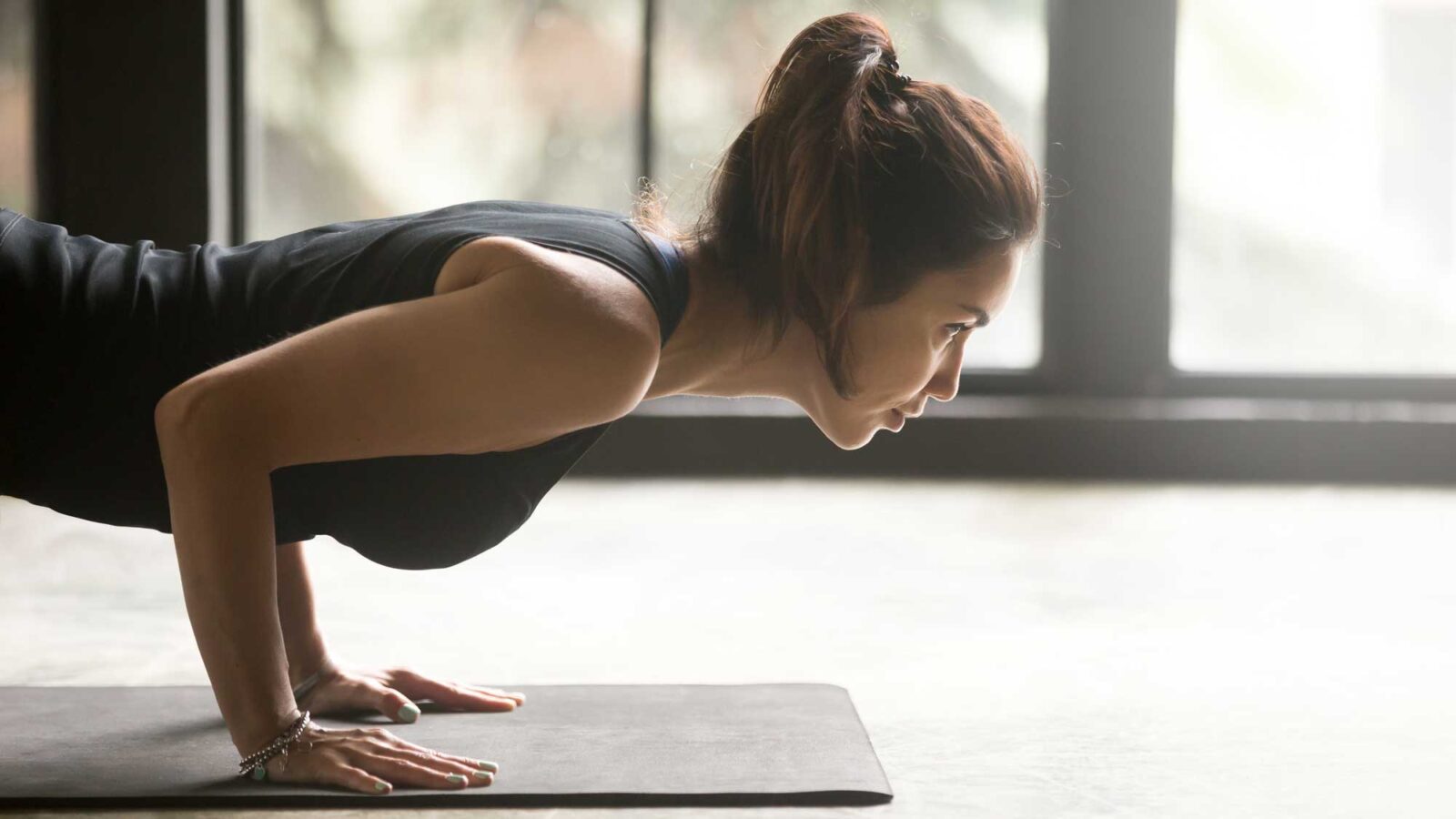
Chaturanga, sometimes called a “yoga push-up,” is a humbling exercise. One moment you’re in class, moving along with the rest of the group. The next moment, the teacher cues Chaturanga and everyone seems to lower their bodies as a single, steady unit. Meanwhile, you might still be negotiating the position of your wrists, struggling to support your bodyweight against gravity, and thinking, “Wait…since when are we doing push-ups in yoga?”
Chaturanga Dandasana is essentially Plank Pose, or the top of a push-up, but with your elbows bent, and it’s a position that’s repeated again and again in vinyasa and Ashtanga-style practices. It’s commonly translated from Sanskrit as “Four-Limbed Staff Pose,” and the word staff matters. In Chaturanga, the goal isn’t to quickly drop into position. Instead, you’re training your body to stay lengthened and solid like a staff as you lower with control.
In traditional Indian strength training, wrestlers practiced dands—repetitive push-up variations—to build stamina, coordination, shoulder stability, and full-body endurance. Over time, that movement influenced modern yoga sequencing, which is part of why Chaturanga can feel like a familiar (and sometimes frustrating) cousin of the push-up.
So how do you build the control and endurance that Chaturanga requires? The answer is using your yoga practice to prepare for it.
Benefits of Chaturanga
Chaturanga is often incorporated into fast-moving flows, which can make it extra challenging to channel the strength and body-mind connection that goes into practicing it. Your wrists need to bear weight, your core needs to engage and support your lower back, and your shoulders need to stabilize the movement. Not to mention the tricep and chest strength, and quad and glute engagement so your arms aren’t doing all the work.
But Chaturanga isn’t just an exercise to make your yoga practice more difficult. It can:
- Build muscular endurance
Learning to lower your body slowly and with control (rather than collapsing to the mat) creates a form of muscular tension which builds lasting endurance. - Simplify vinyasa transitions
Chaturanga is a key “link” in Sun Salutations and other yoga flows. Learning to practice it can make your practice feel smoother. - Support shoulder strength
Especially in challenging poses. The same full-body integration you use in Chaturanga will support you in inversions (such as Handstand and Downward Dog), arm balances (including Crow and Koundinyasana), and weight-bearing transitions (such as Plank to Side Plank).
4 Exercises to Help You Work Toward Chaturanga
Working toward Chaturanga takes time and patience. Consistently include a few or all of the poses below into your practice and you’ll develop the strength, stamina, and endurance to take your Chaturanga from a leap of faith into something intuitive.
Keep these best practices in mind while practicing Chautranga and any prep poses:
- Lengthen the back of your neck. Gaze slightly forward and down at the mat a few inches in front of you so your neck stays in line with your spine.
- Keep your body in a Plank shape as you lower. Chaturanga is essentially Plank Pose with bent elbows. Keep your core engaged and try not to let your lower back sink toward the mat, known as “dumping into your back.”
- Press through your hands. Spread your fingers, press evenly through your palms, and plant the base of your knuckles into the mat—especially under your index fingers and thumbs—to help evenly distribute the weight so it isn’t all in your wrists.
- Point your elbows straight back. Your elbows will probably want to splay out to the sides. Hug your inner arms close to, but without touching your ribs to keep your chest lifted and reduce shoulder strain.
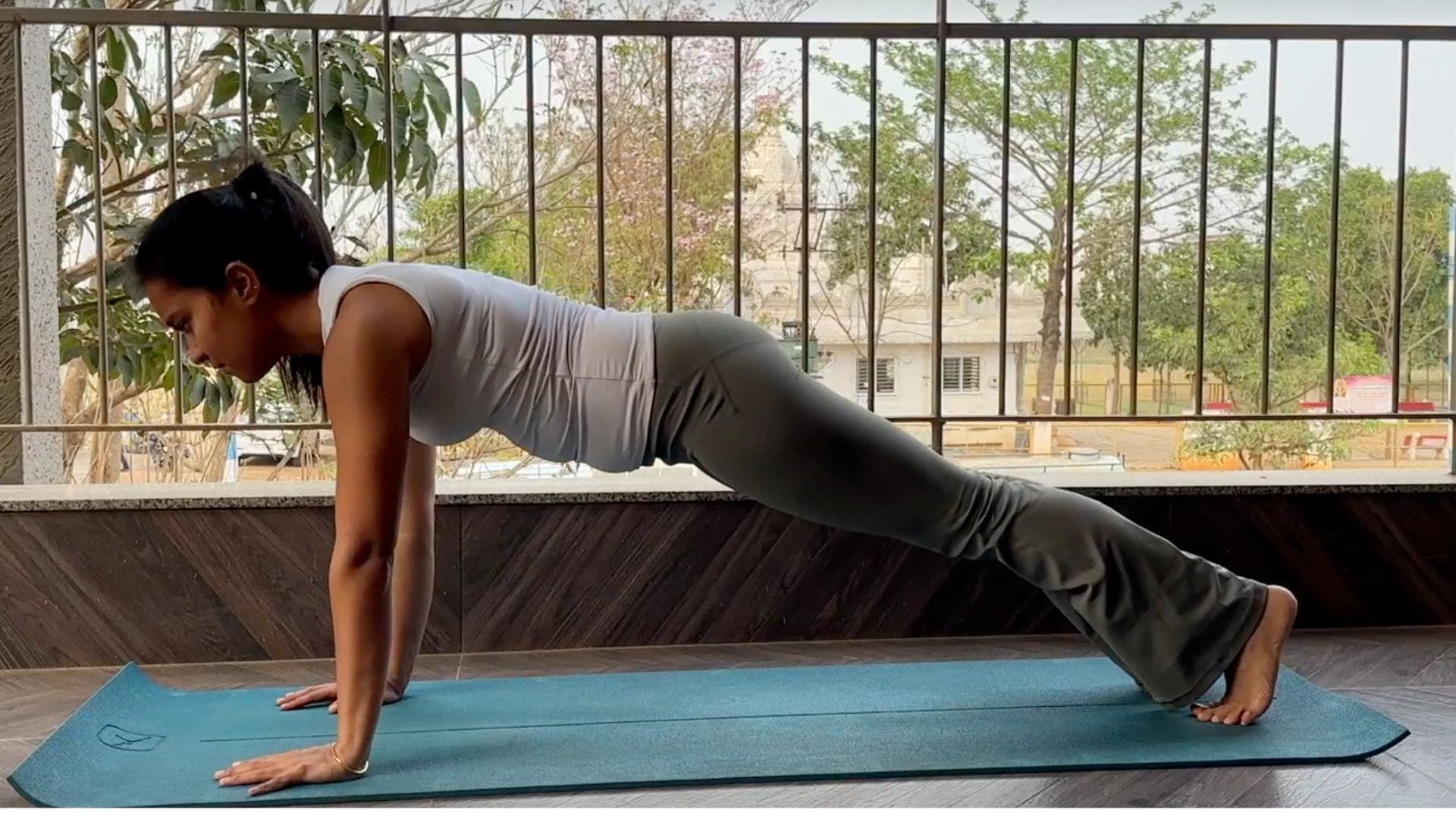
1. Plank (Phalakasana)
How to: Come to your hands and knees with your shoulders stacked over your wrists and your hips over your knees. Press your palms into the mat. Step one foot back at a time, pressing the balls of your feet into the mat. Draw your navel toward your spine and keep your hips level in Plank. Your body should be in one long line from your head to your heels.
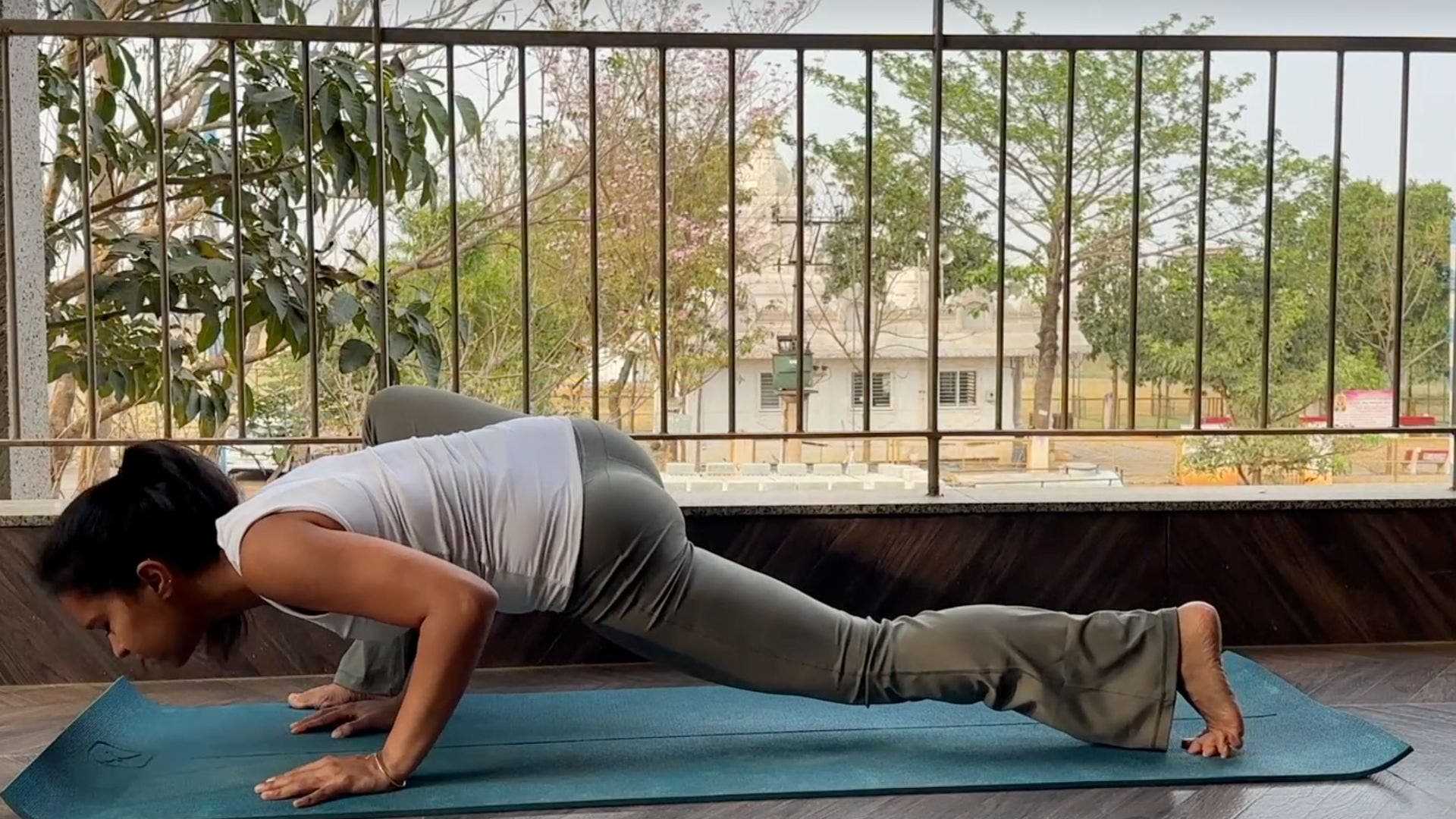
2. Lunge-to-Push-Up Switches
How to: Come into Downward-Facing Dog. Step one foot forward into High Lunge with your front knee stacked over your ankle. Plant both palms on the mat inside your front foot on blocks or on the mat. Bend your elbows and lower into a mini-Chaturanga. Pause here. Then straighten your arms, lift your chest, and step back into Plank. Come into Downward Dog and repeat on the opposite side.
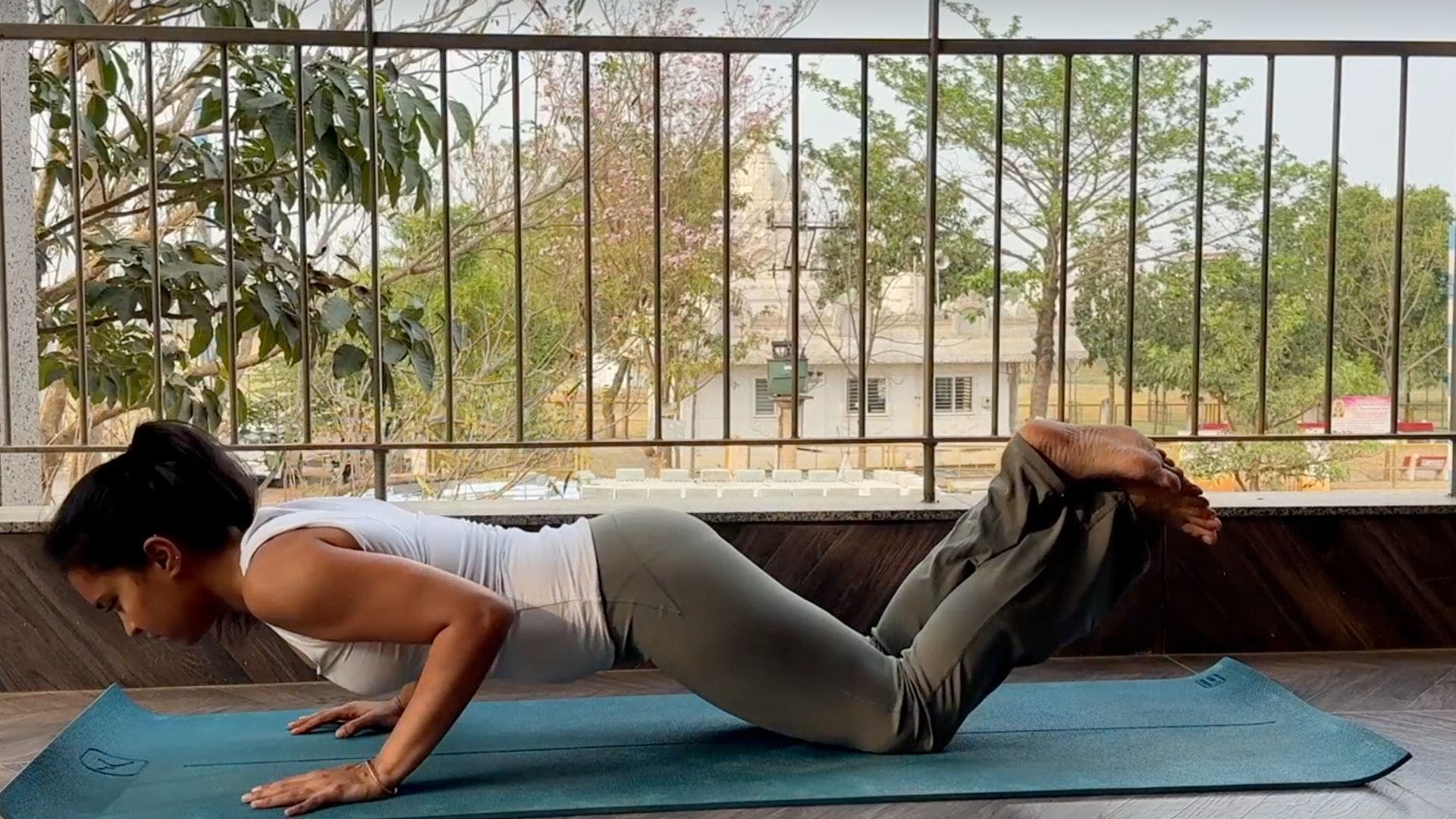
3. Knees-Down Chaturanga
How to: Come into Plank, then lower your knees to the mat. Move your shoulders slightly ahead of your wrists. Keep pressing your hands into the mat. Bend your elbows, lowering as much as you can without compromising your alignment. Straighten your arms back into knees-down Plank.
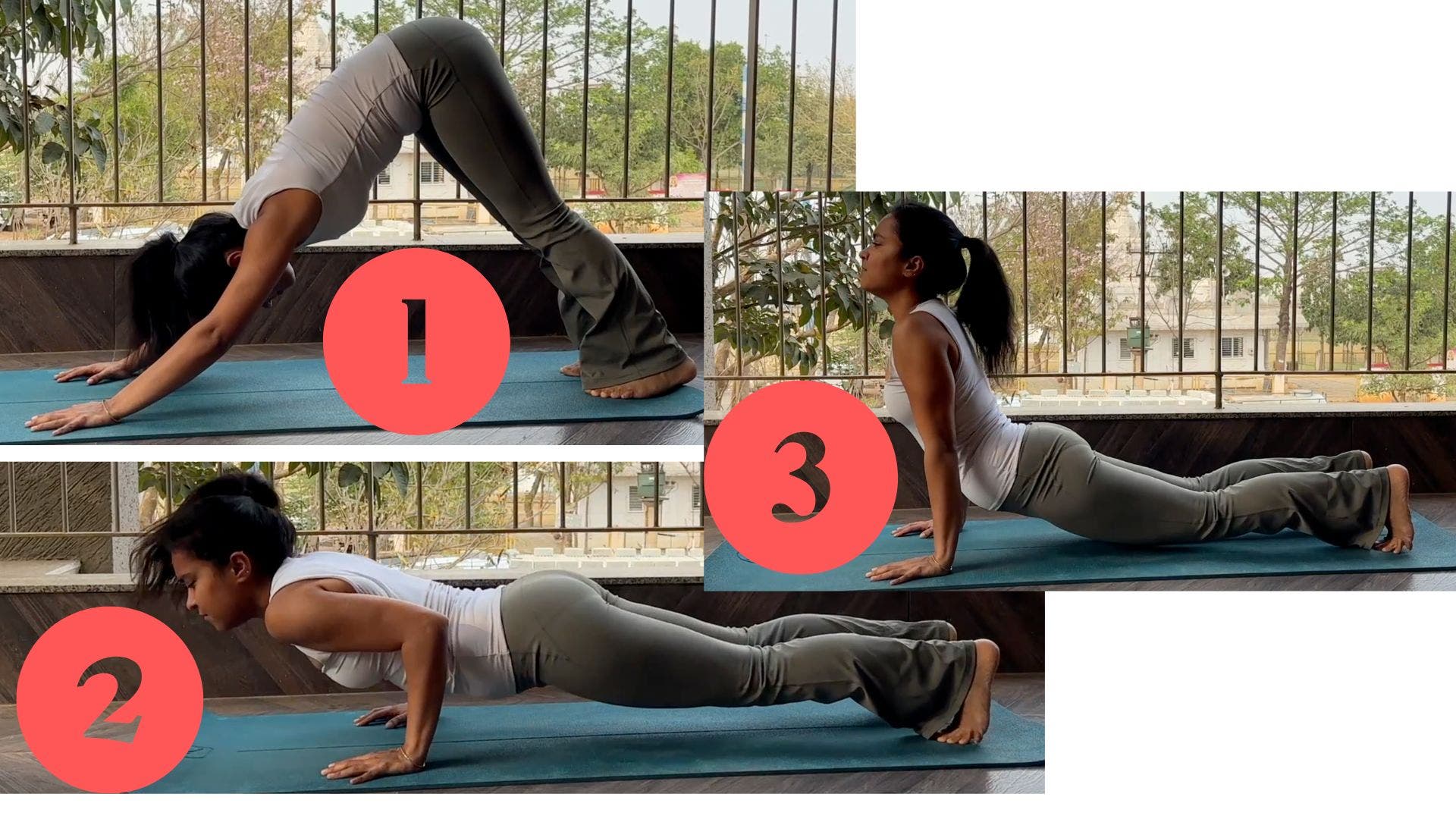
4. Hindu Push-Ups (Dands)
How to: Come into Downward Dog. Bend your arms, point your elbows back, and reach your chest forward as you move through Chaturanga, then into Upward-Facing Dog, then back into Downward Dog in one continuous motion.
How to Come Into Chaturanga
When you’re ready, follow these steps to come into Chaturanga.
- Start in Plank with your shoulders stacked over your wrists. Draw your navel toward your spine and press your heels toward the wall behind you. Spread your fingers wide and press evenly through the base of your knuckles.
- Shift your weight forward so your shoulders move slightly ahead of your wrists. Hug your elbows toward your body.
- Bend your elbows so they point straight back. Gaze at the mat a few inches in front of you and continue drawing your navel toward your spine (avoid arching your lower back). You can even place a block underneath each shoulder so you have a “target” as you lower your body down. Aim to lightly touch the blocks with the fronts of your shoulders. Pause where you can still hold Plank without collapsing.
- To come out of it, straighten your arms and press back to Plank or lower all the way to the mat and onto your belly. To take a counterpose, move into Cobra or Upward-Facing Dog.
Next time you’re in class, treat Chaturanga as a skill that you’re building, not a pose you need to “power through.” Prioritize alignment over how much you can lower yourself down. With consistency, Chaturanga stops feeling like a stressful checkpoint—and becomes what it’s meant to be: a steady, safe transition you can repeat with confidence.